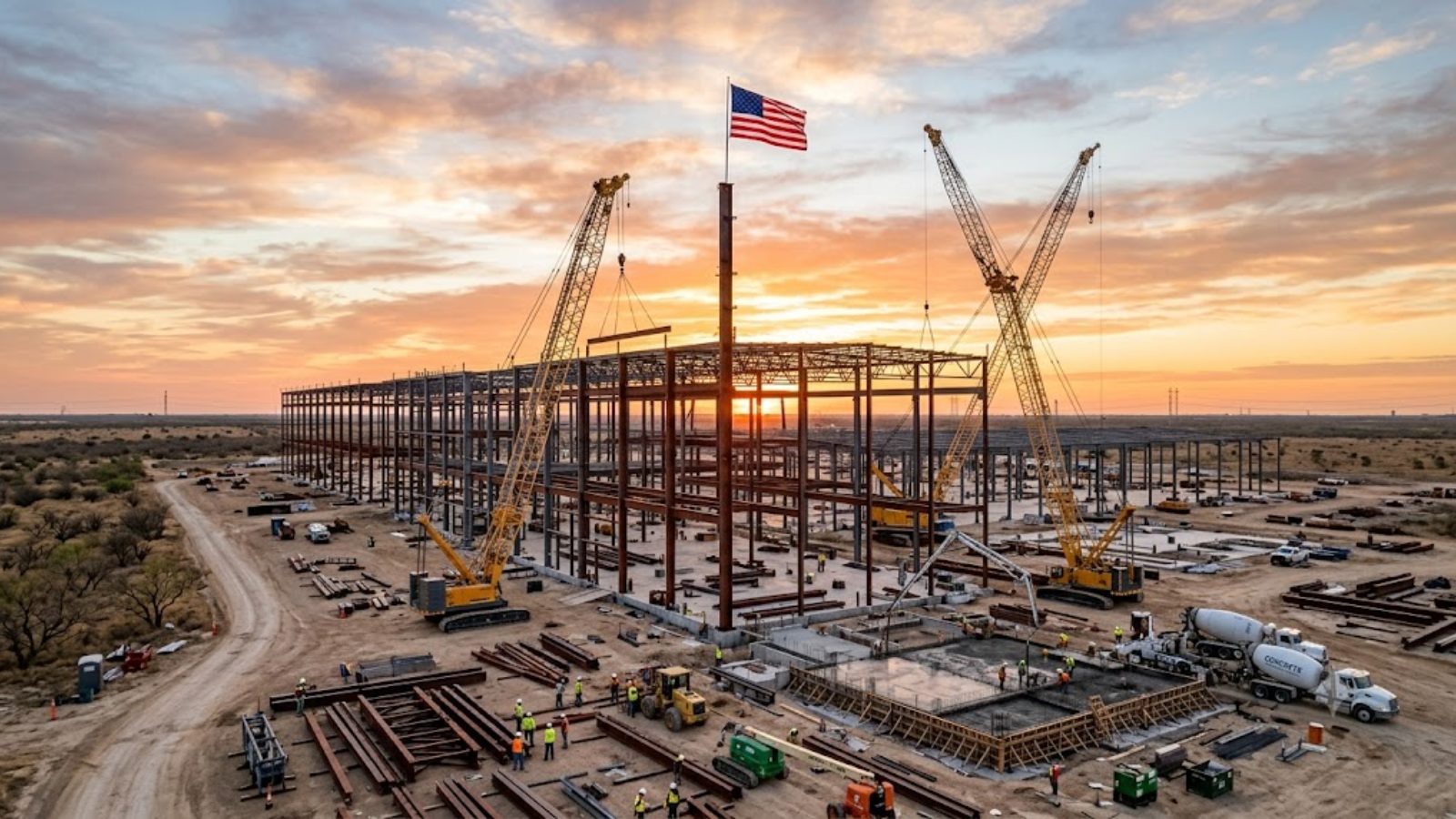
Toyota (TM) announced it will spend $3.6 billion to return Tacoma pickup production to the United States by 2030 — adding a second assembly line and about 2,000 jobs at its San Antonio plant, which today builds the Tundra and Sequoia with roughly 3,700 employees and about 200,000 vehicles a year. The move adds roughly 150,000 trucks of new annual output. The Tacoma is currently built in Guanajuato and Baja California, Mexico; Baja’s output moves to Texas, while Guanajuato is unaffected.
Why now? Arithmetic. Toyota’s North American unit swung to a loss in the fiscal year ended March after absorbing a 1.38 trillion yen (about $8.5 billion) tariff hit, and Japanese-built vehicles still face a 15% tariff under the year-old trade deal. When the tax on crossing the border exceeds the cost of building inside it, the factory moves. It helps that Toyota is worth moving for: U.S. sales rose 0.5% in the first half while the industry fell 2.5%, it’s the No. 2 U.S. automaker behind General Motors (GM), and it already runs its North American plants at over 90% capacity utilization — the industry’s highest.
Not because of the truck. Because a $3.6 billion factory doesn’t arrive alone. It arrives with rail spurs, construction crews, heavy equipment, electrical substations, and a Texas grid that must grow to feed it — and Toyota is one announcement in a reshoring wave that has been building for two years. That’s a multi-year tailwind for exactly the unglamorous industrial businesses that pay dividends through whole cycles: railroads hauling the parts, equipment makers pouring the pads, utilities wiring the load. Higher-for-longer tariffs mean higher-for-longer building.
One: when you read “tariff,” ask who eventually builds a factory to avoid it — that’s where the durable money flows. Two: check whether your portfolio owns the picks-and-shovels of reshoring — rails, industrial equipment, grid and construction exposure — rather than trying to guess which automaker wins. Three: note the pattern of quality — Toyota is reshoring from strength (90%+ utilization, gaining share in a shrinking market), and strength is what our themes are built to own.