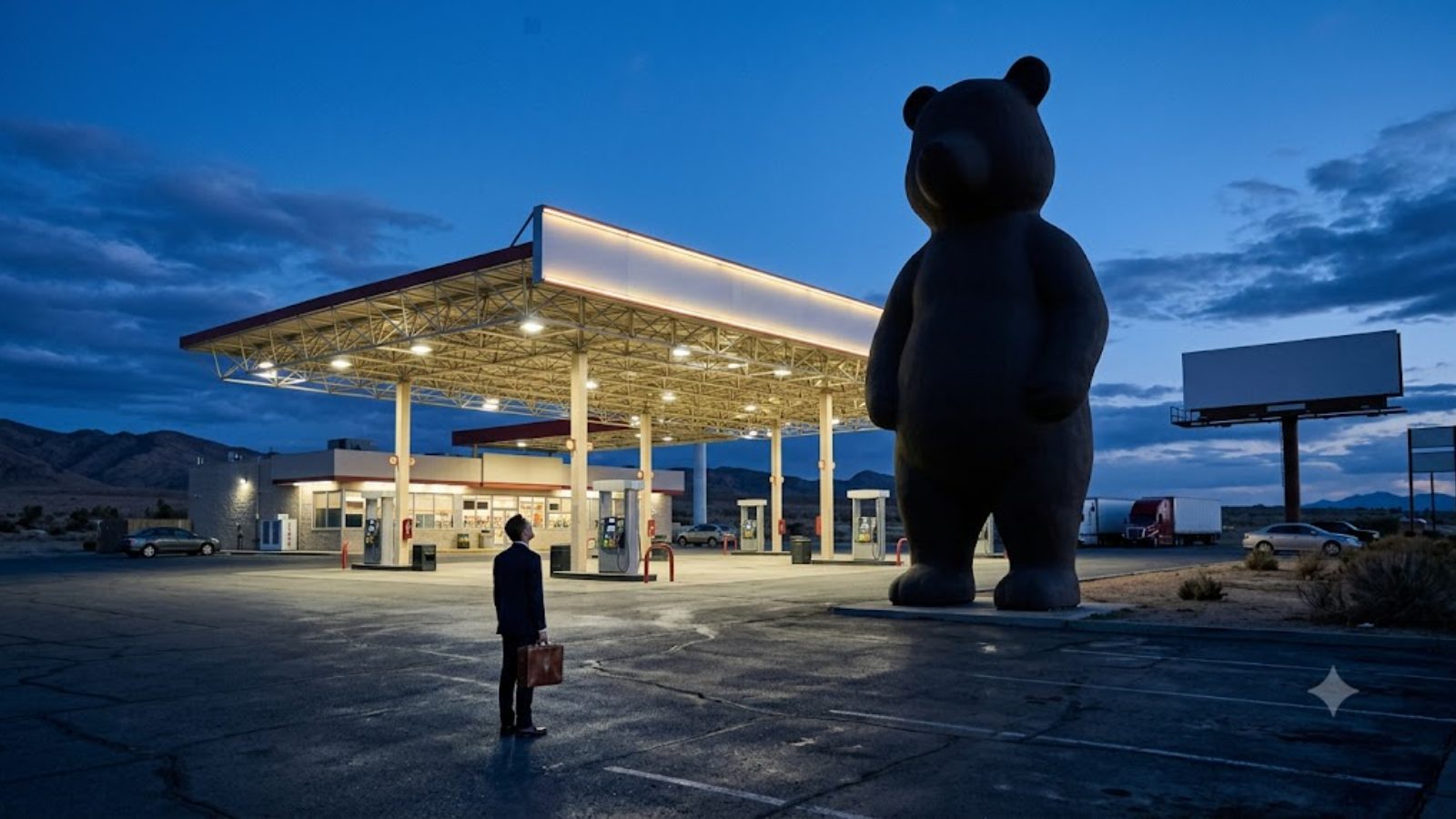
Here's a sentence I did not expect to type this week: a beaver is suing a moose. Buc-ee's, the Texas convenience-store colossus of 50-plus stores the size of regional airports, has filed a trademark suit against Mickey's Mart, a 42-store Ohio chain whose cartoon moose is, Buc-ee's insists, a little too close to its cartoon beaver — both "facing right with wide eyes and a smile." The moose, mind you, was drawn by the founder's grandchild. And this isn't a one-off grudge: Buc-ee's lawyers have already come for an alligator, a duck, and a koala. Mickey's attorneys opened with the defense of the year — "A moose is not a beaver" — which is now my favorite piece of legal writing of 2026.
Now the part your advisor can't help noticing. When Buc-ee's opened in Huber Heights, Ohio, it reportedly did a million-dollar day — a gas station, with 50 pumps and 700 parking spaces, that people drive hours to reach, photograph the bathrooms of, and buy the t-shirts from, all while the fuel runs about a buck a gallon cheaper. That combination — a brand people detour for, plus prices rivals can't match — is what investors call a moat, and the lawsuit is simply what moat defense looks like in the wild. Nobody spends this on lawyers over a mascot worth a little; you do it when the brand is the single most valuable thing you own. As a general planning principle, that's the whole game with pricing power: a business that can make customers detour, pay up, and come back has earnings that tend to hold together when the tape gets rough. Held loosely, of course — no cartoon animal, however beloved, guarantees a good business forever, and this is education, not a recommendation (both companies are private, and we own neither rodent nor ungulate).
The useful lens outlasts the punchline. When you can already see which brands have that kind of pull, that's the moment to glance at your own roof — not after the next storm rolls through. A portfolio review runs about 15 minutes; bring your latest statement and we'll ask the Buc-ee's questions of what you actually own — would anyone drive out of their way for this, and would they pay more to?