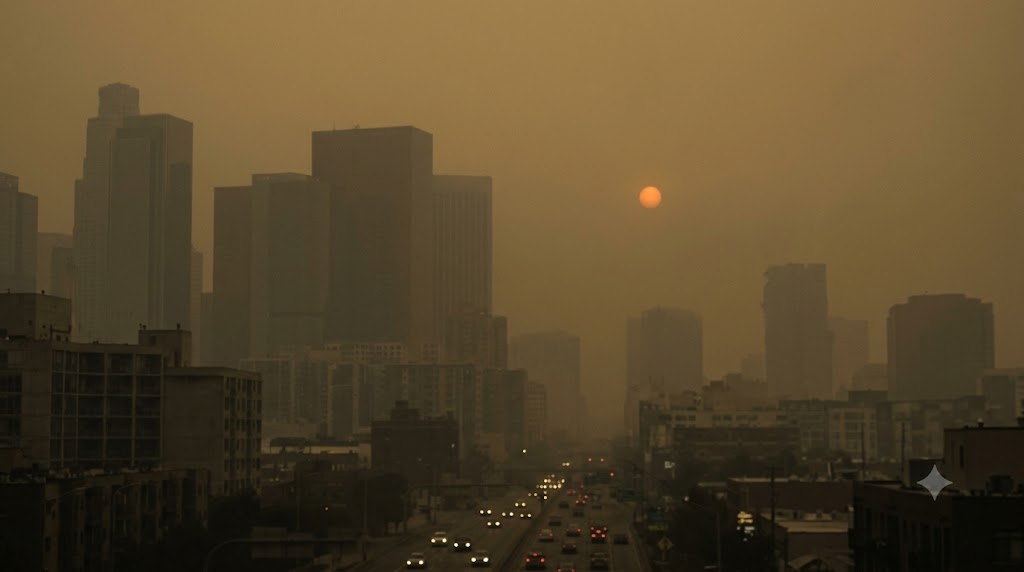
There is a particular quality to the light when the smoke arrives — noon starts to look like a memory of noon, the sun reduced to a coin you can stare at without squinting. Thursday, that light returned to a wide swath of the country.
More than 100 uncontrolled wildfires are burning in Canada, sending smoke into the Northeast and Midwest. Air-quality alerts run through Friday from Michigan to Maine; meteorologists call it the densest smoke event in more than a year, and it is the second one this summer. Airports are reporting delays. Insurers are doing math. Everyone else is just squinting.
The honest read is that this is weather, not a thesis — and we are not going to pretend a bad sky is a buy signal. But smoke has a way of becoming earnings if it lingers.
The transmission channels, if this persists: insurers (AIG, AIZ) if claims season runs hot; utilities (NEE) if regulators start asking about grid hardening; and the fertilizer names (MOS, CF) if the haze settles over growing zones long enough to dent a crop. For now, all of that sits in the monitor column, not the action column.
No trade — and no pretending weather is a thesis. But we keep the file open. If the smoke lingers into the third quarter, three channels turn it into earnings: insurers (AIG, AIZ) on claims, utilities (NEE) on grid-hardening regulation, and fertilizer (MOS, CF) on crop-zone damage. All of it is watch-column, not action-column. The point of building the book in advance is that a bad sky does not require a decision.