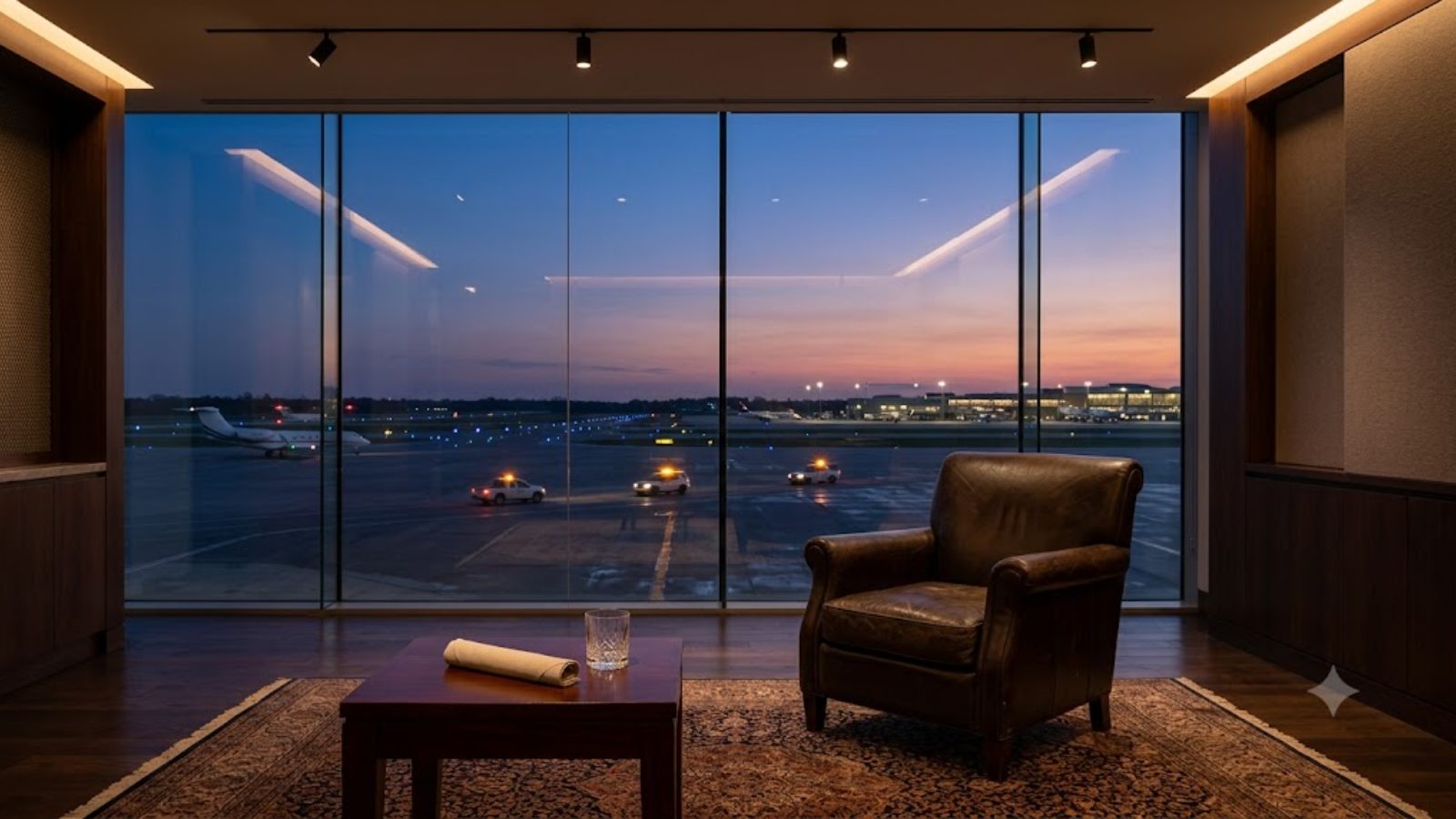
Somewhere at your airport, on the far side of a discreet gate, a man named Juan is offering someone a glass of chilled rosé and a tin of caviar while the rest of us re-tie our shoes on a cold metal bench. This is the private-terminal economy, and business is booming.
The tab is real: memberships run $1,250 to $4,850 before the per-visit fee, and a good day includes a Cuban sandwich, cookies to go, and a car to the plane. The product is not the caviar. The product is the total, engineered absence of other people.
Read it next to this week’s $2.9 billion bag of chips and you have the whole consumer barbell in two anecdotes: the same economy funds a $2.9 billion snack deal and a $1,300 walk around a security line. The pressure is all in the middle.
Here is the part worth saying plainly for the book. When the top of the market starts paying four figures to remove an annoyance rather than to acquire a thing, the consumer barbell is stretching, and the middle is where it snaps first. We keep the value sleeve pointed at the arithmetic-doing shopper, not the caviar-ordering one, because that is where the earnings pressure and the earnings surprises both live. The private terminal is a wonderful anecdote and a terrible investable thesis; the store the middle actually shops at is the one we underwrite.
No trade — a read on the consumer, filed for the value books. When luxury sells the removal of an inconvenience rather than a product, the barbell is stretching, and the middle-market names feel it first. We keep the value sleeve aimed at where the arithmetic is happening, not where the caviar is.