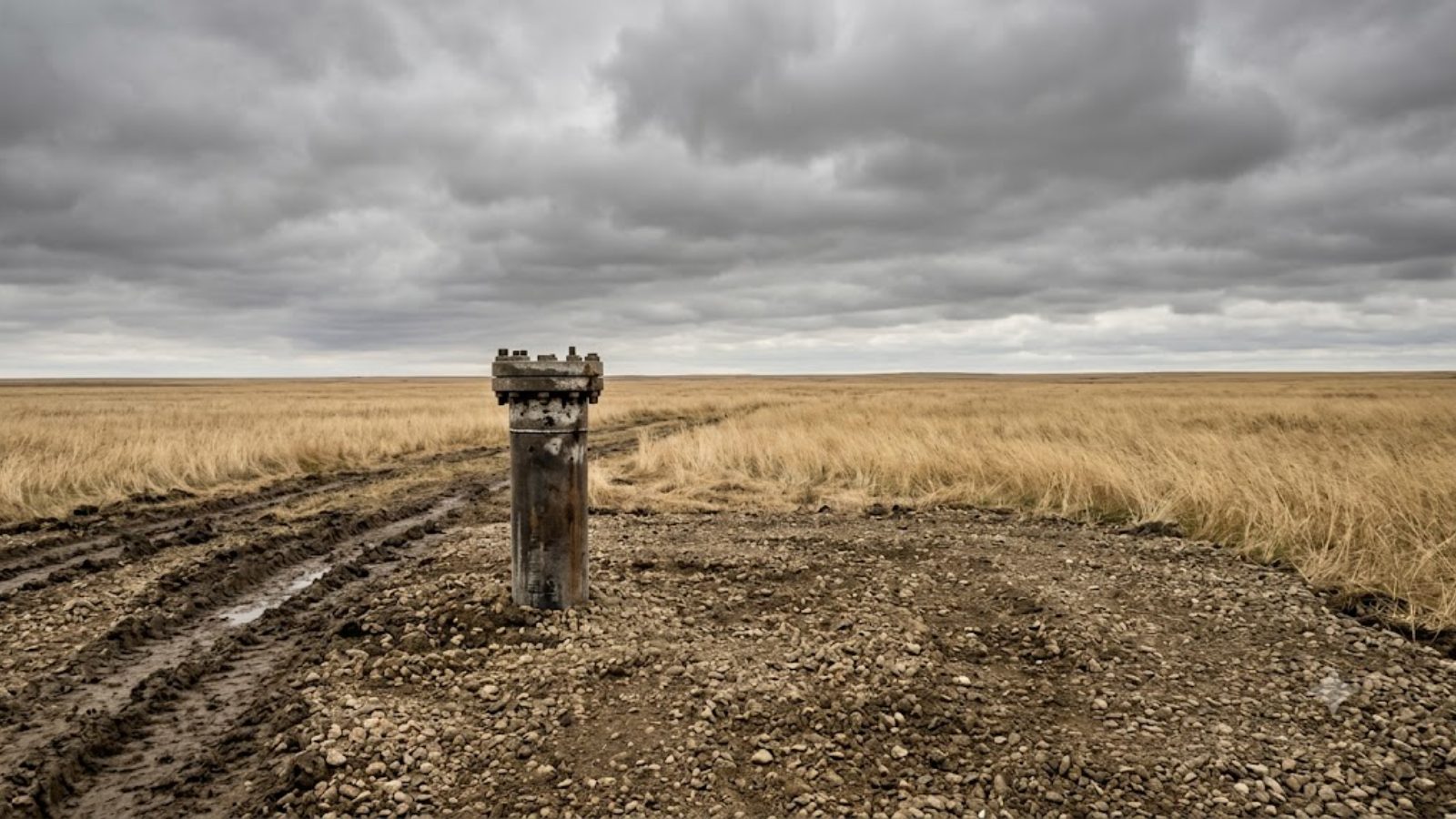
Residents of Parsons, Kan., agree on many things. Whether to put an experimental nuclear reactor a mile deep in the granite beneath their town isn’t one of them.
The Hole
Parsons, population 9,600, sits about midway between Kansas City and Tulsa, Okla. Deep Fission drilled a first test hole this spring on 100 acres at a mostly overgrown industrial park dotted with old munitions bunkers just outside town. The plan is to send a canister loaded with nuclear fuel down a third hole to heat water a mile underground and generate electricity on the surface in 2027 or 2028 — an astonishingly short time frame by industry standards.
The so-called Gravity Reactor is the creation of Liz Muller and her father, Richard Muller, emeritus professor of physics at the University of California, Berkeley. Its innovation is not the reactor: it uses a common, scaled-down design. The innovation is putting it underground, which avoids the need for hulking containment buildings, because the mile-deep hole provides the necessary pressure, cooling and containment. A single reactor will generate just 15 megawatts, enough to power about 12,000 homes, but Muller envisions an array of 100 or more, providing more than a gigawatt — enough for a data center.
The project is one of 11 in an Energy Department pilot program designed to build and test small, advanced reactors, using expedited procedures for environmental reviews. “It’s allowing us to develop a first reactor within a time frame that had been unthinkable previously,” said Liz Muller, Deep Fission’s chief executive. The renewed interest comes amid soaring electricity demand, much of it driven by data centers for artificial intelligence.
The Argument
“Any time you’re putting a nuclear reactor in a hole, it’s kind of scary,” said Verlyn Bolinger, an insurance agent who sits on the Parsons city commission and is now mostly excited by the prospect. “It’s great that it’s here. It’s kind of bad that we’re the guinea pigs.” Jerel Johnson, an IT professional who planned to retire in Parsons, was blunter: “I can’t think of a worse idea.”
Nuclear watchdogs say the administration is moving too fast and cutting corners; this spring, 12 attorneys general argued that circumventing standard environmental reviews would put communities at risk. “It’s simply unacceptable to even consider exempting Deep Fission from a peer-reviewed environmental impact statement on the generation of high-level nuclear waste under Parsons,” said Paul Gunter with Beyond Nuclear, a group that opposes nuclear power and weapons. A local opponent formed a nonprofit, the Prairie Dog Alliance, and questions how the company will perform maintenance underground and why drillers are operating under oil-and-gas regulations rather than nuclear ones. The Energy Department said the administration is focused on safety and security.
Muller said the plan to store spent fuel underground is safe, that the reactor is too deep to affect aquifers, and that Deep Fission will follow all nuclear and oil-and-gas regulations. The Nuclear Regulatory Commission would still oversee the commercial licensing needed to sell electricity; dozens of firms are designing smaller reactors, a handful have begun construction, and none yet operate commercially in the U.S.
No trade. The nuclear renaissance’s real constraint is the county commission, not the physics — and the licensing calendar, not the engineering one. Twelve attorneys general and a local nonprofit can add years to a timeline that a borehole cannot.
Action: our uranium-and-utilities exposure stays index-shaped while the siting wars play out. The demand signal underneath this story — data centers hunting firm power — is the one we already own through the utility and infrastructure sleeves, and it does not require guessing which startup wins.
- XLU · Utilities · index-shaped exposure
- Private · Deep Fission · not listed, no position