On June 17, Washington and Tehran signed an interim memorandum of understanding — the “peace deal” that sent oil sliding toward $68 last week as traders priced in Iranian barrels returning to market. On June 21, Treasury issued a license permitting Iranian oil sales. That was the détente. It lasted three weeks.
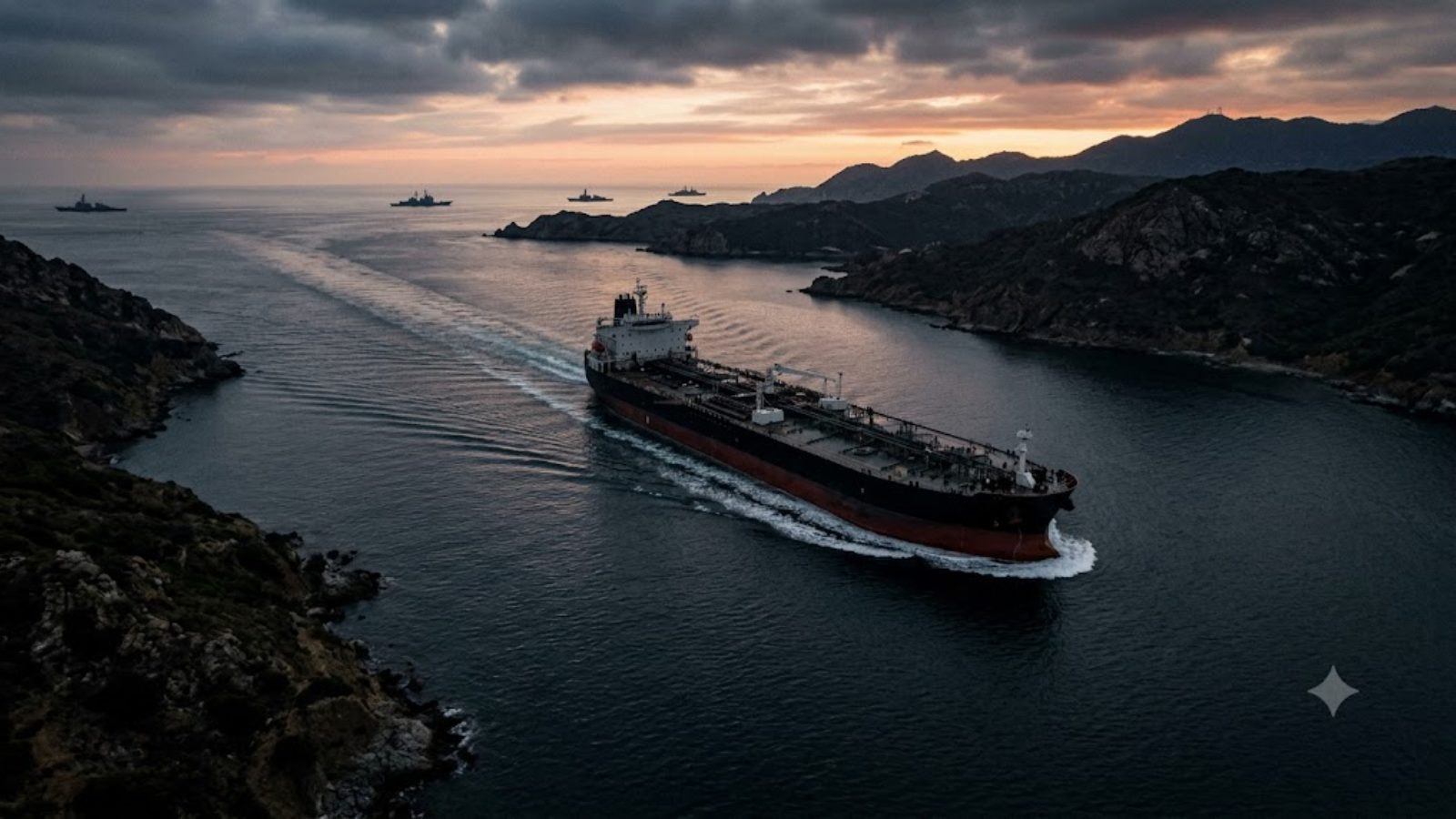
Then Iran struck three commercial ships near the Strait of Hormuz with antiship missiles and drones. The U.S. response was fast and large: strikes on more than 80 targets plus more than 60 small boats. And the financial response came with it — Treasury revoked the June 21 oil-sale license, with a grace period running only to July 17. The barrels the market spent June pricing back in are now being priced back out, on a nine-day fuse.
West Texas Intermediate rose $1.89, or 2.76%, to $70.44. Brent pushed to almost $76, up roughly 5%. The reason a skirmish moves the global price that much is geography: roughly 20% of the world’s oil transits the Strait of Hormuz, with traffic running 30 to 60 crossings a day. There is no pipeline workaround big enough. When the strait gets dangerous, every barrel on earth gets repriced — including the ones that never go anywhere near it.
The same day, Shell (SHEL) rose 3.4% in London after telling investors its gas-trading division’s results would be “significantly higher” for the second quarter. Note what that update actually contained: Shell has lost roughly 10% of its production — its Pearl gas-to-liquids plant was hit in March, along with its 30% stake in a QatarEnergy LNG facility — and cut integrated-gas guidance to 610,000–650,000 barrels of oil equivalent a day. And the stock went up, because refining margins climbed to roughly $20 a barrel from $17 with utilization running near 100%, and volatile gas markets are exactly where a giant trading desk earns its money.
That is what an integrated energy major is: a machine whose parts profit from the very disruptions that damage its other parts. It is the closest thing markets offer to insurance that pays you the premium.
Our energy sleeve isn’t a bet that war continues — we’d be delighted for it to end. It’s a hedge against the fact that a fifth of the world’s oil moves through a waterway that can close on a Tuesday. The majors pay you a steady dividend in the calm stretches and reprice violently upward in the loud ones. Either way, a retiree’s portfolio gets paid.
First, don’t trade the headlines. Anyone who sold energy on the June 17 MOU sold a week before the reason to own it reasserted itself. The round trip from $68 to $70-plus took one session; no household portfolio should be trying to time that. Second, check whether you own the hedge at all. Broad index funds carry only a sliver of energy — far less than the sector’s weight in your actual cost of living. Gasoline, utilities, airfares: when oil spikes, your expenses go up, and an energy sleeve is the offset. Third, insist on getting paid to wait. The version of this hedge we hold is the dividend-paying kind — cash flow in peacetime, protection in wartime, and no forecast about Tehran required.