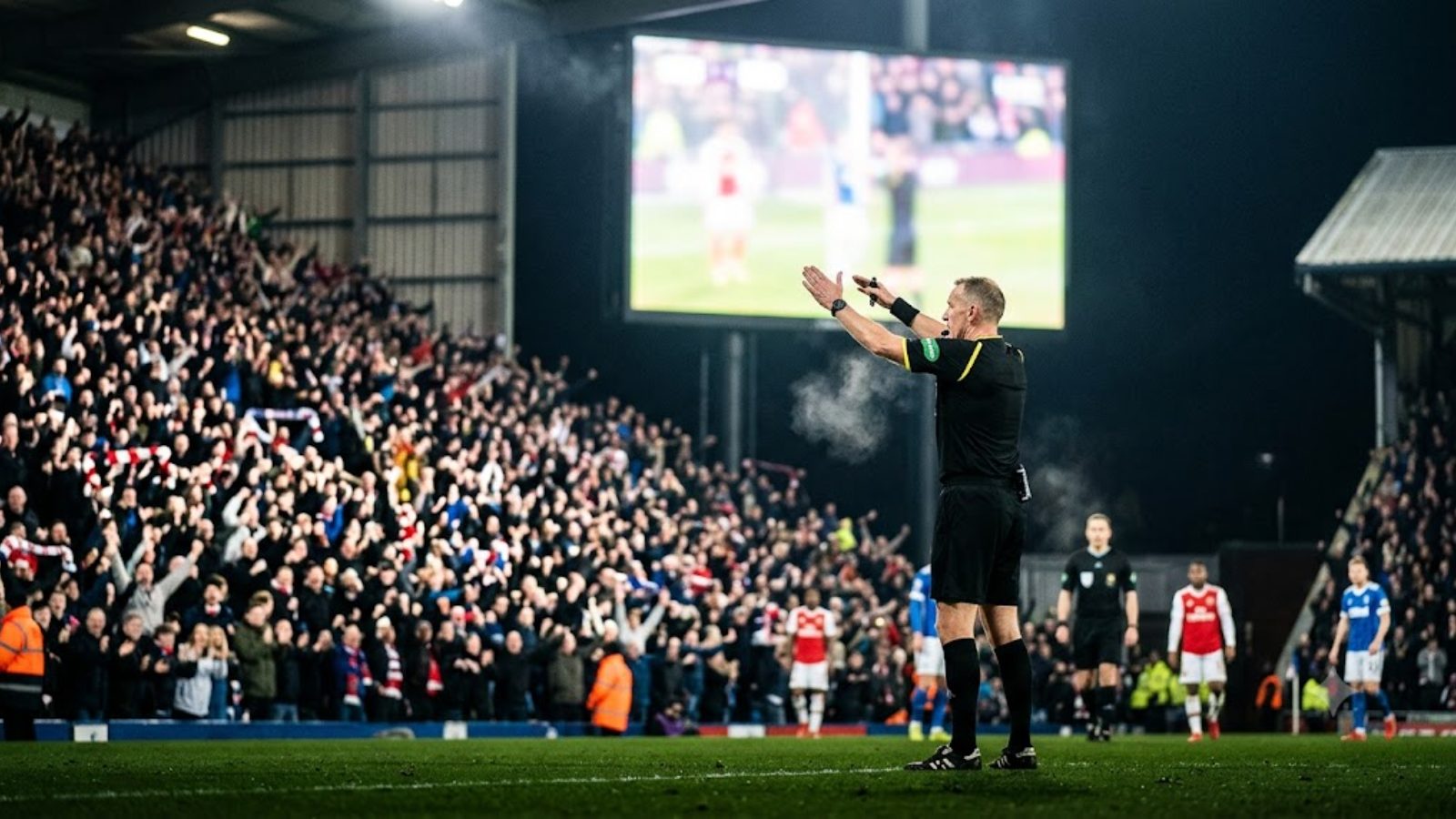
Egypt scored on Argentina last week — a real, stadium-shaking goal — and then a man in a booth took it away for a foul that happened 100 yards up the pitch and about 15 seconds earlier. A match later, Croatia lost a goal to a ball sensor that flagged a graze off somebody’s hairline, a call fans instantly christened the “Hair of God.” The Wall Street Journal’s Jason Gay has had enough of the replay booth, and honestly, so have I. His working rule is a good one: when the explanation of a call makes everyone in the room scrunch their face, the technology has stopped serving the game.
Buried in the same coverage is a stat I’d frame on every investor’s wall. Lionel Messi — the greatest player alive, three goals in thirteen minutes against Egypt — converts penalties at 77%: 114 of 148, dead league average. Harry Kane, mortal and wonderful, hits 89%. The gap isn’t talent, it’s method — Messi reinvents every kick, Kane grooves the same boring run-up every single time. Now put the two halves together, because behavioral finance already has a name for what the replay booth does to your money: myopic loss aversion. Zoom in on a portfolio frame by frame and you’ll find a red Tuesday, an ugly week, a quarter that scrunches your face — and because we feel a loss roughly twice as hard as we enjoy the matching gain, the more often you look, the more the pain piles up and the more tempted you are to “rule” on a perfectly good goal from a place of anxiety. As a general planning principle, the fix is Kane’s, not Messi’s: automatic contributions, scheduled rebalancing, and a written plan you review on a calendar you set when you were calm. Nobody cheers the ninth identical run-up. That’s rather the point.
So yell at the VAR screen through the semifinals — it’s genuinely good for you — just don’t bring the replay booth home to your brokerage account. Here’s the thing about a forecast: if you can already see the weather turning, you don’t wait for the downpour to find out whether the roof holds, you glance up at it today while the sun’s still out. A review runs about fifteen minutes — bring your latest statement, we’ll make sure the run-up’s grooved, and then you can go back to ignoring the account like a professional.
Nothing to trade here — this is the Off Duty read. But the discipline point stands and it’s the whole practice in one sentence: a repeatable process, reviewed quarterly, beats brilliant improvisation reviewed hourly. If your current plan depends on in-the-moment genius, let’s give it a grooved run-up instead.