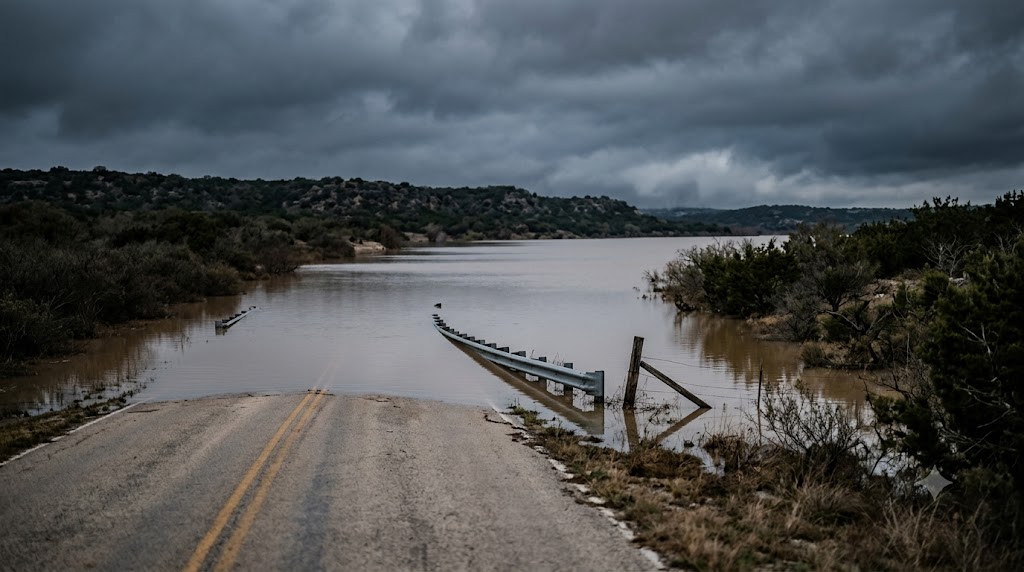
One year, almost to the day, after the Camp Mystic disaster, the Texas Hill Country flooded again — two feet of rain in hours, two dead, more than 230 rescues, and a state of emergency declared across the region.
The hydrology is brutal and specific: limestone canyons funnel water fast, and the region’s rivers can rise dozens of feet in a single night. Everyone knows this. The rain, increasingly, outruns the knowing. The water keeps arriving faster than the infrastructure budget.
The financial system is quietly repricing that sentence: insurance premiums, municipal borrowing, land values in flood plains. For the book, it files under the same watch as the wildfire smoke — insurers (AIG, AIZ) on claims frequency, and the long, unglamorous infrastructure spend that follows every anniversary like this one.
Files under the same watch as the wildfire smoke: extreme weather is now a recurring line item, not an event. Channels — insurers (AIG, AIZ) on claims frequency, municipal credit in exposed regions, and the slow infrastructure spend that follows each disaster. No action today; the books’ insurance-sector exposure stays watch-column while claims season develops.