Every thesis deserves an adversary, and this week the oil market got one in print. The Wall Street Journal’s Heard on the Street column — a desk we are going to carry in every edition from here on, because the analysis is usually the sharpest thing in the paper — made the argument that runs directly against the energy call we have been making since May. We would rather print it than hide from it.
The Crash Diet
The claim is simple and the evidence is not friendly. “China is more in control of its oil consumption than anyone realized,” the column argues, and that will unsettle oil bosses. During one of the worst energy crises in history — brought on by the Iran war — the crude market’s top customer cut imports by 40%.
The arithmetic: China imported 11.6 million barrels of crude a day on average in 2025, according to American Petroleum Institute data. By June of this year, imports had collapsed to around seven million barrels a day. A single-country drop of that size has not happened before — not even during a major recession.
And it happened without a recession. China’s economy grew 4.3% in the second quarter. That was a slowdown from the first three months of the year, but hardly the sort of thing anyone would associate with a collapse in energy consumption. The country did not stop needing energy. It stopped needing to buy this particular kind of it, on the spot market, at these prices.
“The OPEC of Oil Demand”
“We tend to joke among ourselves that China is the OPEC of oil demand,” says Homayoun Falakshahi, head of crude oil analysis at Kpler. That is the line worth writing on the wall of every energy desk this quarter, because it inverts the assumption the whole market has been priced on.
Traditionally the Organization of the Petroleum Exporting Countries used production quotas to move the price, with U.S. shale producers adding supply once prices went above roughly $65 a barrel. Demand for oil was assumed to be relatively inelastic — you burn what you burn. “The demand side can now influence the market and that is quite scary for suppliers,” says David Fishman, a principal at the energy consulting firm the Lantau Group.
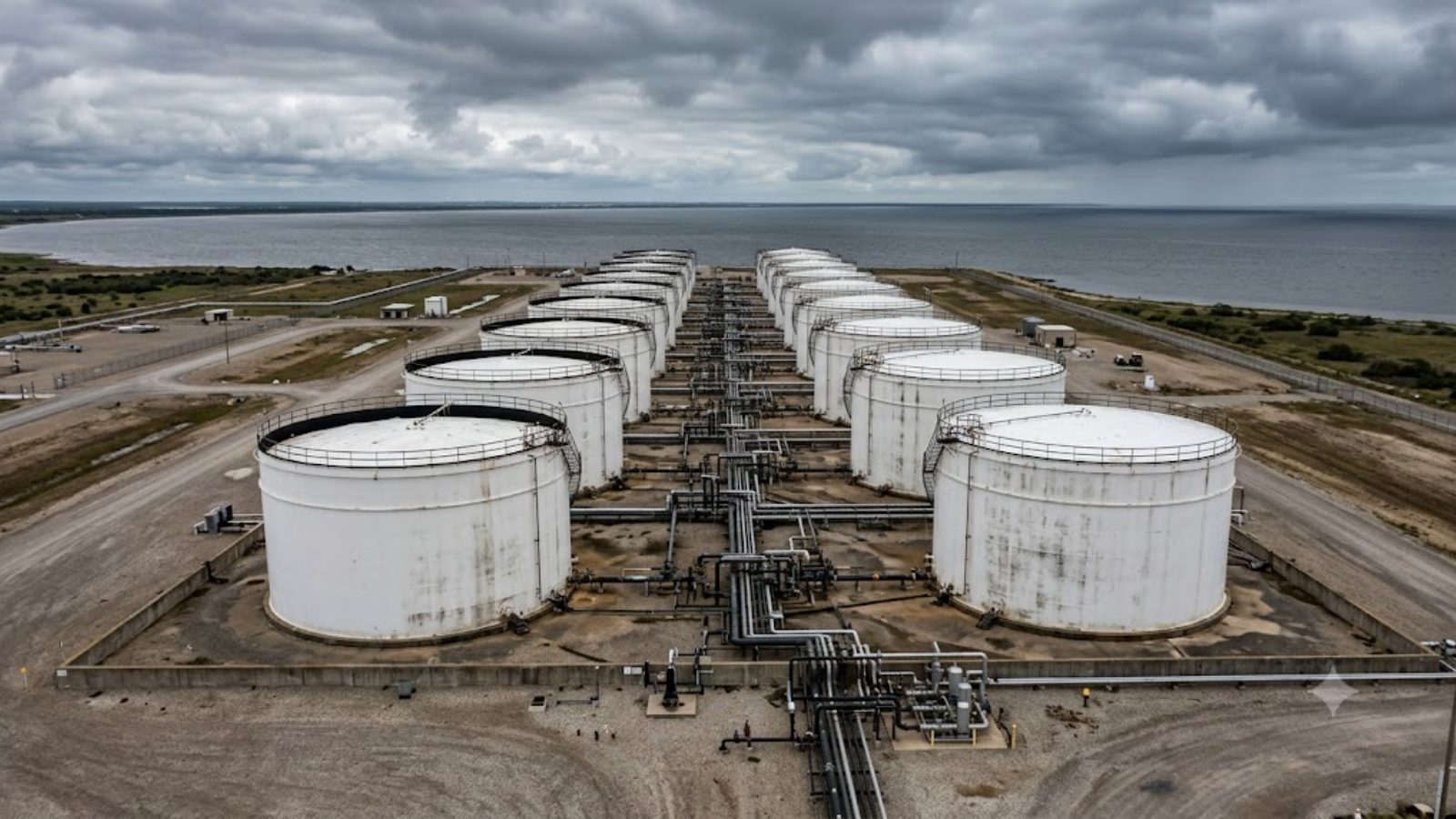
The pullback acted as a shock absorber for the global economy, keeping a lid on prices, and it was a big surprise to commodities traders — who are now trying to work out how much longer China can stay quiet in the market. According to Kpler data, Beijing can comfortably suppress its crude imports for another six months at the rate it is drawing on its stockpile. Even after that length of time, China would still have close to 1.1 billion barrels remaining in storage — a mixture of refinery and commercial stocks and the country’s strategic petroleum reserve.
How a Country Builds an Off Switch
The ability to dial down imports this way is the result of years of planning by Beijing to reduce dependence on overseas oil. There were signs the country’s energy system had shifted before the war made it visible: more than half of all new cars sold in China in 2025 were electric. American technology executives noticed last year that China’s artificial-intelligence players were not experiencing the same scramble to find power for data centers, thanks to the country’s massive rollout of renewable-energy infrastructure.
Then the war supplied the demonstration. As well as dipping into emergency reserves, Beijing restricted refinery runs and banned fuel exports at the start of the fighting, which meant refineries did not need to import as much oil and the domestic market stayed well supplied. Consumer behavior did the rest: more people drove electric vehicles instead of gasoline cars, or took high-speed electric trains instead of domestic flights.
There is a limit. Beijing might not want to drain its stores too much. Inventories were at 1.07 billion barrels early last year when the Chinese government announced a major stockpiling drive — which could be a threshold that would send China back to the spot market to buy more oil. The return of a heavyweight buyer would push up the cost of a barrel. But that is a ceiling on the downside for the demand side, not on the upside for the price.
Second Year Running
This is the second year in a row that China’s behavior has had a surprising effect on the oil price, and last year it worked the other way. Some analysts were forecasting $50 oil toward the end of 2025 because of an oversupplied market. The widely expected glut never materialized — because Beijing was hoovering up so much crude to add to storage.
Same actor, opposite direction, twice in eighteen months. That is the definition of a swing consumer, and swing consumers get paid the way swing producers used to: by being the last party in the room who can change their mind.
The column’s closing observation is the one with the longest tail. Decisions made in Beijing are currently bringing relief to other countries that depend on imported fossil fuels — and those countries are taking note of the breathing space China gave itself by electrifying its transport fleet and diversifying its energy sources. Some markets are already seeing a surge in imports of electric vehicles and solar panels since the war began, especially in Southeast Asia. If that is an early indicator that other governments are starting to follow Beijing’s lead, it is more bad news for oil suppliers — and it is the kind of public-relations win climate groups never managed to engineer on their own.
This is the strongest argument on the other side of our oil thesis, and we would rather print it than hide from it. Our floor is geopolitical and it held all week — you can read the scorecard in this week’s stress test. This piece is about the ceiling. If the biggest buyer can flex demand 40% at will, rallies get sold faster and higher prices carry their own cure.
It does not change the construction: majors at sleeve weight as insurance, never a bet, no tanker or refiner momentum. It does retire any temptation to add on strength. Action: HOLD the energy sleeve exactly where this week’s reinforce put it — Chevron (CVX) and Exxon Mobil (XOM) at existing weights; AVOID adding above it. File under: why we read the other side’s best case on purpose. Sean’s oil letter takes this head-on.
- CVX · Chevron · hold at reinforced sleeve weight, no adds on strength
- XOM · Exxon Mobil · hold at reinforced sleeve weight, no adds on strength
- PTR · PetroChina · reference only, not held
- Kpler · Crude analytics · source, not a ticker
- Lantau · Energy consultancy · source, not a ticker
Related from this edition: our oil thesis, stress-tested in public · Sean’s letter on the barrel