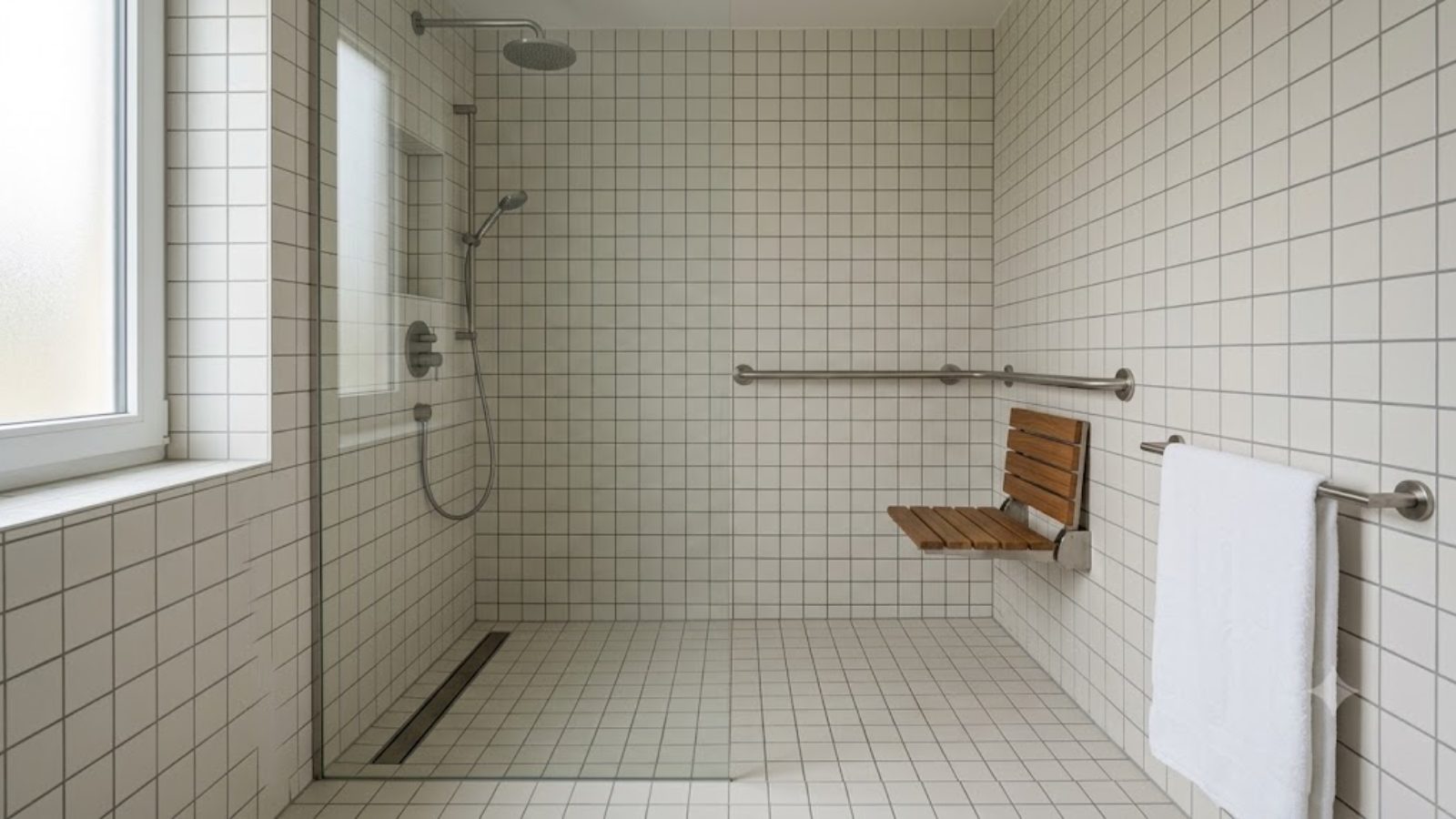
If Americans fell less, they would live longer. That is not a slogan; falls are the leading cause of injury-related death among adults aged 65 and older, and many of them happen in a room most people have never once thought of as hazardous.
The Architect’s Case
Lloyd Alter, a Toronto-based architect and author and a longtime writer on green architecture, believes the most sustainable building is the one that remains useful the longest. When it comes to houses, he says, few are designed to serve their occupants safely into their 70s, 80s and beyond. “Unlike deaths from guns and cars, we don’t talk about deaths from falls as something we can fix,” he says. “We apparently accept them as a function of aging, when they’re really about bad design.”
His indictment of the bathroom is specific. It is wet, it is slippery, it requires us to contort ourselves, and it is filled with germs. Freestanding tubs look good in magazines and may be safe during one’s peak years of agility, but they are close to impossible for older people to get in and out of: the edges are thin for effect rather than wide enough to sit on and swing a leg over, the bottoms are often rounded, and with no walls nearby there are no grab bars to help. If you have one, Alter says, it is probably a good idea to reinforce your ceiling — because at some point you might need a winch and a bosun’s chair to get in and out of it.
Ordinary tubs are safer, but most double as showers, which combines a curved bottom with soap and water. Getting out, one foot rests on a slippery surface while the other lifts high over the side and down onto another slippery surface. Neither foot is stable. His solution: a stall shower separate from the tub — or, if there is no room, a shower without the tub — and never put the controls under the water source. Every shower needs grab bars. There are many more deaths from falls than from fires, he notes, but smoke detectors are required everywhere.
Floors, Toilets, and the Bathroom of the Future
Floors come down to what engineers call the coefficient of friction, a measure of slipperiness. Scientists in Arizona are strapping volunteers into harnesses and lowering them onto wet floors to find which surfaces are safest — but you do not have to compute anything to know that matte tiles beat shiny ones, and that small tiles beat big ones because the grout lines provide friction.
The toilet is the delicate part of the conversation and, Alter argues, a large share of the problem. Getting to, from, on and off it are all opportunities for falls — some caused by orthostatic hypotension, the drop in blood pressure that can follow standing up quickly, and some by vasovagal syncope, which the Mayo Clinic describes as a sudden drop in heart rate and blood pressure that reduces blood flow to the brain and causes a brief loss of consciousness. Loss of consciousness means falls. Anatomically we are built to squat; sitting or standing makes us strain, and the higher we sit the worse it is. Yet builders and renovators increasingly choose taller “comfort height” toilets, often with good intentions.
The ideal, he says, is a lower toilet with grab bars that make it safer to get on and off. Almost nobody has grab bars around their toilet, but they should — and grab bars do not have to be ugly and institutional-looking. Asked whether the bathrooms of the future will prioritize safety, Alter is skeptical: when magazines show the bathroom of the future, it is usually the bathroom of the present with more gizmos, a killer bathtub at the top of two slick steps, a shower with no grab bars, and a toilet you would fall off if you tried to reach the paper. Stop adding digital bells and whistles, he says, and design fixtures that people — especially older people — can use safely.
This is a planning page wearing a design byline. A $2,000 bathroom retrofit defends a retirement plan better than most insurance riders do, and it is the cheapest line item in the long-term-care conversation we have with every client at 55. One fall that ends in a hip fracture can move a plan from “funded” to “funded if nothing else happens.”
Action: no trade. Put it on the household list next to the beneficiary review: stall shower, matte small tiles, grab bars at the shower and the toilet, and controls that are not under the water. See Sean’s letter on wealth and health and the long-term-care planning page.
- None · No position implicated · planning content