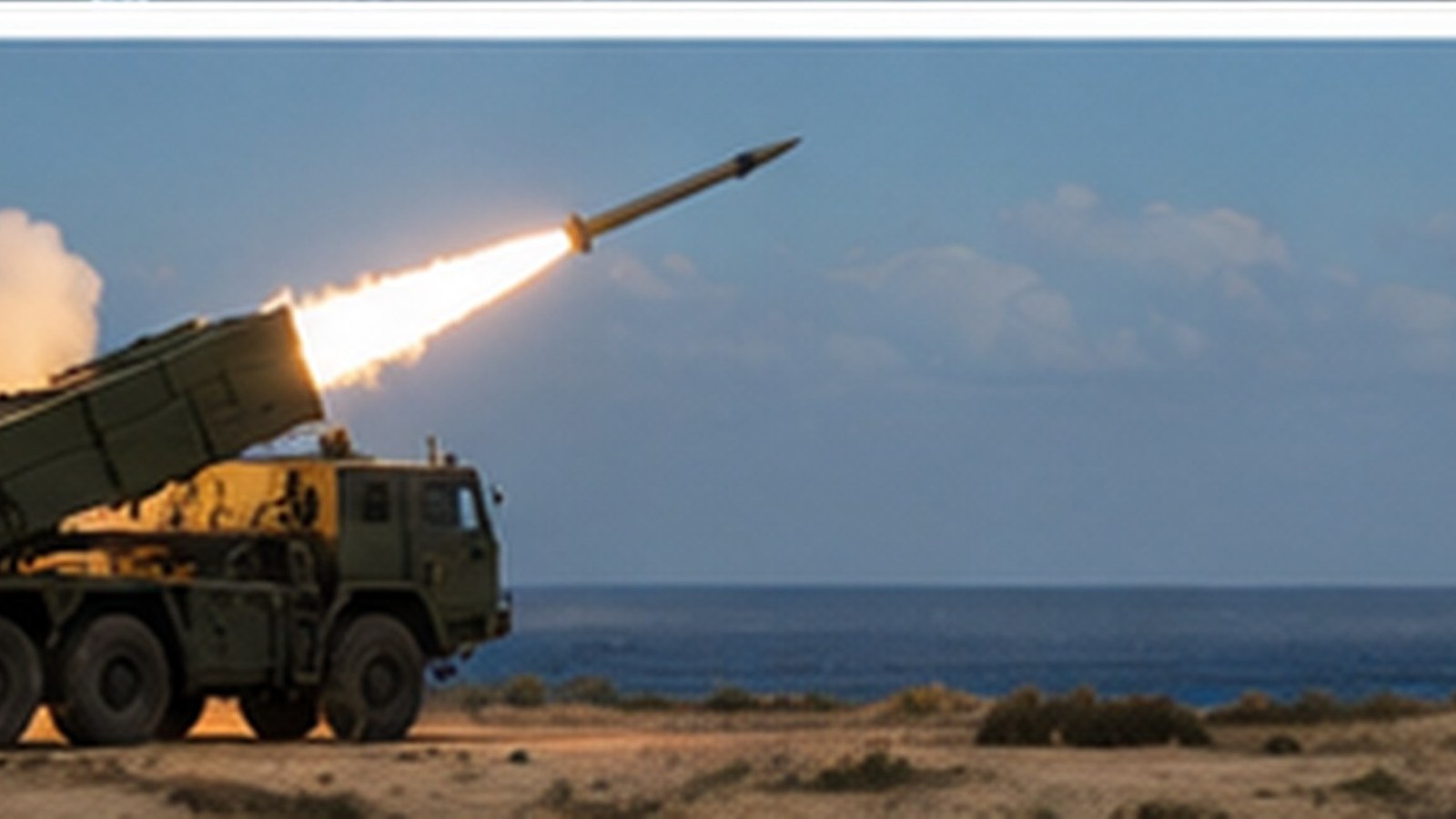
A $35 Billion Restock: Why The Defense Sleeve Earns Its Keep After A War.
The Pentagon just handed Lockheed Martin up to $35 billion to rebuild the interceptor stockpiles the Iran war drew down. That kind of multi-year, government-funded backlog is the whole point of owning defense — for the cash flow, not the war.
Capital Wealth Daily · Analysis by Sean Anees Saifi · June 25, 2026
A war emptied the magazine — now someone has to refill it.
The Restocking Order
Here is the kind of headline that doesn’t make the front page but should make your retirement plan. The Pentagon awarded Lockheed Martin (LMT) a contract worth up to $35 billion to build hundreds of THAAD interceptors a year, replenishing the U.S. stockpiles that got drawn down fighting the war with Iran. It’s a seven-year award, and it follows a $4.7 billion award back in April to speed up Patriot missile production. Each THAAD interceptor can cost more than $12 million — so this is a contract measured in years of factory output, not a one-week trade.
This is what rearmament looks like on the income statement. A shooting war doesn’t just spike the stock for a day; it physically empties the magazine, and somebody has to spend the next several years refilling it with $12 million missiles. That “somebody” is the U.S. government, and the company on the other side of the check is the one you may already own.
Backlog Is The Whole Point
I keep telling clients the energy-and-defense sleeve isn’t a bet that the world blows up — it’s insurance that happens to pay you while you wait. Energy is the inflation hedge. Defense is the geopolitical one. And the reason defense belongs in a retirement portfolio rather than a trader’s account is exactly this $35 billion print: it converts a scary news cycle into visible, durable, multi-year revenue.
That revenue is what funds the dividends and the buybacks an income investor actually lives on. Lockheed doesn’t need a new war next quarter to pay you; it needs to keep working through an order book that Congress already wants filled. And the same dynamic runs across the broader sleeve — RTX (RTX) on the Patriot side, plus Northrop Grumman (NOC) and General Dynamics (GD) carrying their own slices of the rearmament cycle. It’s a barbell of government-funded backlogs, not a single name riding a single headline.
You don’t own defense to profit from the next war. You own it because the last one left a multi-year bill the government is contractually obligated to pay.
The Footnote That Does The Heavy Lifting
Now the part that keeps me honest. Both the THAAD and the April Patriot awards are what the Pentagon calls “undefinitized” — which is procurement-speak for “we’ve agreed to the work but still need Congress to come up with the rest of the money to finalize it.” In this Washington, “Congress will fund it later” is a sentence doing a lot of heavy lifting. So I’d treat the $35 billion as a strong signal of direction, not a wire transfer that has already cleared.
That’s why this is a sleeve, sized as insurance, and not a concentrated wager. The thesis — rearmament drives years of backlog — is sound. The timing of the cash flow has a political dependency I don’t control. You position for the durable trend and you size for the footnote.
What This Means For The Book
This is the defense half of our energy-and-defense sleeve doing exactly what it’s built to do. We don’t own Lockheed Martin (LMT) because we’re rooting for the next conflict; we own it because a real shooting war turns into a $35 billion, multi-year, government-funded order backlog — the kind of visible revenue that supports the dividends and buybacks the income side of the book runs on.
We hold it sized as insurance, not as a war trade, and we keep the “undefinitized, pending Congress” risk in plain view. Paired with the energy half, it’s a sleeve designed to earn its keep precisely when the headlines turn ugly — and to keep paying you in the quiet stretches in between.
Themes & Tickers In This Article
LMTLockheed Martin — THAAD, missile defense, backlog
RTXRTX — Patriot side of the rearmament cycle
NOCNorthrop Grumman — defense barbell
GDGeneral Dynamics — defense barbell
DefenseOwned as insurance, sized for the Congress risk
Want to talk about where a theme like this does — and doesn’t — belong in your plan? Bring your statement; we translate the headline into a position-level decision.