Crude ran from $118 in March to $72 this week and landed almost exactly where it sat the day before the war started. The market priced an apocalypse, collected the premium, and handed the money back — and that round-trip is the whole case for how you own energy.
Capital Wealth Daily · Analysis by Sean Anees Saifi · June 26, 2026
A post-war record 78 tankers moved through Hormuz this week — and oil ended up right where it began.
A Three-Month Trip To Nowhere
U.S. crude settled at $71.92 on Thursday. Brent briefly dipped below the $72.48 it traded at the day before the U.S.-Iran war began. Sit with that for a second: prices peaked at $118.35 back in March, the world spent a quarter convinced the Strait of Hormuz was about to close for good, and the benchmark wound up roughly where it started. That is the most expensive lap around the track you will ever watch a commodity run.
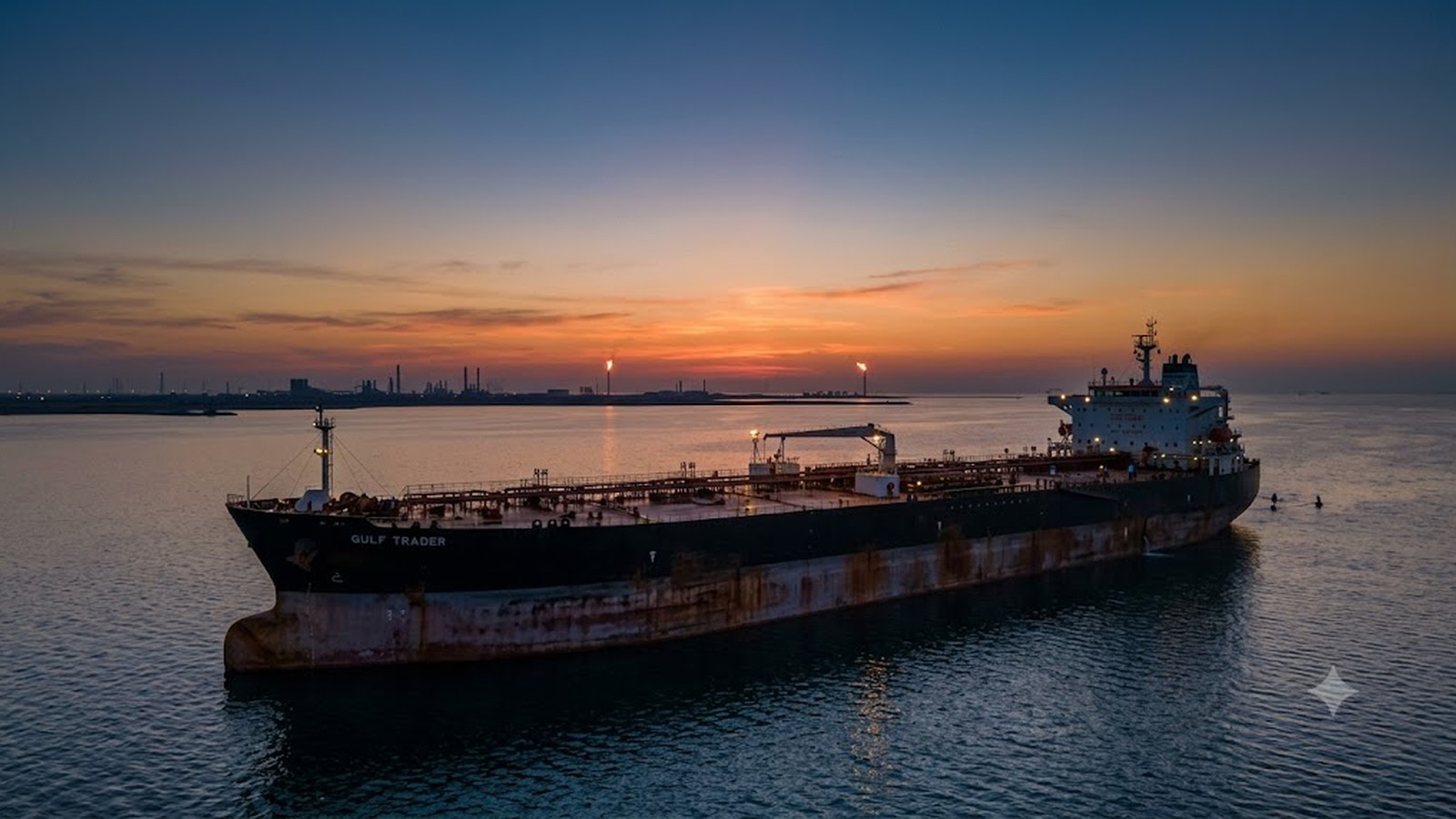
The reopening did the work. Just 11 days after Trump’s 60-day deal to reopen Hormuz, a post-war record 78 tankers transited the waterway on Wednesday — 57% of pre-war levels and climbing. The barrels are flowing again, the war premium has bled out, and the apocalypse everyone paid up for never showed.
The Calm Might Be Lying To You
Here is the part the headline buries. The flows came back through a “meaningfully different mix” than analysts assumed, and the people closest to the barrels are not relaxed. TD Securities and the CEO of Phillips 66 both warned the quiet may be deceptive, with Cushing inventories sitting about a million barrels below the level the market treats as comfortable. A thin cushion plus a tense neighborhood is exactly how a $72 tape becomes a $90 tape on a single weekend headline.
That is the thing to understand about an energy sleeve: you are not buying it because oil is going up. You are buying it because the world refuses to stay peaceful, and the next spike is always one phone call away. You hold the position through the round-trip rather than chasing it at the top — because by the time the war is on the front page, the premium is already in the price and you are buying the apocalypse retail.
The market priced an apocalypse, collected it, and handed the money back. You don’t own energy for the spike — you own it because the next one is a phone call away.
Why You Owned It The Whole Time
Picture the investor who chased crude at $118 in March, certain Hormuz was closing. He bought the top of the round-trip and is now underwater on a barrel that came all the way home. Now picture the one who simply held ExxonMobil (XOM) and Chevron (CVX) for the dividends through the entire arc — up the hill, over the cease-fire, and back down. He collected his payout in March, collected it again in June, and never had to be right about the war at all. Same scenery; very different ride.
What This Means For The Book
The energy-and-defense sleeve is, at bottom, a bet that the world does not stay peaceful — and you hold it through the round-trip rather than trade the headlines. That is why ours is built on ExxonMobil (XOM) and Chevron (CVX) for integrated cash flow and a growing dividend, not on a wager that the next Hormuz scare sends crude to $150. The dividend pays you the same whether oil is at $72 or $118, so you collect through the calm and you are already positioned when the calm turns out to be lying. We held the sleeve through the war, we held it through the peace, and we will hold it through the next phone call — sized to the cash it generates, not the spike we are hoping for.
Themes & Tickers In This Article
XOMExxonMobil — integrated major, dividend
CVXChevron — integrated major, dividend
WTIU.S. crude — $71.92, back to square one
EnergyOwned for cash flow, held through the round-trip
Want to talk about where a theme like this does — and doesn’t — belong in your plan? Bring your statement; we translate the headline into a position-level decision.