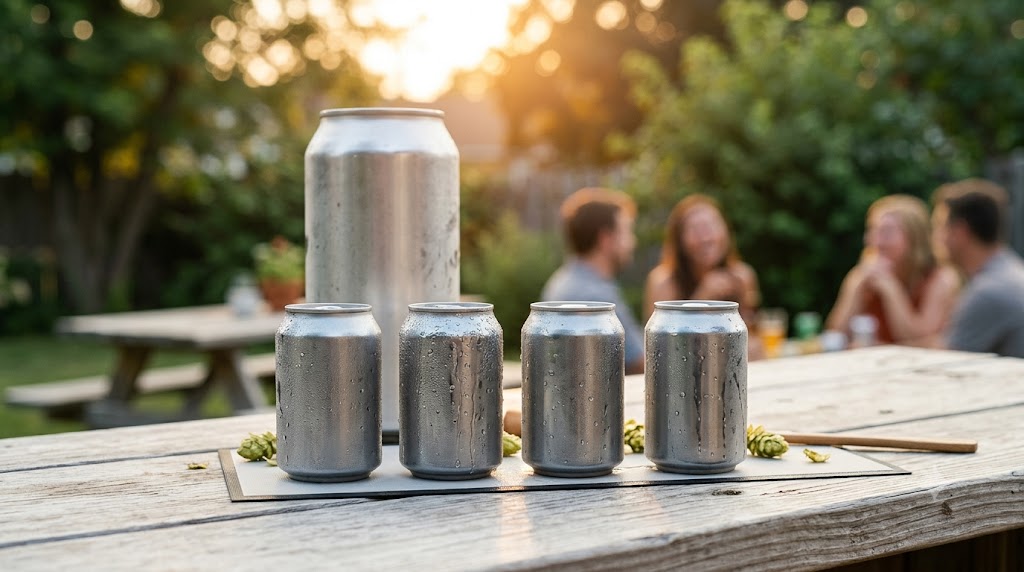
Big Beer’s Growth Plan Is A Smaller Can. That’s Smarter Than It Sounds.
For the biggest beer week of the year — July 4 sales run 37% above average — America’s brewers are betting on ‘ponies’: small cans for drinkers who want a beer, just less of it. It’s a tidy case study in selling less for more.
Capital Wealth Daily · Analysis by Sean Anees Saifi · July 3, 2026
The pony can: less beer, better margin, and a customer who feels good about both.
Small Cans, Big Week
Sierra Nevada and Modelo-maker Constellation Brands (STZ) are rolling out smaller-format cans and bottles — ‘ponies’ — into the July 4 window, when beer sales run roughly 37% above the weekly average. Sierra Nevada’s small-can Pils sold well enough that 16-packs are coming this fall. ‘Consumers don’t have to make a 12-ounce decision,’ as the beer wholesalers’ association CEO puts it.
The quiet driver, per Sierra Nevada’s own growth chief: the format appeals to people who want to moderate. The alcohol industry’s biggest headwind — a generation drinking less — just got converted into a package-size innovation.
When volume dies, sell smaller for more — and if the customer wanted less anyway, the margin is free.
The Premiumization Playbook
Do the math on a pony and you’ll usually find the price per ounce went up. This is the oldest consumer-staples play there is: when volume growth dies, sell smaller portions at better margins and call it a lifestyle. Candy bars did it, soda did it, and now beer’s doing it for the moderation era. The genius is that the customer is genuinely happier — they wanted less — so the margin gain doesn’t cost any goodwill.
For staples investors, this is the pattern that keeps mature brands compounding long after unit growth stalls: pricing power expressed through packaging. It’s why the boring names in the book keep earning through consumer downcycles.
The Planning Read
We own the staples sleeve precisely for this adaptability — brands that can re-price, re-package and re-position through any consumer mood. A company that can grow revenue while selling less product to people drinking less is showing exactly the pricing power a dividend depends on.
What This Means For The Book
This is the staples thesis in a beer can: mature brands defending cash flow through packaging and price when volumes flatten. The moderation trend that reads as a headwind for alcohol becomes, in the hands of a good brand, a premiumization lever — and that lever is what funds the dividends our income sleeve is built on. We stay with the consumer names that show this adaptability (the same muscle behind smaller candy bars and 7.5-ounce sodas), because a company that can raise per-ounce pricing while the customer applauds is a company that can pay you through any cycle.
Want to talk about where a theme like this does — and doesn’t — belong in your plan? Bring your statement; we translate the headline into a position-level decision.