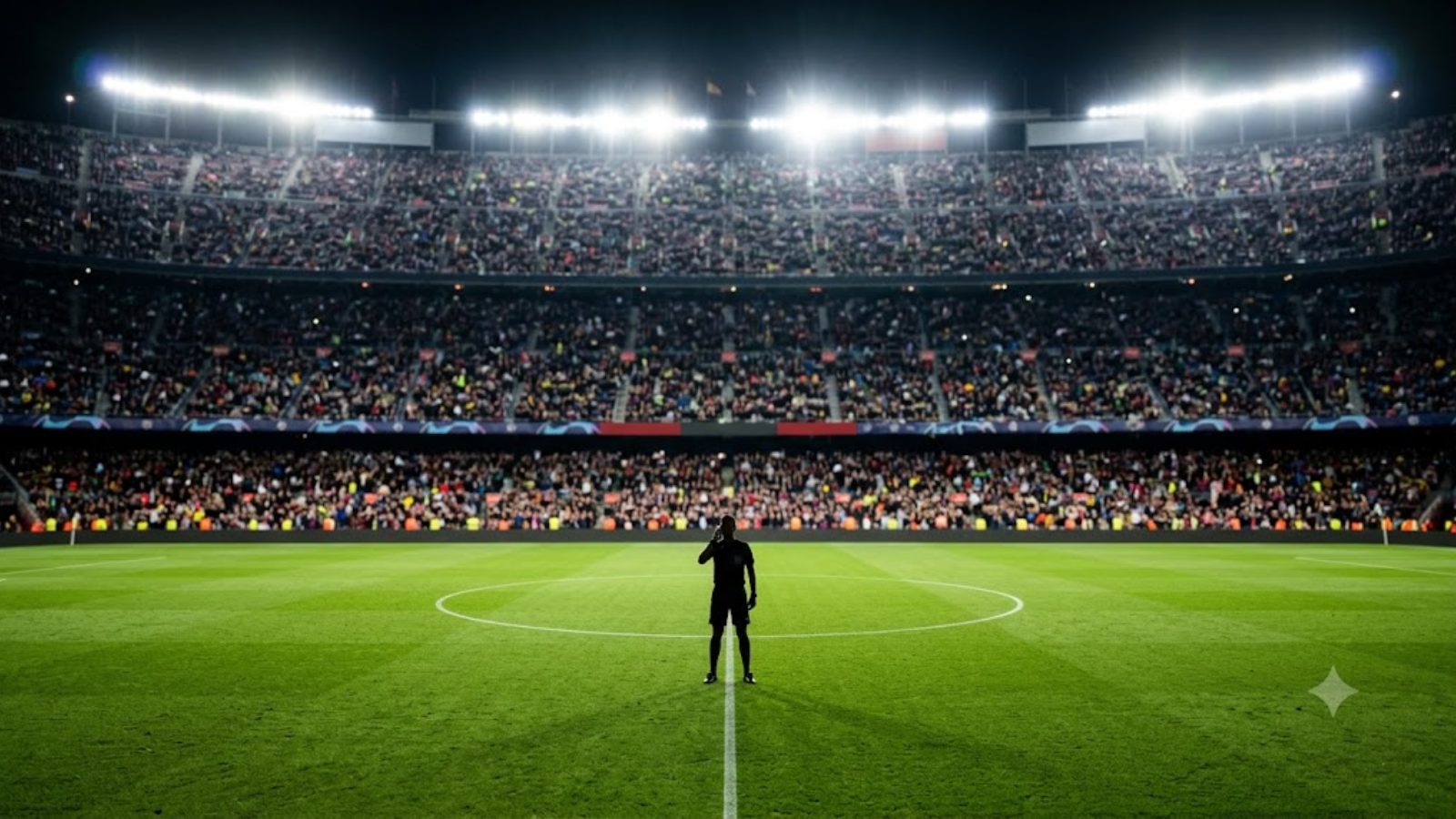
First, the game itself. Belgium beat the United States 4-1 in Seattle in the round of 16, and it wasn’t as close as one goal for a half made it feel. Charles De Ketelaere scored twice, including the decisive header; Malik Tillman’s free kick briefly tied it 1-1 and let a stadium dream for twenty minutes; then Hans Vanaken and Romelu Lukaku added late goals while keeper Matt Freese misplayed a ball he’ll be seeing at 3 a.m. for years. On the field, the better team won. Off the field is where this World Cup got strange.
Before the match, FIFA reversed the red-card ban on U.S. leading scorer Folarin Balogun — after President Trump confirmed he personally called FIFA president Gianni Infantino. (“All I did, I asked for a review… I can’t tell him what to do.”) Belgium’s federation said FIFA had “crossed a red line.” UEFA called the reversal “unprecedented, incomprehensible and unjustifiable.” Balogun and U.S. Soccer were fined $40,000; the Journal reported that Commerce Secretary Howard Lutnick and Andrew Giuliani had pressured FIFA; and the Journal’s own editorial page ran the headline “Donald Trump, World Cup Referee.” It wasn’t even the first time — FIFA earlier suspended a red-card ban for Ronaldo, too.
Elsewhere, the soccer was magnificent. England survived Mexico 3-2 at the Azteca — Jude Bellingham’s diving header in the 36th minute off Bukayo Saka’s cross, a Harry Kane assist on the second just two minutes later, then Jarell Quansah’s VAR red card, a Raul Jimenez penalty, and 108 total minutes of agony against a Mexico side under coach Thomas Tuchel that had won all four of its matches without conceding a goal. And in East Rutherford, Norway’s 6-foot-5 Erling Haaland — “The Terminator” — scored twice to eliminate five-time champion Brazil, 2-1. Neymar’s late penalty was the final World Cup act of his career. England–Norway meets in a Miami quarterfinal that should be appointment television.
Here’s why a financial advisor is writing about a soccer tournament. The entire value of a game — and the entire value of a market — rests on the belief that the rules are enforced by someone who can’t be called. Independent referees are to sport what independent courts, an independent Federal Reserve, and independent auditors are to your portfolio. The moment outcomes look negotiable, people don’t just distrust that outcome; they discount every future one. That’s why UEFA’s language was so sharp, and why investors should watch governance stories — in sports, in companies, in countries — with cold eyes. Trust is the asset being spent, and it does not rebuild at the rate it burns.
One great asset can beat a five-time champion. Norway is not a deeper team than Brazil; it simply owns the single most productive striker alive and built a plan around him. Portfolios work the same way — a handful of exceptional, durable assets, held with discipline, routinely outrun sprawling collections of famous names. And don’t confuse a bad result with a broken thesis. The U.S. lost 4-1, and yet the tournament drew a record 30 million American viewers. The team lost; the asset — soccer’s American audience — is doing better than ever. Investors make this exact mistake every earnings season: selling a great franchise because of one bad quarter, mistaking a scoreboard for a balance sheet.
First, when you evaluate any investment — a company, a fund, a country — ask who the referee is and whether anyone can call him. Governance risk rarely shows up in the numbers until the day it’s the only number. Second, remember the Haaland rule: concentration of quality, not quantity of names, wins knockouts and compounding alike. Third, separate results from theses — a 4-1 loss with 30 million watching is a bad day for a team and a great decade for the sport. We’ve been following the money side of this tournament all summer in our World Cup newsletter — the quarterfinals should be something.