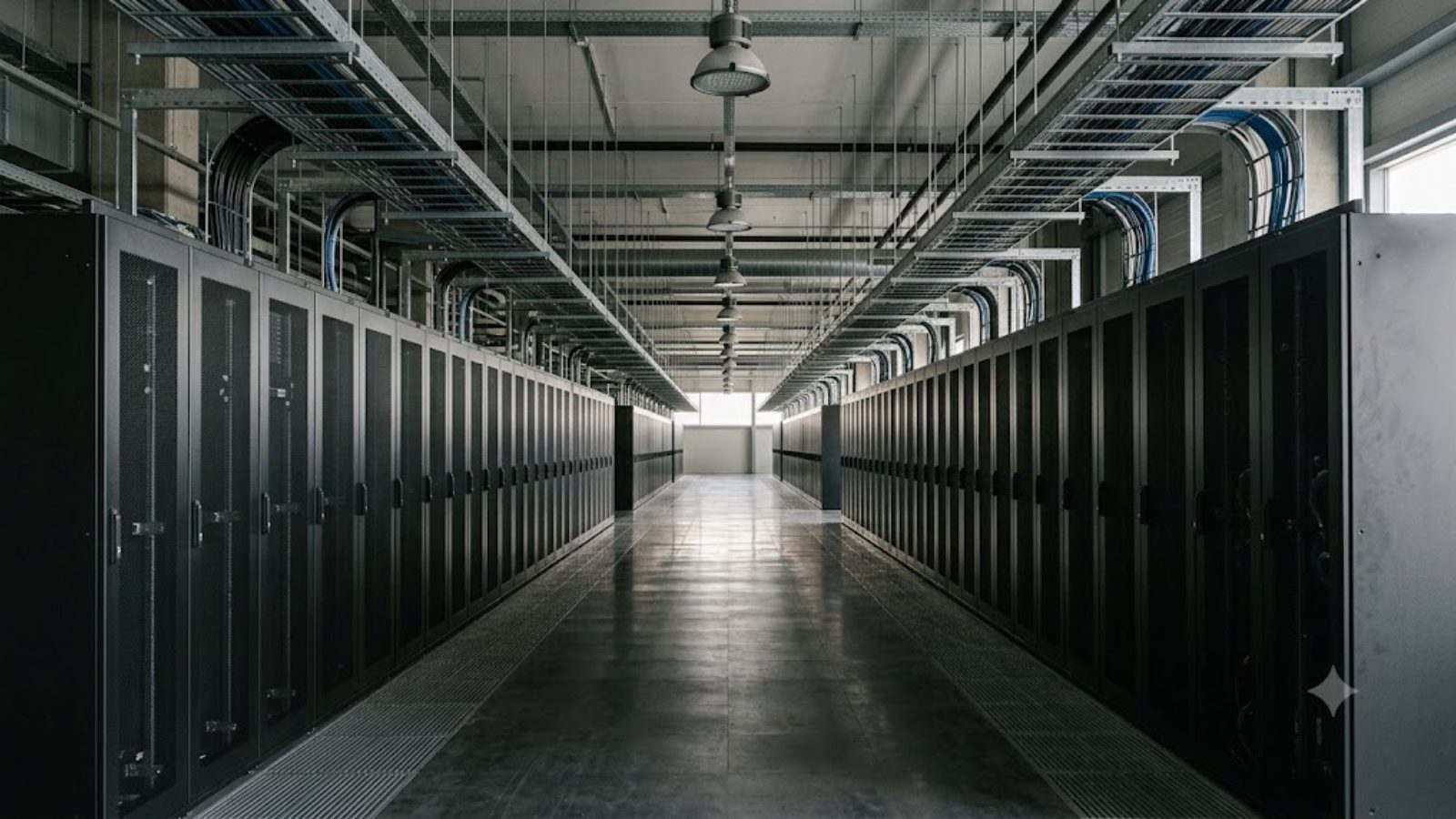
There is a moment in every capital-spending boom when the arithmetic stops working on its own and somebody has to lend it a hand. This week the Journal named the somebody. Nvidia (NVDA) is in talks to guarantee a series of financing vehicles worth roughly $250 billion behind an OpenAI data-center project in southern Ohio — a complex that, chips included, could cost more than $500 billion and would be the largest data-center project announced to date.
What the guarantee actually does
The structure is more interesting than the headline number. Nvidia would not be writing a check to OpenAI. It would be standing behind the financing vehicles so lenders feel more confident that the money behind the project is secure, according to people familiar with the discussions. The reason the guarantee is needed at all is stated plainly in the reporting: OpenAI has no investment-grade credit rating, being an unprofitable private company, and the guarantee would let the site’s developer raise debt at more favorable terms than it could without a financial backer.
Nvidia has already invested $30 billion in OpenAI, and it is separately discussing a deal to finance the chip purchase itself — a figure that could total $350 billion. Terms have not been completed and the people familiar cautioned that the deal could fall apart. The industry has a name for this shape of transaction: a credit wrapper, in which an investment-grade technology company uses its balance sheet to help a smaller company borrow for infrastructure. Alphabet’s Google (GOOGL) has done a version of it, backstopping some data centers for Anthropic, in part to increase sales of its own in-house tensor processing units.
The landlord is the government
The Ohio project is not a private real-estate deal wearing a technology logo. The power is controlled by the U.S. government and funded separately by Japan under a recent trade deal, and Commerce Secretary Howard Lutnick is involved in deciding who gets it. The campus would require roughly 10 gigawatts of electricity — enough to power several million homes — and will take many years to complete. The first phase is expected to be finished in 2028 with around 800 megawatts.
The site itself is a decommissioned uranium-enrichment facility about 50 miles south of Columbus, chosen in part so the partners can avoid the permitting fights and local opposition snarling data centers elsewhere. As part of Japan’s commitment to invest in the United States in return for lower tariffs, Japan agreed to invest $33 billion in a natural-gas power project on federal land in Ohio, to be operated by SB Energy — effectively controlled by SoftBank’s (9984.TO) Masayoshi Son. The U.S. government will collect a fee from SB Energy for operating the power plant, and Japan and the United States will split the power sales until Japan recoups its $33 billion, after which the American government takes 90% of the revenue. Lutnick, Son and Energy Secretary Chris Wright broke ground on the complex in March.
OpenAI has been in advanced talks to lease the site for several weeks and is among the companies that have shown the most interest, while Anthropic, Microsoft (MSFT) and Google have also spoken to Lutnick about it. If OpenAI signs, the data center would be its first as a tenant — a step toward controlling infrastructure it now primarily rents from cloud providers such as Microsoft, Amazon (AMZN) and Oracle.
Circular funding, named out loud
The Journal is blunt about the risk, and so is Nvidia. Such circular funding arrangements have caused concerns that the industry is vulnerable if investor sentiment shifts or growth slows for AI companies. In its most recent annual report, the company warned that data-center funding arrangements could lower its near-term cash flows and increase its exposure to customer credit risk. That sentence is doing a great deal of work. It is a chipmaker telling shareholders that the customer’s ability to pay is now partly the chipmaker’s problem.
The scale on the demand side keeps moving too. OpenAI recently raised its projected spending on computing power to around $750 billion through 2030, up from a projection of roughly $600 billion earlier this year, and it is not clear how the new deal would affect those projections. Both OpenAI and Anthropic are racing toward public offerings at eye-watering valuations, which increases the pressure to keep growing quickly.
What changed for a stock we already own
Nothing about Nvidia’s business quality changed this week. It is still a roughly $5 trillion company selling the scarcest industrial input in the world. What changed is the shape of the risk attached to owning it. A semiconductor company whose revenue depends on a customer it has also guaranteed is no longer a pure equity story; it is an equity story with a credit tail, and the disclosure for that credit tail lives in a term sheet rather than on a balance sheet.
That is not a reason to sell a great business. It is a reason to stop adding to one at a weight that was sized for a different risk profile — and it is a reason to keep expressing the build-out where the cash flows are contractual rather than promissory. Power, grid, and the physical plumbing get paid whether or not the tenant’s valuation holds. That is where the book’s utility and infrastructure sleeves already sit, and this week is an argument for leaving them there.
When the chipmaker starts guaranteeing the debts of its biggest customer, the word for that is not “partnership” — it is vendor financing, and vendor financing is how every capex boom in history has extended itself past the point where the arithmetic worked on its own. We hold Nvidia (NVDA) and we are not selling a great business; we are naming what changed. The equity now carries credit risk that used to live somewhere else, and the disclosure lives in a term sheet, not a balance sheet. Action: HOLD NVDA, no adds at this weight. The cleaner expressions of the build-out remain the power and plumbing — which is where the book’s utility and infrastructure sleeves already sit. And note who is renting the site: a government-controlled power allocation is industrial policy wearing a lease.
Nvidia (NVDA) · Microsoft (MSFT) · Alphabet (GOOGL) · SoftBank (9984.TO) · Amazon (AMZN)
Tickers are named to identify the businesses discussed. They are not recommendations, and a name appearing here does not mean it is held in any model.