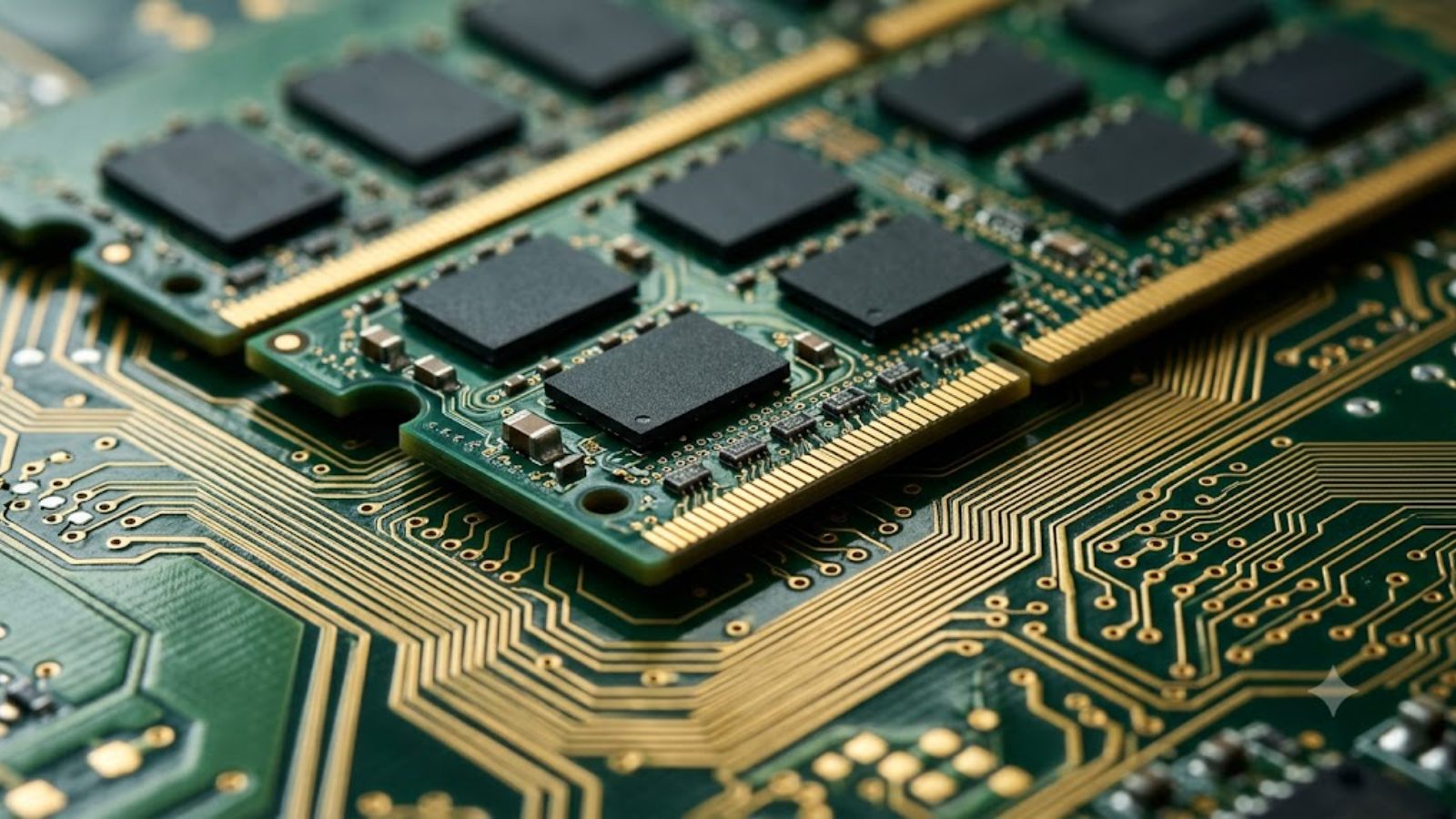
The Memory-Chip Crunch Is Nearly Unsolvable — And It’s In Your Next Laptop.
AI is so hungry for memory that the three companies who make it are shipping it to data centers instead of to you. A common data-center chip went from $350 to $1,300 in a year. This is the inflation nobody can legislate away — and it’s sitting in the laptop you replace this winter.
Capital Wealth Daily · Analysis by Sean Anees Saifi · June 22, 2026
The bottleneck takes years of concrete and clean rooms to fix.
A Shortage You Can’t Print Your Way Out Of
Here is the cleanest inflation story in this week’s paper, and it has nothing to do with the Fed or a tariff. The three companies that make the world’s memory chips — Samsung, SK Hynix, and Micron Technology (MU) — are funneling their capacity to AI data centers, and that leaves a lot less for the gear in your house. The numbers are blunt: Micron’s contract price on a common data-center chip ran from $350 to $1,300 in a single year. Nintendo has already tacked $50 onto the Switch 2. Intel (INTC) is, in its own careful phrasing, “prudently planning” for weaker PC demand — which is corporate for “people are going to balk at these prices.”
And you cannot fix this with a stroke of a pen. Building a chip fab is years of concrete, clean rooms, and specialized equipment. The new U.S. plants in Idaho and Clay, N.Y. won’t be fully producing until mid-2027 and 2030, respectively. So when you read that the shortage is “nearly unsolvable,” that’s not drama — it’s a calendar.
Higher-For-Longer Isn’t Only The Fed
We talk a lot in these notes about a “higher-for-longer” rate regime, and clients tend to file that under “something the Fed decides.” Stories like this one are the reminder that some of higher-for-longer is baked into the supply chain itself, not into a central banker’s speech. A physical bottleneck that takes until 2030 to relieve is a multi-year tailwind for prices, and no amount of jawboning from Washington shortens a clean-room construction schedule.
For a retiree on a fixed income, that’s the part that matters. The laptop and phone you replace this winter is quietly part of your personal CPI. It’s not a one-time tariff that washes through the data; it’s a structural cost that argues, again, for a plan built around real cash flow and a withdrawal rate that doesn’t assume prices are about to behave.
A physical bottleneck that takes years of fabs to fix is the inflation nobody legislates away — and it’s sitting in your next laptop.
The Discipline Hiding In The Margins
Here’s the part I find genuinely instructive. Micron is selling essentially everything it makes at roughly 80% gross margins — and it’s still building cautiously. Why? Because it remembers 2023, when it was bleeding cash and cutting staff in the last memory glut. A company printing 80-cent-on-the-dollar margins that refuses to overbuild has more discipline than most of its customers, and frankly more than most of the market chasing the same AI trade. That restraint is exactly the trait you want in a holding — not the one swinging for the fences.
What This Means For The Book
You may already own this bottleneck through a semiconductor sleeve, where names like Micron (MU) sit inside a broad index rather than as a single concentrated bet. That’s the right way to hold it — you get the tailwind from a shortage that lasts until 2030 without staking your rollover on whether one chipmaker beats by a nickel next quarter. The discipline cuts both ways: I want the exposure to the AI build-out, sized so a memory glut or a 13% down week in the chips is a headline, not a heart attack. And on the planning side, this is one more reason the cash-flow tilt and the inflation-aware withdrawal math aren’t caution — they’re the plan, because some of “higher-for-longer” is being built one fab at a time.
Want to talk about where a theme like this does — and doesn’t — belong in your plan? Bring your statement; we translate the headline into a position-level decision.