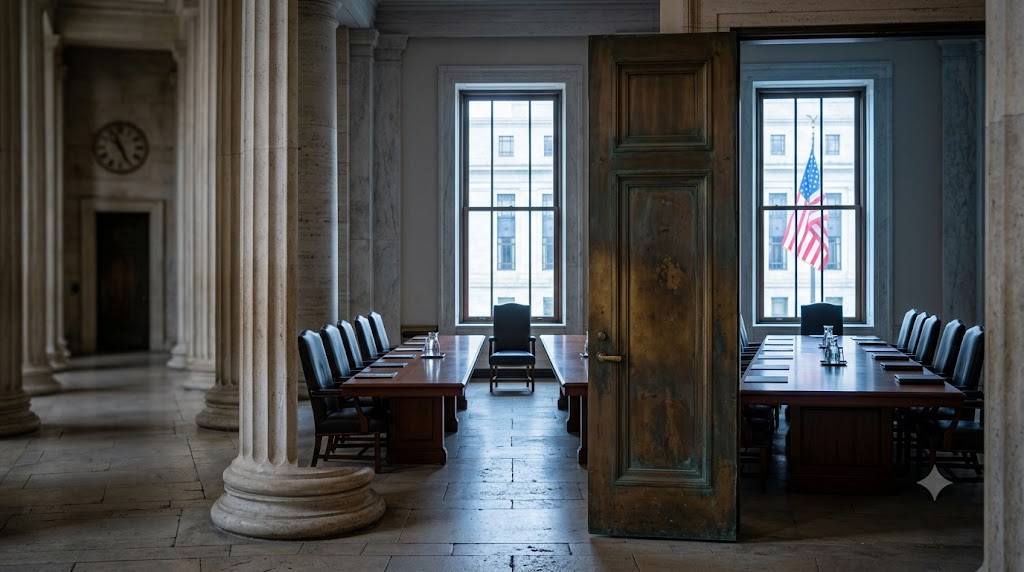
The Fed switched verbs — and the banks we own threw a party about it.
We reinforce the banks — Goldman Sachs (GS), Morgan Stanley (MS) and JPMorgan (JPM) — which earn better spreads the longer the Fed stays parked and collect fees on every deal in the record IPO pipeline three stories down. SGOV stays the full cash sleeve at 4%+, IAU stays the ballast, and we make zero duration bets: the committee can’t agree with itself, and we don’t referee family fights. For the CalSTRS and CalPERS crowd — the 2-year pays 4.164% to wait. Take the money.
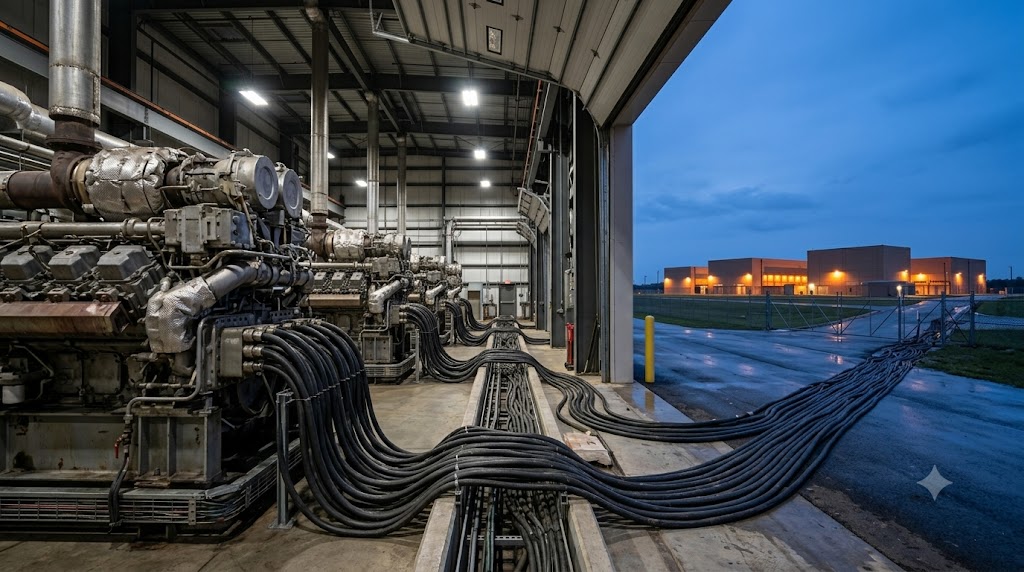
The AI build-out now runs on small engines. We bought the guys holding the extension cord.
Data centers can’t get grid power fast enough, so they’re going off-grid with cruise-ship-class gas engines: Innio leads with 8.3 gigawatts announced, Rolls-Royce has 3.7 GW, Caterpillar (CAT) 3.6 GW with a backlog up 3.5x, Cummins (CMI) in the pack. GE Vernova (GEV) is staying disciplined on turbines — utility-scale waits run seven to eight years. Read that twice.
Quanta Services (PWR) joins the book — a new 1% tactical add in the Aggressive tiers, because every announced gigawatt needs transmission crews and Quanta is the biggest crew in America. GEV, Constellation (CEG), NextEra (NEE) and Vertiv (VRT) all reinforced on the 20-year power contracts and everything between the engine and the rack. CAT goes to the watch bench, not the book: great backlog, but Burry just shorted it and the multiple already ate the story.
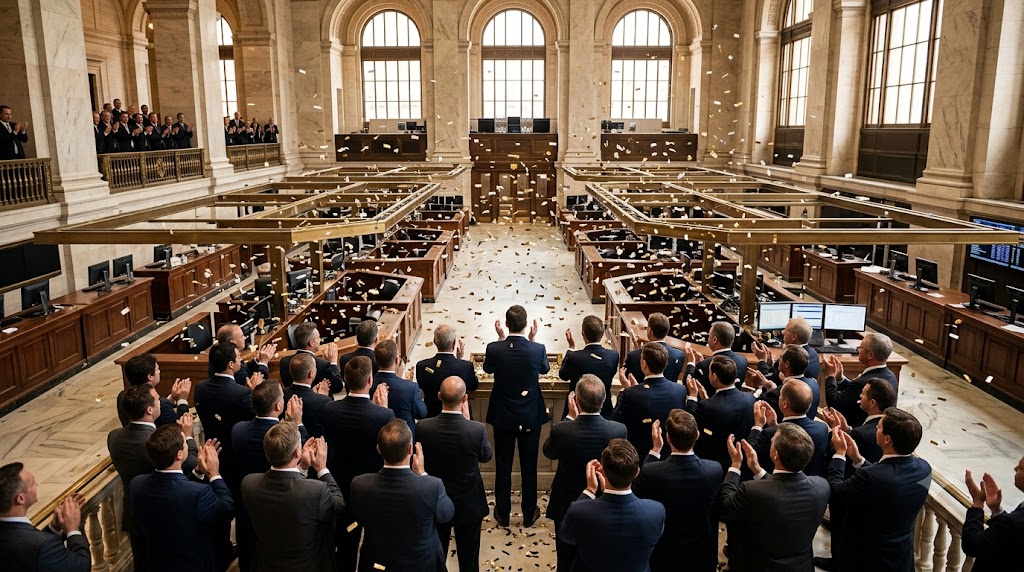
A record $130 billion IPO half. Our allocation is the toll booth, not the ticket.
U.S. IPOs raised a record $130 billion in the first half — $86 billion from SpaceX alone — and AOL-owner Bending Spoons (BSP) closed its debut up 40% at $40.50. Behind it: SK Hynix wants $29 billion via Nasdaq ADRs, Anthropic has filed, Meta (META) is weighing an offering, Alphabet (GOOGL) plans to raise $85 billion. Tech has raised $100B+ in a half exactly twice before — 2000 and 2021.
New issues pop 24% on average, and that pop goes to the institutional allocation, not to you at 9:47 a.m. Our IPO exposure is the underwriters — GS, MS and JPM, all reinforced, collecting fees on every deal whether it pops or flops. BSP and the day-one casino stay AVOID; SK Hynix goes on the watch list as a memory-cycle read for the Micron (MU) position.
New issues pop 24% on average — and that pop goes to the institutional allocation, not to you at 9:47 a.m. Tech has raised $100B+ in a half exactly twice before: 2000 and 2021. The day-one casino stays AVOID.
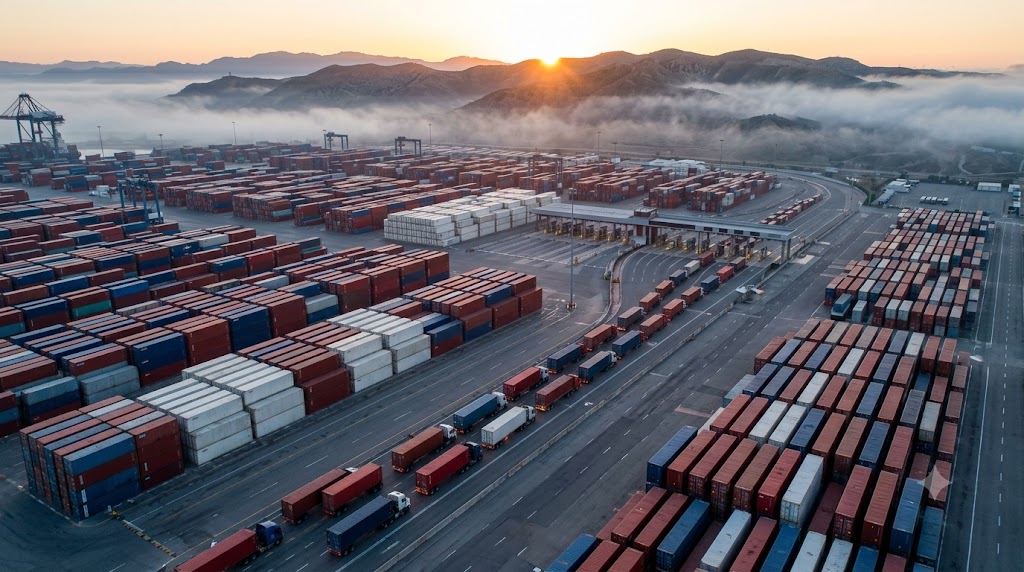
The USMCA got a decade of annual reviews. Ask Alcoa what uncertainty costs.
Washington swapped a 16-year extension for annual reviews on nearly $2 trillion in trade. A tariff is a cost you can price; an open-ended review is a cost you can’t. Exhibit A, same paper: Alcoa (AA) fell 9% on a $5.6 billion deal for South32’s mining assets — squeezed all year paying the 50% tariff to bring its own Canadian-smelted metal home. The seller’s ADR rose 9%.
The income stays anchored in domestic toll-takers whose molecules never see a border checkpoint: Kinder Morgan (KMI), Williams (WMB) and Texas Pacific Land (TPL) all reinforced. AA stays AVOID — good assets, wrong passport. When trade policy becomes an annual argument, own the pipes that don’t file customs paperwork.

Kroger bought Giant Eagle for $1.65 billion. The boring aisle beat the AI aisle.
Kroger (KR, +1.3% to $56.24) bulks up behind Walmart (WMT) with 200 stores and $9 billion in sales. Same section: General Mills (GIS) jumped 8.6% on a budget-shopper push, and Nike (NKE) rose 5% despite cutting its outlook. On a day tech fell 1.84%, groceries and sneakers beat the robots. Nobody plans a parade for that. We notice anyway.
We don’t own the grocers; we own the same defensive paycheck through UnitedHealth (UNH) and Dollar General (DG), both reinforced — the names that work when the consumer trades down and the Fed stays cranky. KR and GIS go on the watch list as proof the defensive bid is real, and as candidates if the income book ever needs another aisle.
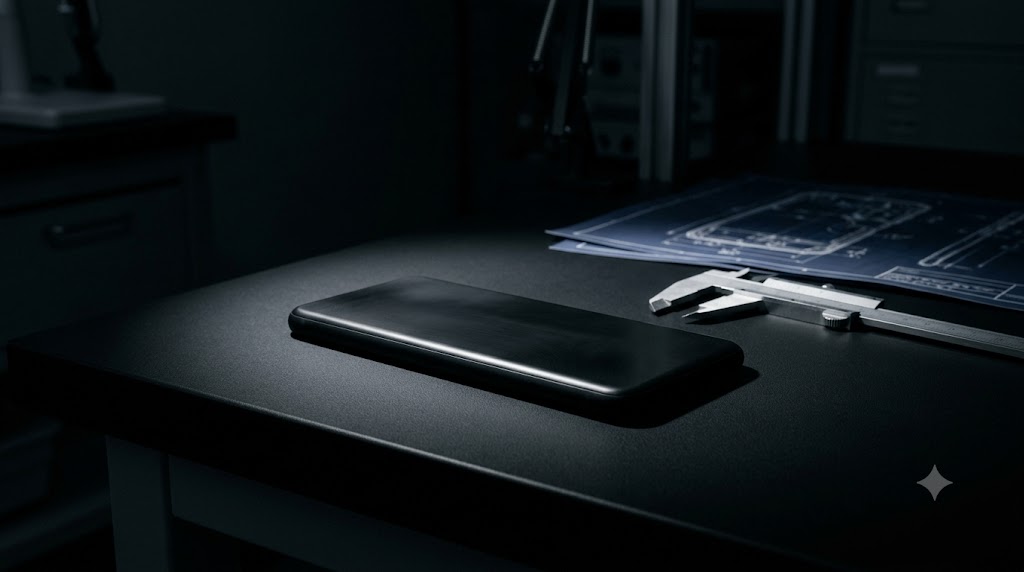
Musk sketched an AI phone. “The idea of making a phone makes me want to die,” says man making phone.
SpaceX showed investors a handset prototype: slimmer than an iPhone, running xAI on a Qualcomm (QCOM) Snapdragon, born of Musk’s grudge against Apple’s (AAPL) app-store tollgate. It may never ship — and OpenAI and ByteDance are chasing the same everything-device. You can’t buy the phone in the headline. Every version of it needs the same silicon.
QCOM goes on the watch list — it was just named the brain of the most-watched vaporware in tech, and that’s how design-win cycles start. The AI-hardware sleeve we already own — NVDA, AVGO, TSM, MRVL — is held at target: they get paid whether Musk’s phone ships, slips, or dies on a whiteboard. Picks and shovels, forever and always.
Michael Burry shorted half the AI tape. Meta started selling the other half.
Fresh Burry shorts on Nvidia (NVDA), Palantir (PLTR), Tesla (TSLA, $416.22 target), Caterpillar (CAT), Applied Materials (AMAT) and the SOXX chip ETF — the one holding Micron (MU) and AMD — with Korea’s $500 billion chip-hub plan called “the beginning of the end.” Same paper: Meta (META) jumped 8.8% on plans to sell its excess AI compute like a cloud utility. The tape is quietly rehearsing a world where AI capex is an inflation source, not just a stock chart.
We hold NVDA, PLTR, MU, AMD and TSLA at target — Burry is a bear case worth reading, not a sell order; he’s early by profession. META goes on the watch list: capex turning into revenue is the bull answer to his short. No adds to the AI sleeve today; the new money went to the power layer instead, where the build-out pays either way.

A Bangkok broth has simmered since 1974.

Europe is fighting over air conditioning in a record heat wave.

American capitalism at 250: three questions from the birthday section.
Also on Wednesday’s tape: Google (GOOGL, +1.1%) was ordered to pay Klarna $2 billion in a Swedish antitrust case and barely shrugged; Binance got blocked from the EU while Coinbase (COIN) pounced on its customers; Getty (GETY, −10%) killed its Shutterstock (SSTK, −29%) merger on a U.K. antitrust demand — a live lesson in why we don’t play merger arb; FMC slid 4.9%; CSX printed a 52-week high as the rails kept rolling; Apollo (APO) cashed out of AOL at the top; and CMA CGM bought FedEx’s supply-chain arm for $1.4 billion. McKinsey shook up its board; the drones, presumably, RSVP’d.