
57,000 jobs, a 594-point record — the market rotated into everything we already own.
We add one point to UnitedHealth (UNH) across the tiers — healthcare led the record, and we’d rather feed the sector’s leadership through the name we already underwrite than chase it. Dollar General (DG) is reinforced on the trade-down math the jobs report just endorsed, and the banks — Goldman (GS), Morgan Stanley (MS), JPMorgan (JPM), +1.58% as a sector — stay reinforced: a parked Fed at these levels is their favorite weather. The AI sleeve (NVDA, AVGO, TSM, MU, AMD, MRVL) rests at target. Resting is allowed. Selling the rally’s broadening is not.

The $16 billion exit line: private credit asked for its money back. Private credit said “some of it.”
Investors asked to pull $15.6 billion from retail private-credit funds in Q2 and got $5.9 billion back. Blue Owl (OWL) fielded $4.7 billion in requests — 19% and 38% of its two flagship funds — and capped withdrawals at 5%; even Blackstone (BX), which honored everything in Q1, now caps at 5%. Requests jumped at Apollo (APO), Ares (ARES) and BlackRock’s (BLK) HPS; new fundraising fell 75% to about $500 million. The YTD tape reads like a fire drill — APO −18%, BX −20%, KKR −26%, ARES −28%, OWL −39% — and OWL still bounced 4.6% Thursday, because on Wall Street even the fire drill gets a relief rally.
The entire category stays AVOID for client income. The money went in with daily convenience and comes out quarterly, capped, at the manager’s discretion — that extra 200 basis points was a liquidity fee charged in advance. Our income lives in things with a public bid: SGOV, the dividend payers, exchange-listed vehicles that sell in seconds. If your income needs a manager’s permission, it isn’t income.
Investors asked for $15.6 billion back and got $5.9 billion; withdrawals capped at 5%, new fundraising down 75%. The money went in with daily convenience and comes out quarterly, capped, at the manager’s discretion — that extra 200 basis points was a liquidity fee charged in advance.

The yen hit a 40-year low. Gold is our entire opinion on the subject.
The yen slid to 161.12 — weakest since 1986, through the levels Japan defended in April and May — as the carry trade runs hot on the U.S.-Japan rate gap. Pimco calls it undervalued and stays neutral; Russell Investments says 166–167 is where it gets interesting. Everyone remembers August 2024, when the BOJ raised rates a whole quarter-point and the Topix fell 12% in a day, dragging the Nasdaq down 13% in weeks. The BOJ’s rate is now 1% — a 31-year high, which in Japan counts as reckless abandon.
We don’t trade currencies; we own the exit ramp. IAU is reinforced — gold rose $44.40 to $4,112.70, up $89 in two days, precisely because the hedge against crowded money is the metal with no central bank. Wheaton (WPM) and Royal Gold (RGLD) stay reinforced as the royalty kicker, and SGOV stays fat so that if the carry unwind comes, we’re the calm buyer, not the margin call.
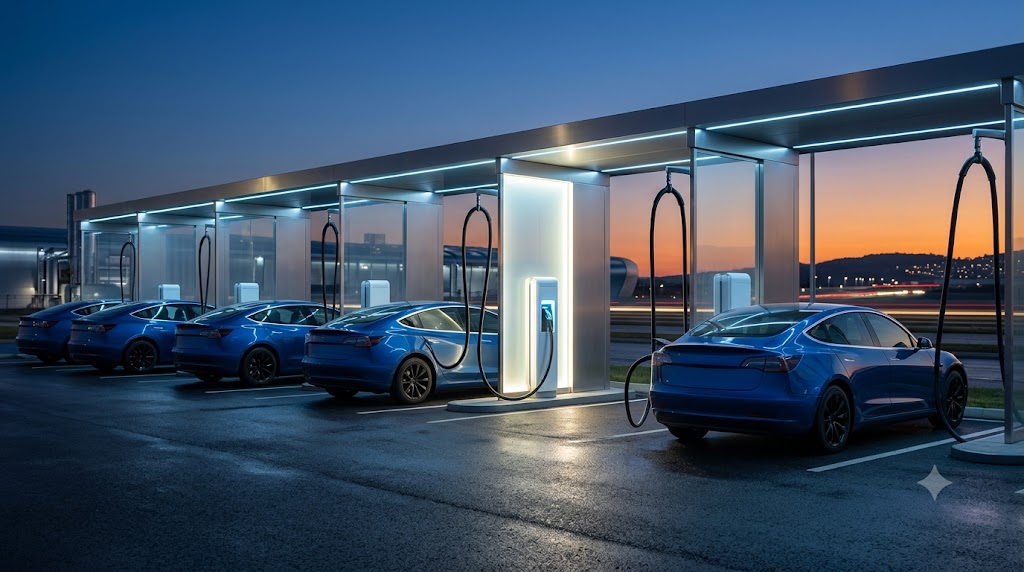
Tesla sold 25% more cars in a market that shrank 25%. Both numbers are true. Only one is a valuation.
Tesla (TSLA) delivered 480,126 vehicles in Q2, up 25%, with energy-storage deployments up 41% — while the broader U.S. EV market fell roughly 25% and most rivals posted sharp declines. A genuine operational win: share gains in a shrinking pond, with the lineup down to three vehicles. Earnings land July 22. Yesterday’s paper had Michael Burry shorting it with a $416.22 target; today’s has the delivery beat. This is why we size things the way we do — so both papers can be interesting instead of terrifying.
TSLA stays a WATCH-rated tactical position, held not added — the cars are real, the energy business compounds at 41%, and the valuation still rides on robotaxis you cannot yet hail. The durable way we own electrification is upstream: CEG, NEE, GEV and VRT get paid whichever badge wins the driveway.
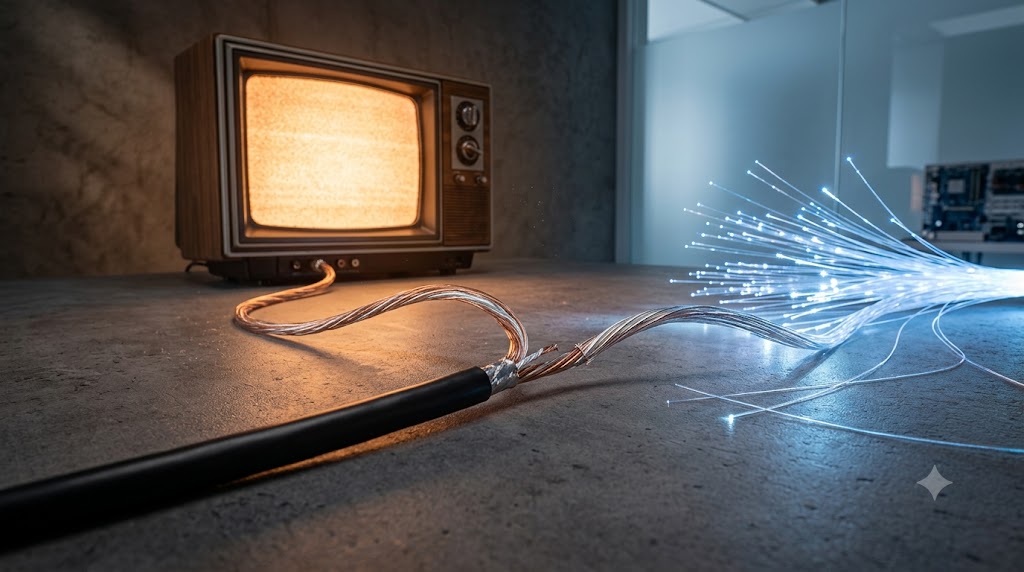
Comcast broke up the family company on Dad’s birthday. John Malone’s review: “finally.”
On his 67th birthday, Brian Roberts finalized the split of Comcast (CMCSA): NBCUniversal and Sky spin off, and the company his father built becomes a broadband pure play. The 15-year convergence bet ends the way Paramount’s and Warner’s did — in a filing. The shares were down about 30% in the year before the announcement, squeezed by streaming on one side and new internet competition from the carriers and Starlink on the other — which appears twice in today’s issue, like a villain with a good agent.
CMCSA stays AVOID through the split — breakups are re-underwriting events, and each piece has to re-earn its seat on its own cash flow. History says the toll-road half (broadband) is the one to study and the glamour half is the one to applaud from a distance. We’ll look at the broadband RemainCo when it trades on its own numbers — cheaper than the excitement, as usual.

Starlink wants your phone bill next. The carriers’ dividends won’t outrun the satellites.
Fresh off SpaceX’s IPO, president Gwynne Shotwell told investors Starlink is exploring ground infrastructure for mobile service — pointed straight at AT&T (T), Verizon (VZ) and T-Mobile (TMUS) — with a prototype handset already shown around. The incumbents’ tape has been telling the story for a year: T −27% and TMUS −26% while the market rose. A fat yield on a leaking moat isn’t income; it’s a countdown with a coupon.
Retail telecom brands stay AVOID. The layer we’ll own is the one both sides must pay — the silicon. QCOM stays on the watch list (its Snapdragon is inside the Starlink handset prototype, per yesterday’s scoop), and our AVGO position already collects on every connectivity chip the device war consumes.
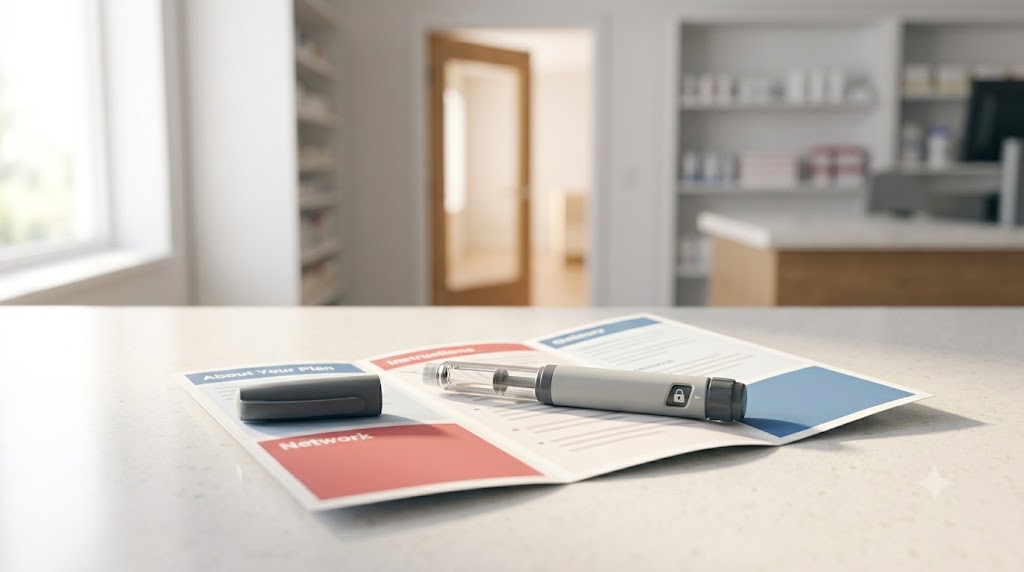
Medicare now covers weight-loss drugs. The number is smaller than the headline — and still worth knowing.
Medicare’s new Bridge program lets eligible seniors get GLP-1s for a $50 monthly copay — a real milestone. For Eli Lilly (LLY) and Novo Nordisk (NVO), Heard runs the math: about 3.8 million seniors actually qualify, worth roughly $3 billion a year against a combined GLP-1 franchise already north of $80 billion. The program is temporary, its permanent successor got shelved, and commercial coverage is quietly retreating. A door is opening; it’s just not a hangar door.
LLY and NVO go on the WATCH list, not the buy ticket — the growth is real but the marginal news is policy risk in both directions, and we don’t pay peak multiples for programs Congress designed to expire. Our healthcare exposure stays UNH — which we added to today — on the boring, giant, rotation-blessed side of the same sector. Retirees: if you qualify for Bridge, that’s a household cash-flow win worth a call.

Wall Street bought bowling and turned on the lasers mid-league.

Big Beer’s growth plan is a smaller can.

Austin’s million-dollar spillover hit the Hill Country.

“Buy now, while supplies last” has never applied to stocks.

He waited 60 years to build the Hitchcock dream house.
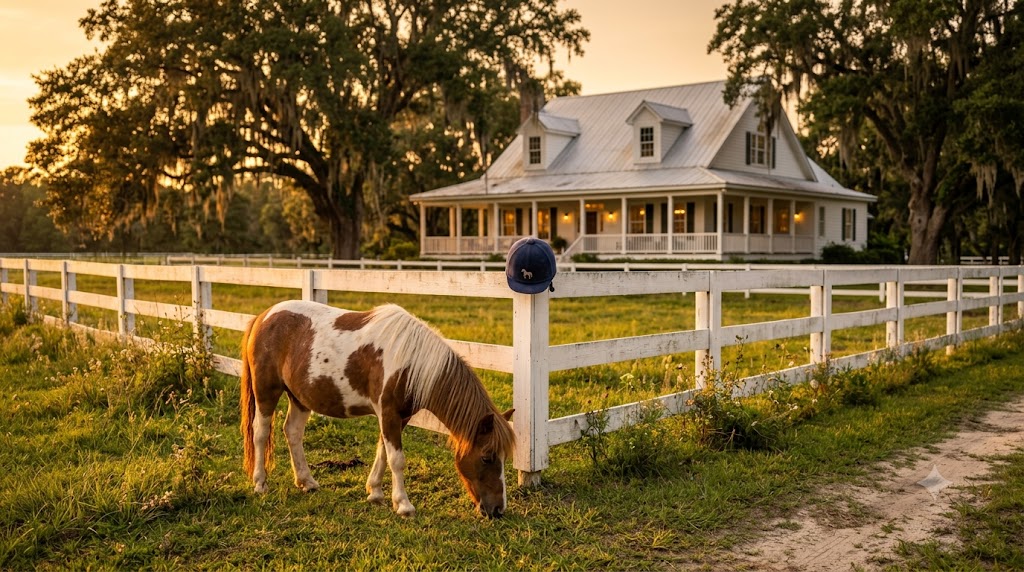
From hearing loss to a Georgia farm: the ladybug test.
Also on Thursday’s tape: the Army discovered ammunition logistics work like Frosty-mix inventory, courtesy of the same Palantir (PLTR) software Wendy’s (WEN) uses — our PLTR position rests easier knowing the Thin Mints Frosty is fully stocked; Google (GOOGL) lost its final appeal on the EU’s $4.7 billion Android fine and the thesis didn’t blink; Roche’s divarasib beat Amgen’s (AMGN) Lumakras head-to-head in lung cancer; SAP promised AI-spending discipline; Chanel bought shirtmaker Charvet; KKR and Energy Capital Partners chased DCC at £5.7 billion while Fidelity held out for £70; the president’s disclosures showed $3.6 million of Apple (AAPL) and Berkshire (BRK.B) bought the day before he posted “a great time to buy”; and Citadel Securities logged nine of its ten busiest days ever in June. One economy, three disguises — a beer can, a bowling lane and a ranch town — rounds out the section. Markets are closed Friday for America’s 250th, and there’s no print Journal Saturday: the next Daily follows the weekend editions. The barbell doesn’t take the day off; it just watches the fireworks like everyone else.