

Texas built a stock exchange. On opening day, almost nobody came.
No action — and that is the action. An exchange is a network business, and a network with a handful of tenants is a building, not a moat. TXSE goes on the watch list with a specific tripwire: we care when a real listing moves, not when a ribbon gets cut. Goldman (GS) stays reinforced — it makes money on the plumbing regardless of whose ticker tape it runs through, which is exactly why it survived the last three “NYSE killers.” For clients the read is simpler: where your shares trade has never once determined whether your plan works. Fees, taxes, and time do that.

Gold was supposed to catch you. Gold is down 25%.
Gold closed at $3,997.00, off $107.10 — a 2.6% slide on Monday alone, and roughly 25% below its January record. That is not a wobble; that is the hedge everyone bought for the crisis losing a quarter of its value without a crisis. Meanwhile the 10-year sits at 4.610% and the Nasdaq fell 1.6%, the Dow 0.3%, the S&P 0.8% — stocks and the cushion going the same direction on the same day, again.
This one costs us something, and we say so: the metals sleeve (WPM, RGLD, IAU) is our worst-performing position of the year, and a 25% drawdown from January is a real hole in a real book. We are not adding to it and we are not dumping it — a hedge you sell at the bottom was never a hedge, it was a trade with a costume on. What we are doing is being honest about the job it failed at: gold did not catch the equity drawdown, and neither did bonds. That’s the whole Risk Atlas argument. SGOV stays reinforced at 4%+ because bills are the one cushion that has never argued with us.

Shein got Beijing’s blessing. The price tag came back a third smaller.
Shein cleared its key hurdle Friday, winning China’s nod for a long-awaited Hong Kong listing that people familiar say could value it at more than $40 billion — issuing 341.6 million H shares, possibly as early as the third quarter. Worth reading that number twice: Shein was valued around $66 billion in a 2023 fundraising round, and its price tag has fallen steadily since amid competition from Temu and persistent geopolitical uncertainty. The U.S. listing died in 2024 over supply-chain scrutiny; London died in the trade flare-up; the end of the de minimis loophole took another bite. Investors include General Atlantic, Mubadala, IDG Capital and HSG.
Avoided, and not a close call. A company that has been marked down from $66 billion to maybe $40 billion across three failed listing venues in three years is not a growth story, it’s a liquidity event for the people who got in at $66 billion. We don’t buy other people’s exits with retirement money. The broader tell matters more than the ticker: the IPO window is open (SpaceX at $86B, OpenAI and Anthropic circling) and that is precisely when the merchandise gets mixed. Our IPO rule holds — we buy the second annual report, not the first roadshow.

Oil jumped 9.42% in a day. The insurance sleeve did its job.
Oil leapt to $78.14, up $6.73 — a 9.42% move in a single session — as the Pentagon launched a third consecutive round of strikes on Iranian shipping and Brent jumped with it. Washington is drawing down the Strategic Petroleum Reserve again while trying to tamp down soaring prices, and experts warn the frequent draws are taxing the reserve’s capacity. Trump asserted the strait remains open under U.S. escort.
Chevron (CVX), Exxon (XOM) and ConocoPhillips (COP) stay reinforced — this is the fourth straight edition we’ve said the thin-buffer asymmetry was the reason to hold them, and Monday is what that looks like when it pays. The pipes (KMI, WMB) keep tolling and TPL keeps collecting royalties on other people’s urgency. Note what a 9.42% day actually tells you: the SPR is not a price cap, it’s a delay. We are not adding into the spike — the sleeve was sized for this in advance, which is the only time sizing is worth anything.
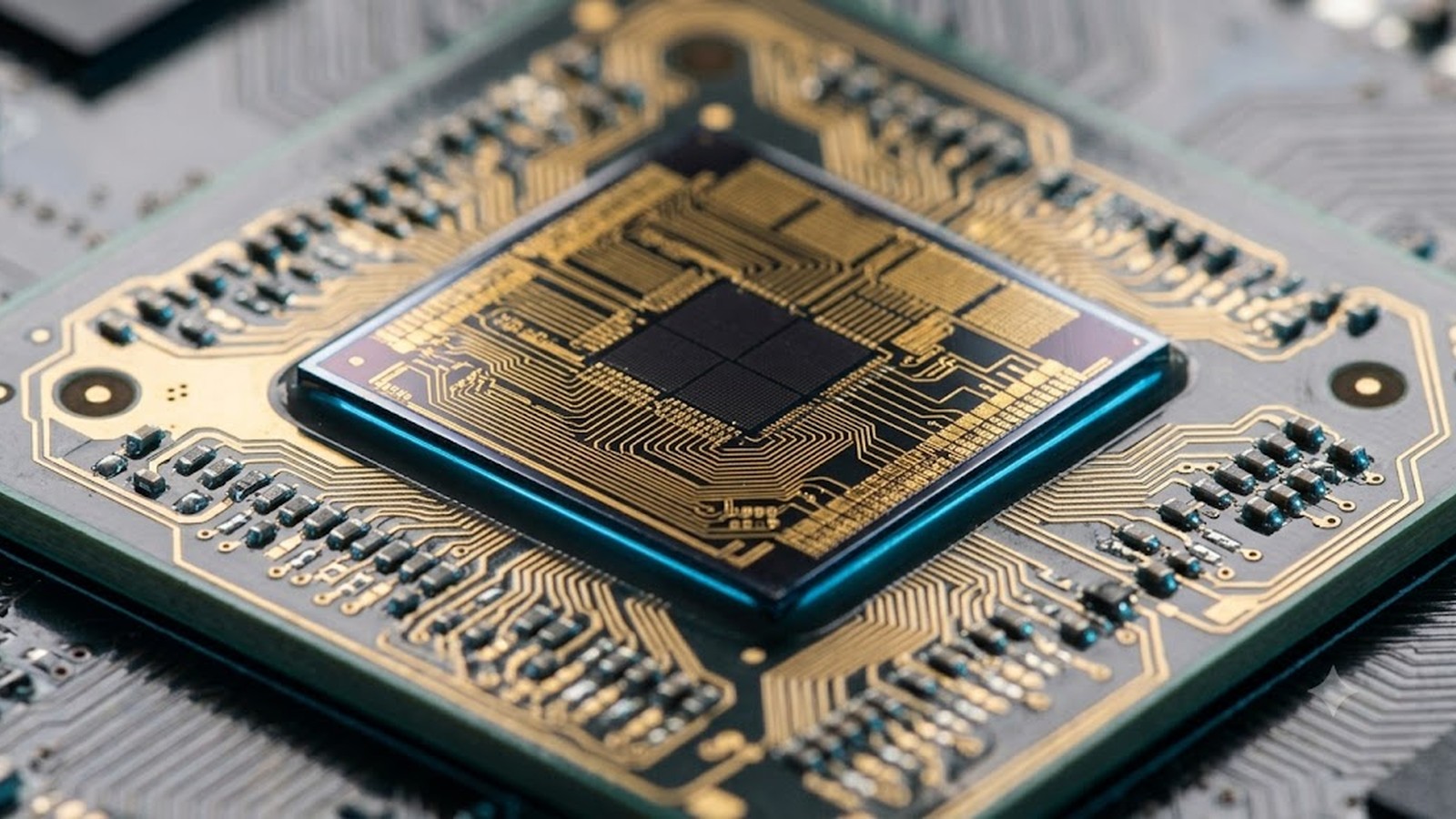
Intel is spending $5.71 billion in Ireland — and may be building Apple’s iPhone chips.
Intel (INTC) said it plans to invest $5.71 billion expanding its manufacturing site in Ireland. Separately, Trump announced via Truth Social that Apple (AAPL) will begin using Intel-made chips for some products — Mac laptops and iPhones, per a person familiar — sending Intel shares to record trading highs. “I decided to help Intel because we need to design and build our Chips right here in America.” Intel’s shares have more than quadrupled since Lip-Bu Tan became CEO in March 2025. The link between the tariff talks and the Apple–Intel arrangement had not been previously reported.
INTC stays off the books, and a quadruple is exactly why — we evaluate turnarounds, we don’t chase them after the re-rating, and a chip deal announced on social media by a president is a headline, not a contract. Compare it to what we did buy: Micron (MU) came off the watch bench on July 10 for a $250 billion committed plan, and Broadcom (AVGO) holds on Apple’s signed $30 billion. Signed revenue, underwritable. TSM stays held: if Apple genuinely dual-sources, the foundry that has never missed is the one that keeps the volume.

Twelve states just sued Paramount. We’re still in the lobby.
A coalition of 12 states led by California is suing to block Paramount’s (PARA) $81 billion acquisition of Warner Bros. Discovery (WBD) — the biggest obstacle yet for a deal that would combine two of Hollywood’s largest producers of entertainment and news, with the states arguing the pact risks harm to consumers. Paramount says the suit should be dismissed as a misrepresentation of competition. This lands on top of the $80 billion debt pile at 6.5x leverage we flagged on July 10, with long bonds already at 8.43%.
PARA and WBD stay avoided — unchanged since July 10, and now with a second reason. When a deal carries 6.5 turns of leverage and twelve attorneys general, you are underwriting a lawsuit and a bond covenant, not a media company. Our position hasn’t moved because the thesis hasn’t: the bond market graded this slideware at a C-minus in July, and the states just asked for a re-grade. If it closes and generates free cash flow, we can buy it then — cheaper, and with a verdict in hand.

The Mid-50s File: the decade where the cushion has to be real.
Six stories this week, and every one of them lands on the same reader — the person somewhere in their mid-50s with the biggest balance they’ve ever had and the least time to rebuild it. Gold down 25%. Oil up 9.42% in a day. An exchange with no tenants. A $66 billion company marked to $40 billion. The 10-year at 4.610%. None of it is a catastrophe. All of it is a reminder that the ten years before retirement are the years when “it’ll come back” stops being a strategy and starts being a hope.
No trade — a checklist. If you’re inside ten years of your date: know what your actual cushion is (not what you assume it is), know which sleeve pays your first five years of income, and know your fee drag to the dollar. SGOV reinforced, dividends (CVX, XOM, PNC on the candidate list) doing the boring work, and the equity book sized so a 25% drawdown in any one sleeve is survivable — because as gold just demonstrated, it happens to the sleeve you least expected. This is the fifteen-minute conversation, and it’s free.

Learning to fly, badly, in the Catskills.

The “panic pouch” is now an accessory.

Everything else is in decline. Bubbles are up.

Picnics, perfected: the $3.85-gas dinner party.

A Niçoise salad — hold the tuna.