
WED CLOSE  JUL 29  |  DJIA 51,594.14 ▼2.19% (−1,153.18)   NASDAQ 24,442.94 ▼1.7%   STOXX 600 645.01 ▼0.3%   10Y 4.621%   OIL $84.46 ▲$5.20   GOLD $4,034.70 ▼$1.60
Friday, July 31, 2026The Week in Review · Part II · Vol. III · No. 150
Capital Wealth
Three Dissents and a Thousand Points.
Part II — the macro half of the July 29–30 Wall Street Journal: the Fed meeting that moved the Dow four figures, the war that moved oil twice, and the quiet pages about your retirement account that will outlast both.
An empty committee table in a wood-panelled room, three water glasses and one closed folder
The Fed · The Rate File · Lead Story

The Fed stood still, and the floor moved.

The Fed held rates at 3.50%–3.75% on a 9–3 vote — with all three dissents, for the first time since 2016, pointing the same direction: UP. Hammack, Kashkari and Logan wanted a hike with inflation above target for a fifth year. Chairman Warsh, who has spent his first months saying less on purpose, told markets he has no magic wand — and the Dow gave up 1,153 points, its worst day of the summer, as traders decided “no cut soon” was the real statement.
Our Read The Model Desk

Read the dissents, not the decision — half the committee wanted a hike. The market spent 2026 positioned for the next move being down; Wednesday it met a committee arguing the next move is up. Action: REINFORCE the defensive tilt and the short-duration bill ladder; AVOID adding long-duration bonds into a committee debating hikes.

Off Duty · The Human FileThe ones you’ll actually want to talk about
A scale wind-tunnel model of a blended-wing airframe resting on a workshop stand
Aerospace · The Challenger File

A manta ray is coming for Boeing.

Washington put $3 billion behind a windowless, blended-wing jet — the biggest change in airliner design since the Concorde.

Our Read The Model Desk

Governments have decided aviation duopolies are a strategic risk, and they are funding the challenger directly — the same pattern as the chips.
Read the full story →
A card terminal on a bare shop counter, receipt roll unspooled, late-afternoon light
Consumer · The Swipe File

The consumer kept swiping through all of it.

The Dow lost 1,153 points. The swipe data never noticed.

Our Read The Model Desk

Visa is the book’s cleanest expression of employed America: a toll on nominal spending, with no inventory and no credit risk.

Read the full story →
A single unlabeled detergent bottle on a bare supermarket shelf under flat store lighting
Consumer Staples · The Cost File

P&G just handed us the oil hedge’s receipt.

P&G says the Iran war will cost it $1 billion — in raw materials, freight and surcharges.

Our Read The Model Desk

This is the receipt for the defensive tilt: P&G pays $90 Brent so that the energy sleeve can collect it.

Read the full story →
Your Money & HealthWhat lands in your account and your premium
A plain manila plan document squared on a bare desk beside a cold cup of coffee
Your Money · The Nest-Egg File

The $20.6 million 401(k) was legal the whole time.

Nearly 12,000 taxpayers now hold retirement accounts worth $10 million or more. Every step they took was legal.

Our Read The Model Desk

The likeliest page in this week’s paper to change a client’s life — and most people never asked the five-minute HR question that unlocks it.

Read the full story →
An empty pharmacy counter with a single paper prescription bag under flat light
Health · The Premium File

The subsidy propping up Medicare drug plans is going away.

The subsidy holding Part D premiums down is sunsetting — a 2027 price shock announced in a 2026 press release.

Our Read The Model Desk

Health care is the retirement plan’s silent second mortgage, and the rate just went up. Re-shop Part D this fall; do not renew by default.

Read the full story →
A single unmarked injector pen lying on a pharmacy counter beside a folded paper statement in raking window light
Healthcare · The Metabolic File

The miracle drug is now a line item on your Medicare bill.

The miracle drug is now a line item on your Medicare bill.

Our Read The Model Desk

Same drug class, same calendar, sixteen points apart — Lilly up 14.3% against Novo down 2.2%. That is a franchise war with a winner.

Read the full story →
Markets & The MacroThe desk’s working file
A brass pressure gauge on a weathered pipeline valve, low sun raking across the metal
Energy · The Barrel File · Thesis Review

Our oil thesis just ran a live-fire drill.

WTI ran $89.31 to $79.26 and back to $84.46 in five sessions — the same war, read three different ways.

Our Read The Model Desk

A $10 round trip is our floor-and-ceiling thesis stress-tested in public — and the energy sleeve was the book’s only natural hedge on the worst day of the summer.
Read the full story →
A single unmarked server rack door standing open in an empty white hall
Technology · The Bill File

Meta asked Wall Street to pick up the AI tab.

Meta went to the bond market to fund the AI build-out. The bond market raised the price.

Our Read The Model Desk

The pair trade inside the megacaps is finally visible: sellers of AI, who have subscribers, against spenders on AI, who have invoices.
Read the full story →
An empty steel shipping cradle on a concrete factory floor beneath high windows
Defense · The Arsenal File

The Pentagon just placed a $120 billion restock order.

A $120 billion munitions restock order — the largest since the Cold War.

Our Read The Model Desk

A war that empties the magazine is a multi-year revenue commitment to whoever refills it — and this one is funded by an appropriation, not a bond deal.

Read the full story →
A ring of house keys resting on a marble bank counter beside an unsigned loan folder
Finance · The Governance File

The private bank approved the mortgages. The banker asked questions later.

The private bank approved the mortgages. The banker asked the questions afterward.

Our Read The Model Desk

Every cycle has a chapter where the incentives inside a wealth machine quietly outvote its controls — and it is never about one client.
Read the full story →
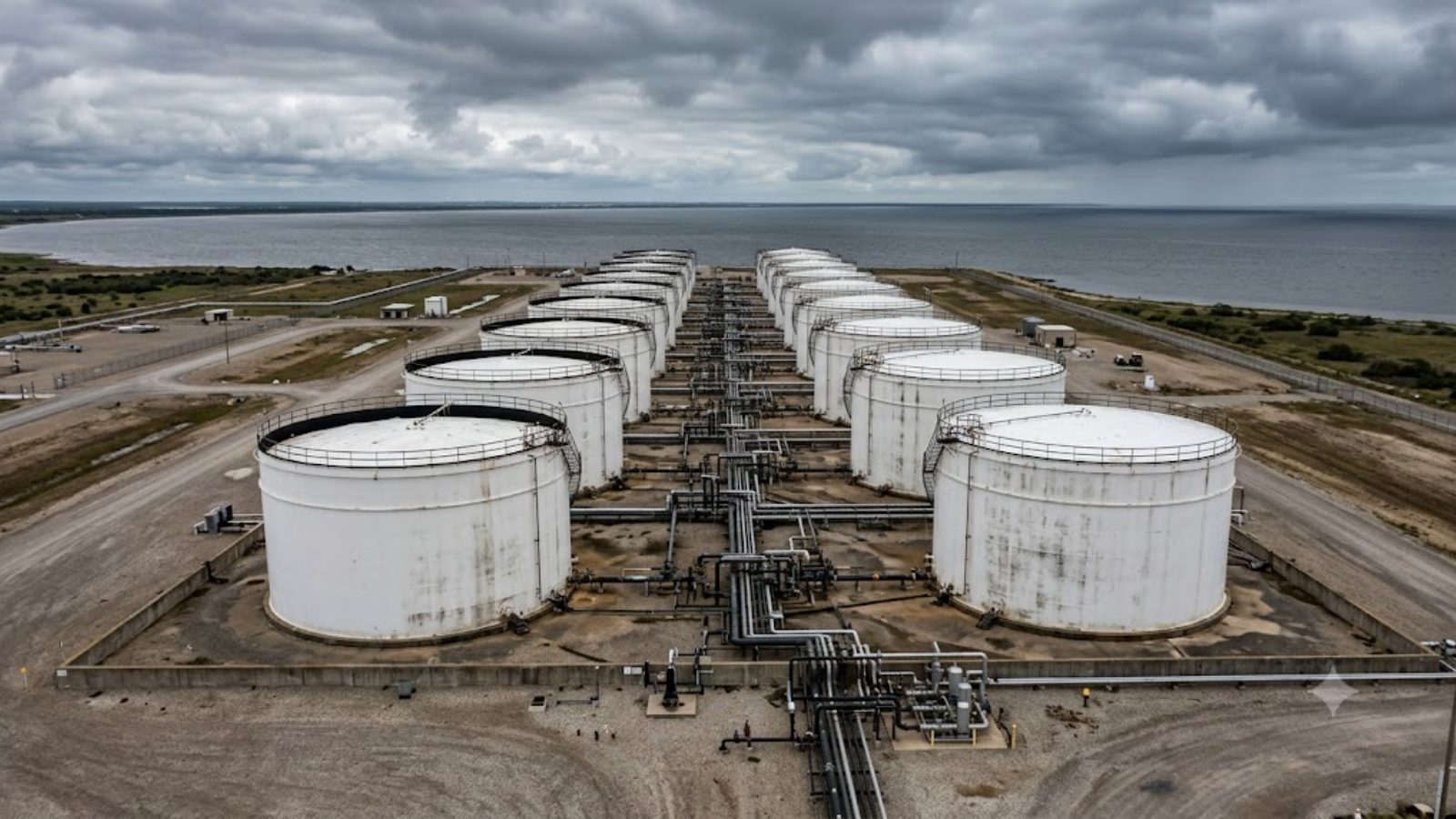
A row of covered crude storage tanks on a flat coastal terminal under an overcast sky
Heard on the Street · The Demand File

Beijing became oil’s biggest problem.

China cut crude imports 40% — and capped the rally without firing a shot.

Our Read The Model Desk

This is the strongest argument against our own oil thesis, and we would rather print it than hide from it.
Read the full story →
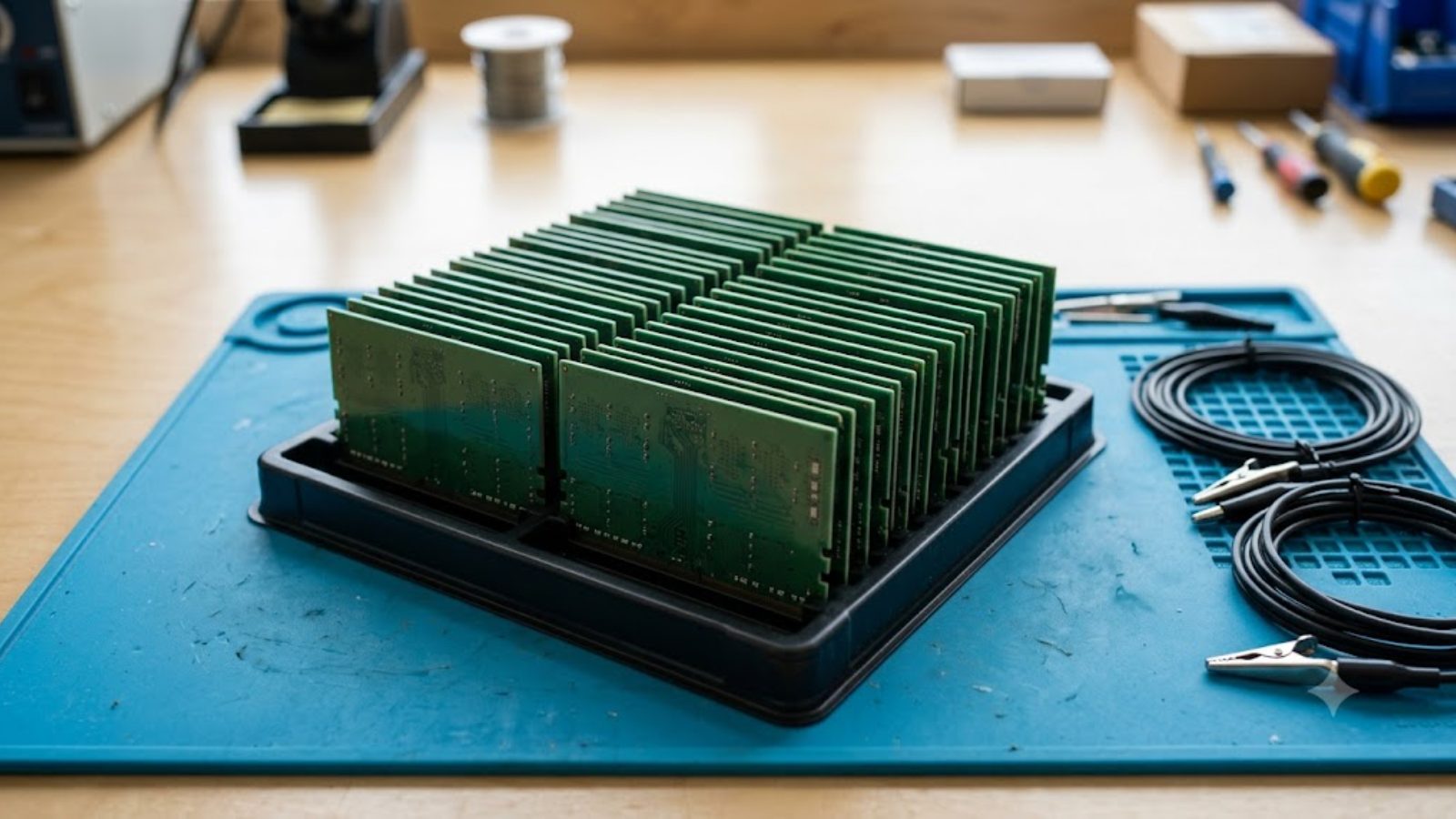
A tray of unmarked memory modules on an antistatic mat under even workshop light
Technology · The Memory File

SK Hynix made $64 billion and the stock fell 10%.

SK Hynix earned a record $64 billion. The stock fell 10% anyway.

Our Read The Model Desk

When perfect earnings get sold, the market is not grading the quarter — it is grading the durability of the boom.
Read the full story →
Off Duty & The Life File
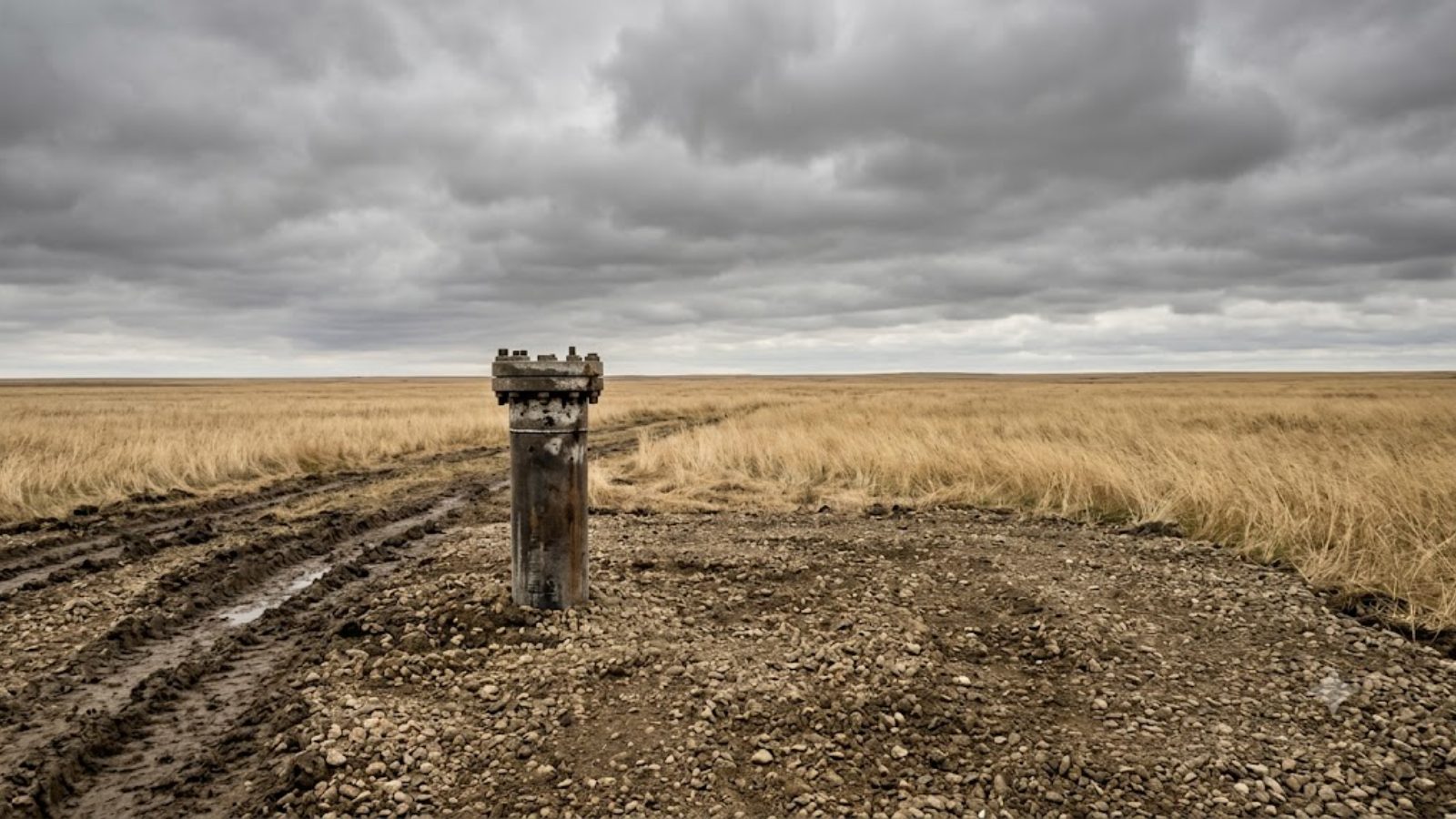
A capped borehole casing on a cleared gravel pad in an empty prairie field
Energy · The Frontier File

Parsons, Kansas may bury a nuclear reactor a mile underground.

Deep Fission’s “Gravity Reactor” — Liz Muller and her Berkeley-physicist father — would heat water a mile down in billion-year-old granite and split a farming town of 9,600 between jobs-and-data-centers and I-can’t-think-of-a-worse-idea. The nuclear renaissance’s real constraint is the county commission, not the physics; our uranium-and-utilities exposure stays index-shaped while the siting wars play out.
An empty leather chair behind a bare desk in a glass-walled corner office
Business · The Corner Office File

855 CEOs, twenty years, one lesson.

A study of the complete tenures of 855 S&P 500 chief executives finds the market’s verdict is mostly written early — and that first-time CEOs outperformed more often than experienced ones. The average holding period of our book is longer than the average CEO’s honeymoon; buy governance, not personalities.
A concrete tunnel portal lit by a single strip of ceiling light, no vehicles
Technology · The Tunnel File

Elon Musk’s tunnel company is worth $20 billion now.

The Boring Company is in talks to raise around $4 billion at a valuation near $20 billion, up from about $5.7 billion in 2022, while many of the city projects it pitched never panned out. Private-market marks are a sentiment gauge, not a valuation; the read-through is that late-stage capital is still abundant for anything adjacent to one particular surname.
An empty witness table with a microphone and a closed leather folder in a hearing room
Washington · The Hearing File

Fauci took the Fifth.

Anthony Fauci invoked the Fifth Amendment more than 100 times in a three-hour Senate hearing, calling the proceeding a slander campaign. No trade, obviously — filed because clients ask, and because institutional-trust erosion is a real discount rate on everything from vaccines to Treasury auctions. We price it by owning cash flows, not promises.
A tiled shower stall with a stainless grab bar and a folding seat, empty and evenly lit
Life · The Aging-In-Place File

The most dangerous room in the house.

Falls are the leading cause of injury-related death for Americans 65 and older, and many happen in what architect Lloyd Alter calls “killer bathrooms”: freestanding tubs that need a winch and a bosun’s chair, comfort-height toilets that are treacherous to get off, shiny big tiles instead of matte small ones with grippy grout lines, and almost nobody with grab bars where they matter. This is a planning page wearing a design byline — a $2,000 bathroom retrofit defends a retirement plan better than most insurance riders, and it is the cheapest line item in the long-term-care conversation we have with every client at 55. Grab bars do not have to be ugly; neither does prudence.
An empty wooden chair and a folded blanket on a swept porch of a rural house
World · The Demographics File

Poor countries are aging fast, and can’t afford it.

Thailand became an “aging society” in 2004 and an “aged society” 18 years later — a transition that took the U.S. about 70 years — with a fertility rate of 0.9 and a per-capita GDP of $6,910, against the $55,264 the U.S. had when it crossed the same line. Vietnam, China and India are on the same curve: old before rich. A $50-a-month old-age allowance, families scraping by on $90 caregiver wages, the World Bank forecasting Thais over 80 needing assistance to rise sixfold to 2.5 million by the 2040s. Demographics is the slowest, surest macro force we track — it is why our developed-market and healthcare sleeves lean where they lean, and why long-term-care planning is a first-world privilege worth using.
A blank metal credit card resting on a boarding-pass sleeve on a bare table
Off Duty · The Points File

The flashy travel card, audited.

The Journal’s guide to whether the lounge life is worth it: the Chase Sapphire Preferred’s famous 100,000-point sign-up bonus (offer ending July 30) demands $5,000 of spend in three months; lounge access is shrinking — Delta now curbs Sky Club visits and will bar its stripped-down business-class ticket holders from the Delta One lounge entirely. Annual-fee arithmetic is a miniature of all financial planning — the perks are real, the fine print is the price, and the influencer touting the card is not paying your interest rate. Pay it off monthly or the mimosa costs $400. No trade; Visa (V) and Mastercard (MA) collect either way, which is why the book owns the rails and not the points.
An empty classroom with chairs stacked on desks and a blank whiteboard
Opinion · The Classroom File

An op-ed our teacher clients will be talking about.

Tony Woodlief argues in the Journal’s opinion pages that “restorative justice” discipline policies have produced chaotic and sometimes violent schools — citing Little Rock’s district (20,000 students, nearly 2,500 violence, bullying and weapons incidents in 2021-22 before wide adoption) and his group’s scan claiming alternative-discipline methods in 600-plus districts across 9,200 schools in 41 states. This is one author’s argument in an opinion section, and we present it as that — but we work with teachers every day, and classroom safety and discipline policy are working-conditions issues that show up in our office as burnout, early-retirement math, and 403(b) rollover timing. Whatever a district decides, the advisor-desk fact is: when teachers feel unsafe, they retire earlier, and the pension arithmetic changes. Worth reading, whichever side of it you land on.