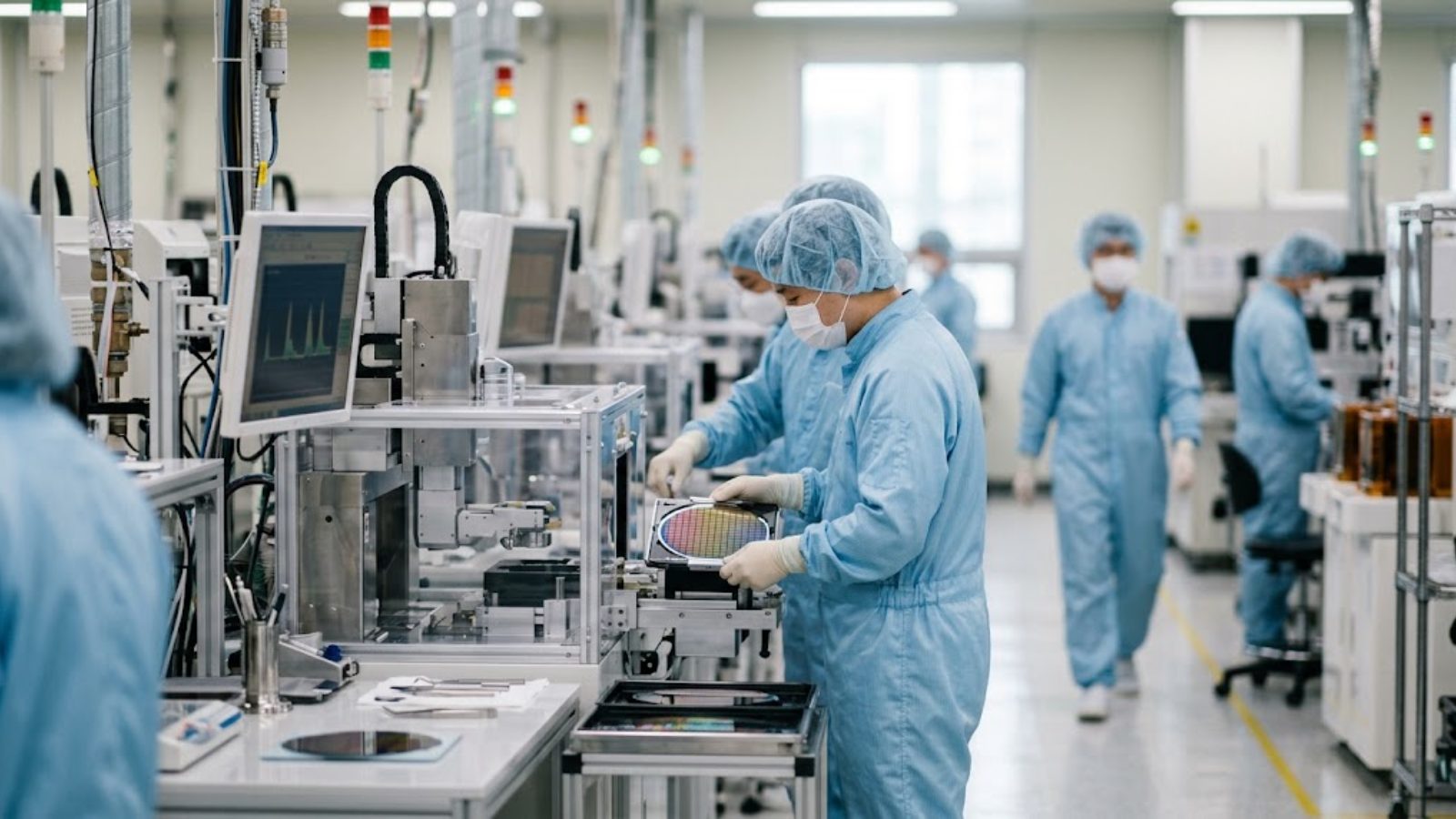
Every era crowns its most eligible profession. There was the doctor era. There was the lawyer era. There was, regrettably, a crypto-guy era. In Seoul right now, the crown belongs to somebody new: the memory-chip engineer.
This sounds like a joke, and it is also completely true. Matchmakers in South Korea report that engineers from Samsung and SK Hynix — the twin giants of the global memory-chip business — have become the hottest names on the marriage market. Not pop stars. Not surgeons. The people who design the tiny rectangles that remember things.
The reason is not a mystery. The reason is money. Recent bonuses at Samsung have run to roughly $400,000. At SK Hynix, about half a million dollars. And that is the bonus. It arrives on top of the salary, like a second, larger salary, because the world cannot stop buying memory.
Matchmaking in Korea is a formal business, with professionals, files, and fee schedules. Think of it as a stock exchange for eligibility, complete with analysts. And like any exchange, it reprices fast when the news is good. A profession's stock can jump overnight. This one just did, spectacularly, and the whole city noticed.
The Hynix God
Korean sketch comedy has noticed too, because sketch comedy notices everything first. SNL Korea aired a parody celebrating the "Hynix God" — the chip engineer reimagined as a romantic hero, armed with nothing but a company badge and a bonus statement.
When a profession gets its own comedy sketch, the culture has officially spoken. These engineers spent years being the quiet ones at dinner parties. Now the dinner parties are organized around them, and somebody else refills their glass.
Professions rise and fall with the market. When banks boomed, bankers were the catch. When startups boomed, it was founders in fleece vests. The marriage market, it turns out, is just another market — driven by momentum, soaked in feeling, forever chasing last year's winner.
The Journal also found a former employee who left the industry before the boom and regrets it now. That may be the most relatable detail in the whole story. Everyone owns a version of it. The house not bought. The shares not held. The badge handed back exactly one bonus cycle too soon.
Booms leak
Here is the backdrop that makes it all make sense. The Korean stock market has risen roughly two-and-a-half times since the start of last year, riding the same wave of memory demand that turned those bonuses into folklore.
And booms never stay on the trading screen. They leak. They show up in apartment prices, in restaurant reservations, in the fee schedules of professional matchmakers. When an industry starts printing money, everything around it gets repriced — right down to the wedding halls.
Now the quiet part, said briefly, because we would be lousy advisors if we skipped it. What a boom gives the marriage market, a bust can take back. A family fortune built on one industry, one employer, and one bonus pool is a wonderful thing and a fragile thing, and those are two different things.
The happiest version of this story is the engineer who marries well and spreads his money beyond the company that pays him. But that is Monday's worry. Today, somewhere in Seoul, a man who spent a decade being invisible at parties is the most interesting person in the room, and honestly, we are delighted for him. Booms are rare. Apparently, so is a good memory.