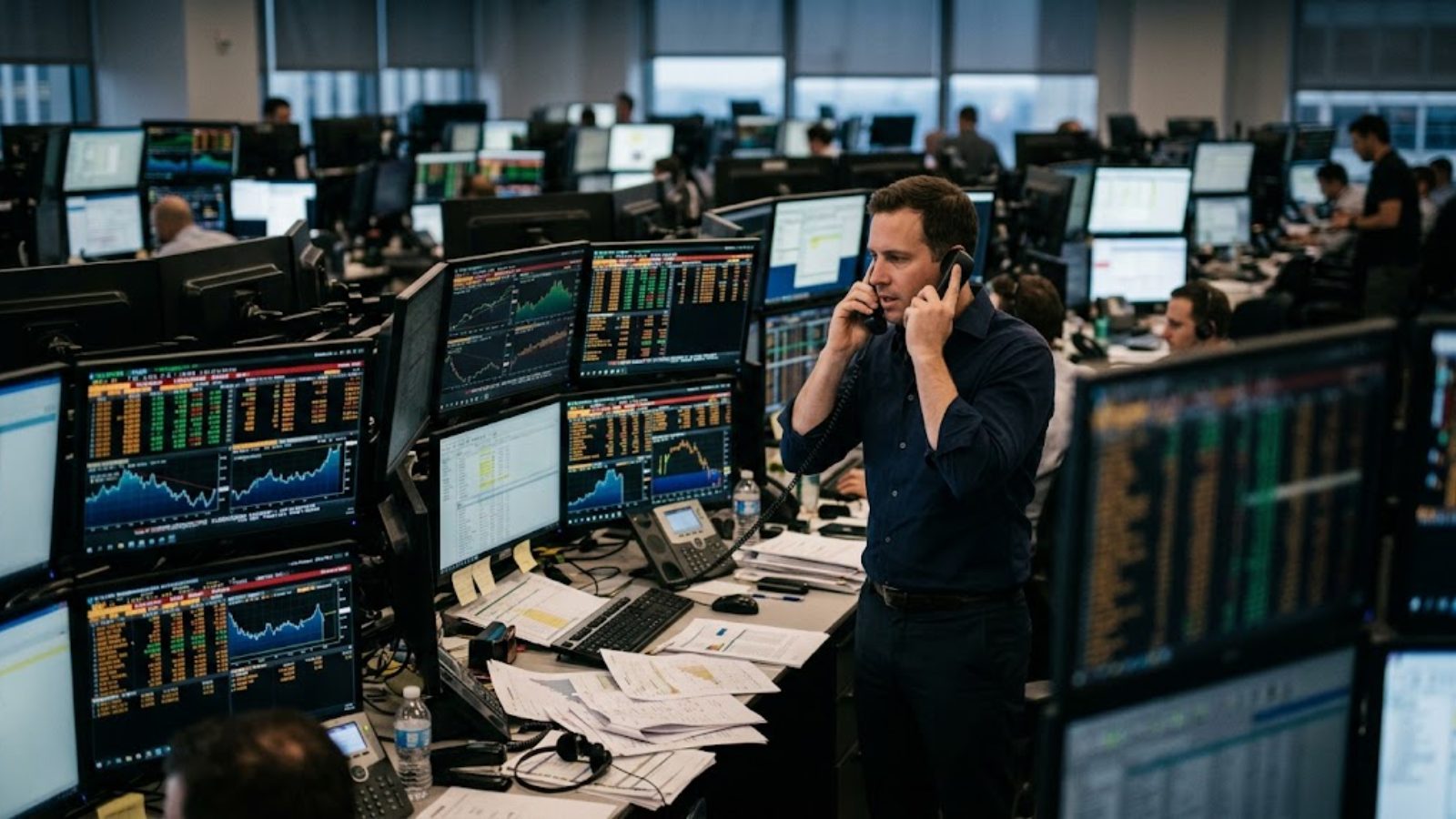
Here is the week in one image: the Treasury Secretary goes on television to say the government will buy back more of its own bonds — maybe double the usual size, more than $4 billion an operation — and the ten-year yield goes up anyway. That is not a policy failure. That is a price.
Scott Bessent’s expanded buyback program is a real tool. Treasury goes into the market, repurchases older bonds nobody wants to trade, and improves liquidity. It cooled yields for a stretch. Then, on Thursday, the selling resumed, and the ten-year note settled at 4.697%. By Friday’s close it was 4.737%.
“This is a band-aid,” Lawrence Gillum, chief fixed income strategist at LPL Financial, told the Journal. “This doesn’t really fix the problem.”
What the problem actually is
The Journal’s Greg Ip made the argument plainly this week, and it is the most important thing anyone wrote about markets in five days. For decades, investors accepted a lower yield on Treasurys because they were the safest thing on earth. Economists called it the safety premium.
Ip cites work by Ricardo Caballero at the Massachusetts Institute of Technology finding that the premium has flipped. Investors are now demanding a higher yield — not for safety, but for the sheer work of absorbing the supply. He calls it an absorption premium, and he estimates it explains about three-quarters of a percentage point of the roughly two-and-a-half-point rise in yields since 2015.
The tell is technical but clean: historically Treasurys yielded less than interest-rate swaps and less than the highest-rated corporate bonds. Lately they have yielded more. A separate study out of Stanford reaches the same conclusion.
| What moved | Level | What it means for you |
|---|---|---|
| 10-year Treasury | 4.737% | Mortgages and annuity pricing key off this |
| 2-year Treasury | 4.185% | What cash and short CDs are chasing |
| S&P 500 for the week | −1.4% | Stocks lost the argument with bonds |
| Dow for the week | −0.8% | Thursday −704, Friday +518 |
| Nasdaq for the week | −2.1% | The debt-funded builders felt it most |
Why it hit technology hardest
Because the artificial-intelligence build-out runs on borrowed money. When the cost of long money rises, the companies financing globe-spanning data centers on debt reprice first. That is why the Nasdaq lost 2.1% on a week when the Dow lost less than a point.
It is worth saying the quiet part: the stock market’s fear gauge, the volatility index (VIX), fell 5.5% on Friday to 15.13. Equity investors are calm. The volatility this week lived in the bond market, where almost nobody looks at it.
What we are doing about it
Nothing dramatic, which is the point. Three things:
The ladder stays short. If long yields are rising because there is too much supply rather than too much inflation, a thirty-year bond is not a haven. It is a position. Short maturities and floating-rate Treasury exposure get paid to wait.
Inflation-linked bonds keep the long horizon. We added a long inflation-protected fund two weeks ago at roughly 3% above inflation. That thesis is unchanged and slightly improved — a rising real yield is the compensation getting better, not the case getting worse.
Nothing about this is a reason to sell stocks. The tape bounced 518 Dow points on Friday. A market that can lose 704 points and take most of it back inside a session is not broken; it is arguing.
The umbrella line applies here more literally than usual. Nobody waits for the first drop to go find one. If your retirement income is coming out of a bond ladder somebody built when the ten-year was under 2%, that ladder was constructed for a different climate. Fifteen minutes with a statement tells you whether it still fits this one.