On August 14 we wrote that bring-your-own-power was the thesis the energy sleeve had been waiting for — that Chevron (CVX) signing a twenty-year deal to power Microsoft (MSFT) in West Texas turned an oil-and-dividend holding into artificial-intelligence infrastructure. We reinforced two positions on it. This week the Journal ran the other half of the story, and it is our job to publish that too.
The other half: of the four operating data centers in the United States running on off-grid or partially grid-connected power, three have already reported equipment problems.
What is breaking
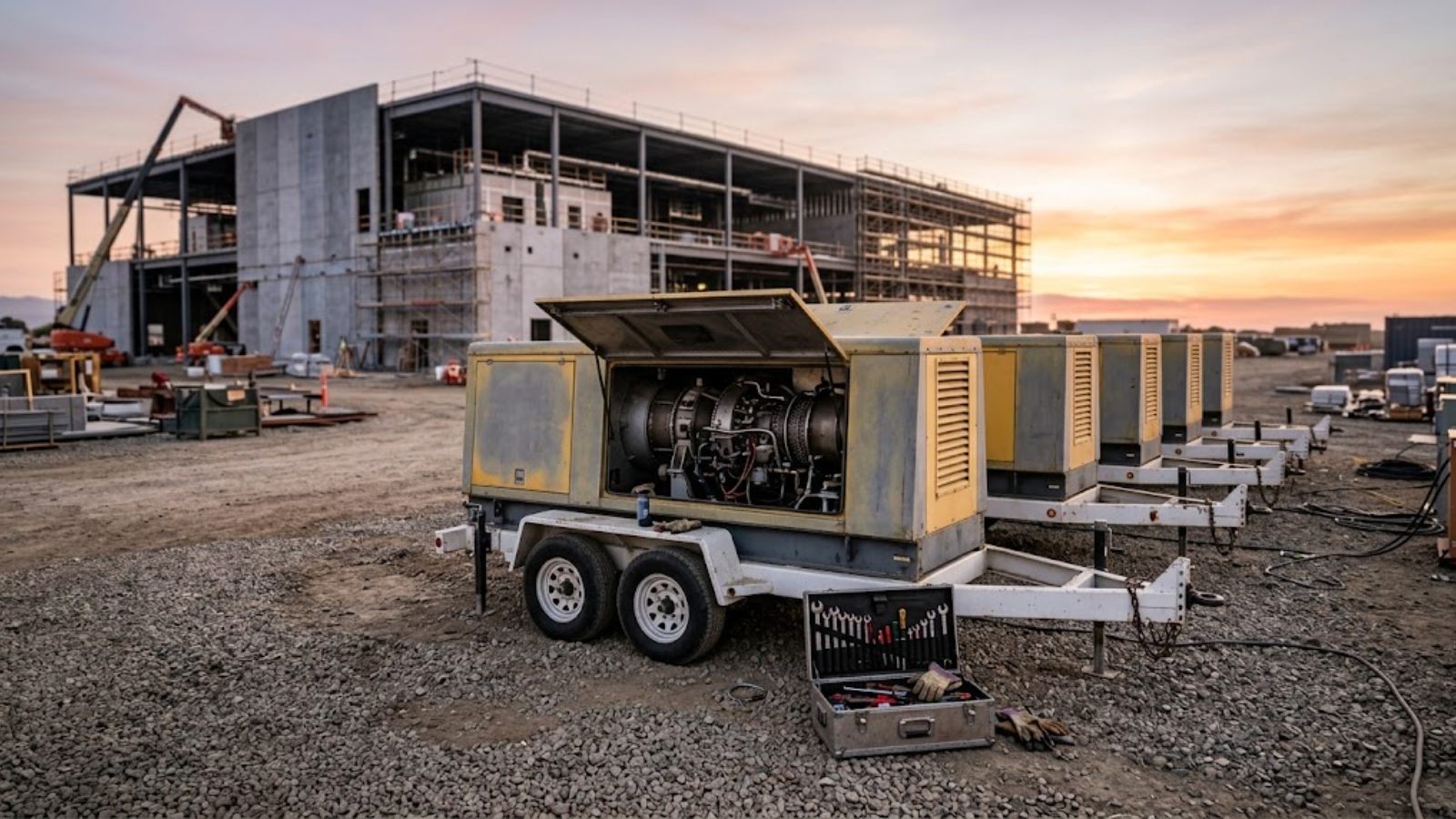
Bloomberg reported cracks forming at gas-fired turbines powering one Memphis campus, and cranks breaking off combustion engines at some sites. The turbine operator said in a statement that it has “not seen any extraordinary operating issues or failure rates.” An electrical engineer who previously worked at Amazon and Tesla told the Journal that cracked turbines and broken engine cranks are major failures requiring replacement.
In July, a Virginia data-center campus had a critical power failure and ran on diesel backup for about a day. A third site hit turbine glitches and other technical problems.
Why it is happening — and this is the interesting part
Artificial-intelligence workloads do not draw power steadily. They spike hard during computation and drop off as results are gathered. According to a Schneider Electric paper cited by the Journal, as these campuses grow, those oscillations can reach hundreds of megawatts — or gigawatts. Wood Mackenzie says big swings stress engines and turbines, shorten their life, and can cause shaft fractures.
One on-site power executive described a prospective customer asking for a power response time measured in tens of milliseconds rather than hundreds. As he put it, no rotating equipment and no lithium battery has ever had to respond that fast.
And the honest summary came from that same engineer: “Nobody has enough operating history yet to say how this equipment holds up.”
Who eats the loss
This is where it stops being an engineering story and becomes a portfolio story. Power providers typically do not get paid for electricity they fail to deliver, sometimes owe penalties, and are usually on the hook for repairing or replacing broken equipment. One consultant described a provider replacing millions of dollars of equipment after a multiday outage.
Meanwhile the customers — the technology giants — have highly profitable businesses and strong balance sheets. Many of the new power providers do not. The risk is not distributed evenly, and the market has been pricing the contracts rather than the risk: the Journal notes one provider trading at ten times forward earnings before interest, taxes, depreciation and amortization, about 19% above its oil-field-services peer group.
What we are changing
Chevron stays and stays reinforced. It is an integrated energy company with an investment-grade balance sheet selling power under a twenty-year contract; if a turbine cracks, that is a maintenance line, not an existential one.
Williams Companies (WMB) moves from reinforce to watch, and we are writing down what would make us wrong so we cannot quietly move the goalposts later: if two or more on-site power projects report equipment failures serious enough to trigger contractual penalties or replacement obligations at named public providers over the next two quarters, the pure-play on-site power trade is a service business with an experiment attached, and position sizes come down.
Note what we are not doing. We are not selling on a Heard on the Street column. The demand is real — one planned Texas campus would generate as much as 7.65 gigawatts, the equivalent of seven or eight nuclear plants. The thesis survives. The position sizing gets more careful, and the reason is on the record.