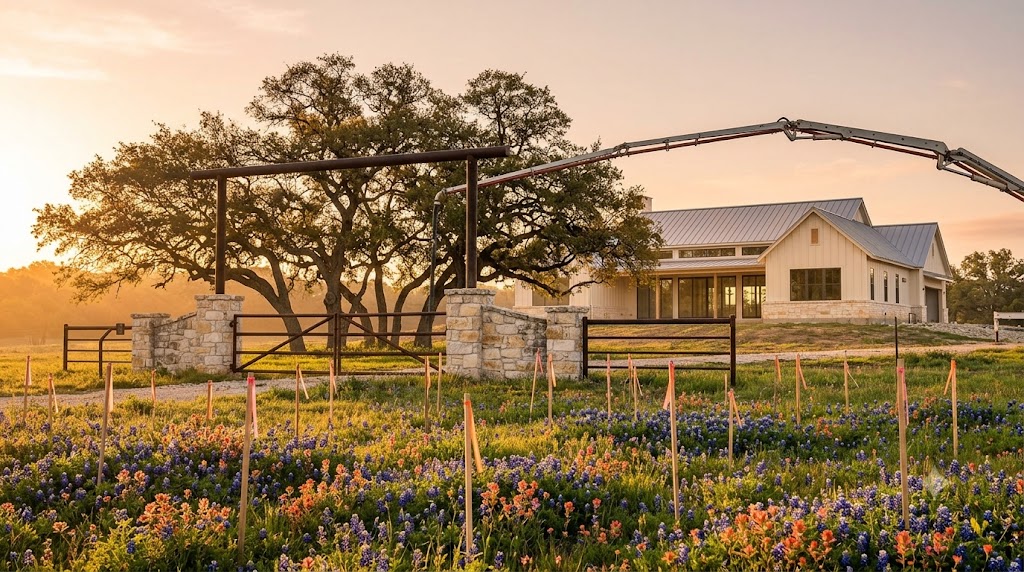
Austin’s home boom got bored of Austin. The Journal’s Mansion section reports million-dollar-plus buying spreading through the small towns of the Texas Hill Country — ranches, views and small-town quiet within reach of the airport.
The buyers are remote-capable wealth. They can work from anywhere, so they traded the city for acreage.
The airport detail matters. These buyers are not leaving the economy; they are stretching its leash.
This is a rerun, not a premiere. The same arc already played out around Nashville, Boise and the Florida coasts. The metro boom creates the exurb boom — exurbs being the ring of towns past the suburbs.
And the current underneath has not slowed. Money keeps migrating toward states with no income tax, and every wave of arrivals prices the next ring of towns.
The hidden math
Location is one of the biggest levers in a retirement plan. It is also one of the most emotionally decided. The listing shows the sunset. It does not show the line items.
Start with property taxes. Texas has some of the highest in the nation, so part of the income-tax savings quietly round-trips right back out.
Add insurance, which keeps getting pricier in a hardening climate market. Add healthcare access, which thins out fast beyond the metro.
None of these line items shows up in the daydream. All of them show up in year one of ownership.
Then the big one: liquidity — how fast you can sell at a fair price. A unique rural property is one of the least liquid things a family can own. When it is time to downsize, or the estate has to sell, the market can be one buyer wide.
The boom itself deserves respect as a cycle, too. Exurb prices that doubled on migration can round-trip if the migration slows.
A dream property bought at the top of a wave is a concentrated, leveraged, illiquid position. It just happens to have a porch.
We have watched clients discover each of these the hard way. The discovery always costs more than the checklist would have.
Underwrite the move
So we run relocation math the way we would run any position. Total cost of carry — what you pay every year just to own it — plus liquidity, concentration and the exit.
Concentration is the quiet one. A big rural purchase can become the single largest position a family owns — bigger than any stock we would ever let them hold.
That is not a reason to say no. It is a reason to size it, the way we size everything.
Here is the good news. The arbitrage — the gap you pocket by moving somewhere cheaper — is real. Done right, it can genuinely fund years of retirement.
But the math has to decide, not the listing photos. We price the whole stack — property tax, insurance, healthcare, exit — and only then compare it with the income-tax headline.
If the move still wins after all that, wonderful. Buy the ranch and enjoy the view. Just know what you own before the moving truck knows your address.