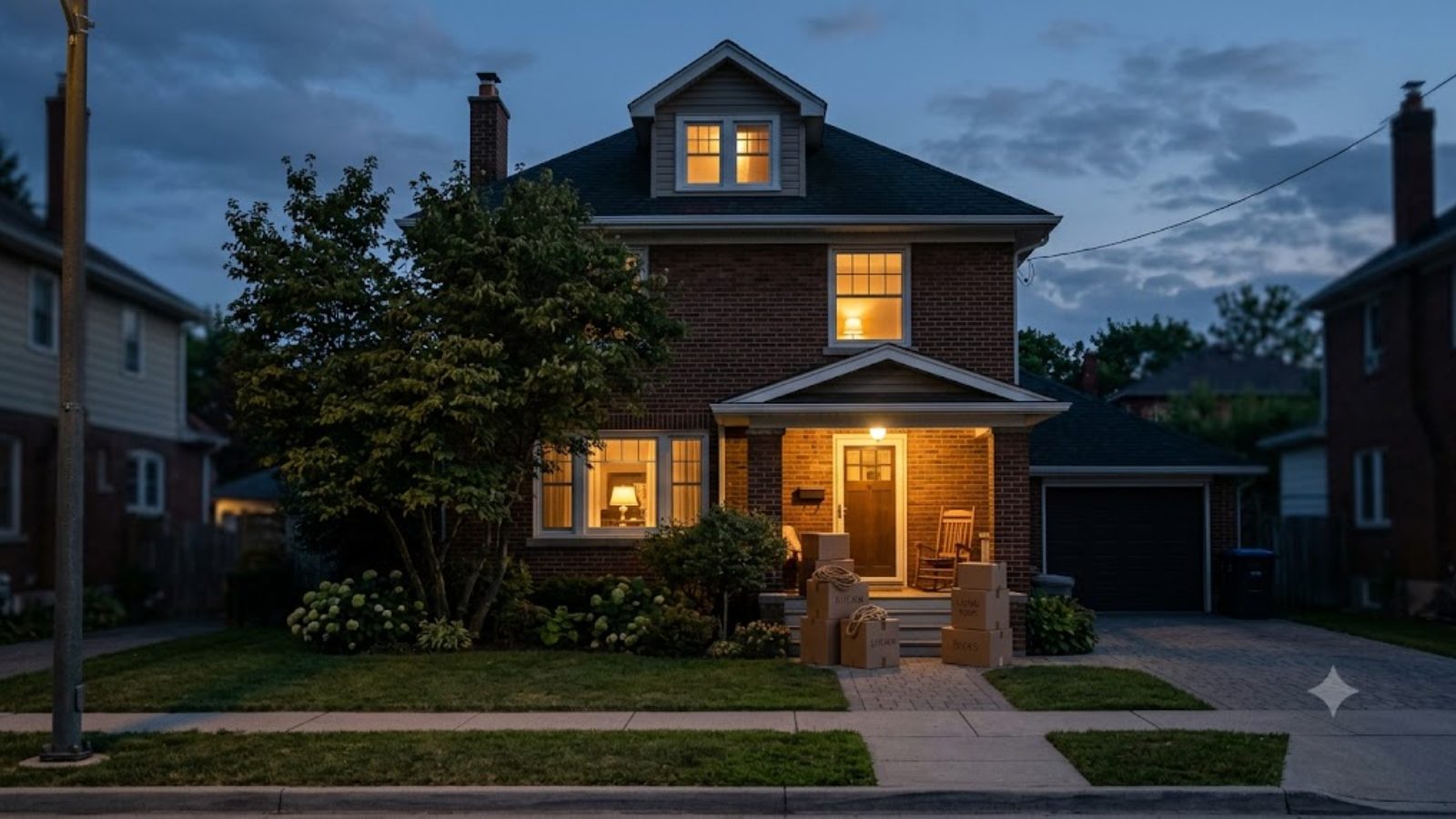
Three stories sat in different corners of the July 7 Journal. Kids moving home. A daughter scheming to move her aging father. Old schools turning into apartments. They are secretly one story: the American household is re-bundling.
Kids come back
Last year, 49% of adults under 30 lived with a parent — up 12 percentage points since 2019, per the Fed’s household survey. A third of them were 25 or older. About 55% called it financial necessity.
The math explains itself. The median home now costs over $400,000, and rents are at records.
One father in the story bought his three-bedroom house in the 1980s for $70,000 on a $35,000 salary — two years’ pay. The same ratio today would require a $200,000 salary. The stigma is dissolving because the math already did.
Parents need moving
At the other end of the same hallway: 23.6 million Americans now care for aging parents.
The Journal tells of a 64-year-old daughter who finally moved her father — who has dementia — into assisted living using a staged water-shutoff notice and a friend posing as a utility worker.
She held a power of attorney — a signed paper letting her act for him. He would not let her use it. One researcher notes 96% of residential-care staff report using some well-meant deceit with dementia patients.
The quieter stat should stop you cold. Only 19% of adults have discussed care preferences in detail with loved ones. Nearly half have not discussed them at all. The other 81% are planning to have that talk in a hospital hallway, at the worst possible price.
The buildings between
Meanwhile, real estate is trading on both trends at once. Nearly 2,000 apartments were carved out of former school buildings in 2024 — four times the prior year — with 9,320 more units in the pipeline.
Austin closed ten schools this year. In one Massachusetts conversion, a 65-year-old woman now lives in the art room of her own junior high.
Put it together: housing costs, longevity, and demographics are reversing the great unbundling of the American family. Twenty-somethings come back through the front door. Eighty-somethings head toward assisted living or the in-law suite. The empty schools in between get recycled into apartments for both.
For the Capital Wealth Growth Portfolio, this confirms a theme we already own. Senior-housing and healthcare demand is not a forecast — it is a certainty with a birth date. A senior-housing REIT boss was the second-highest-paid CEO in this year’s Journal ranking for a reason.
For your plan, three line items change. The boomerang budget: decide on purpose, with rent or a written timeline, and redirect some saved rent into the kid’s Roth. The care conversation: it is free this week and unaffordable later, so sign the powers of attorney while they are unquestionably valid. The house: it is your largest asset and your likeliest future care facility, so price the ADU, retrofit, or downsize while it is still a choice.
And if you are the sandwich generation, your own retirement contributions come first. The family balance sheet fails from the middle.