Toyota just agreed to spend $3.6 billion to move Tacoma pickup production back to Texas. It did not do this out of patriotism. It did it out of arithmetic.
The plan: a second assembly line at its San Antonio plant by 2030. About 2,000 new jobs. Roughly 150,000 more trucks a year. The plant already builds the Tundra and Sequoia with about 3,700 employees and 200,000 vehicles a year.
Today the Tacoma is built at two Mexican plants, in Guanajuato and Baja California. The Baja work moves to Texas. Guanajuato keeps running.
Nothing about the announcement is sentimental. It is a spreadsheet with a groundbreaking ceremony attached.
The arithmetic
Why now? Toyota’s North American unit swung to a loss in the fiscal year ended March. The reason was a 1.38 trillion yen tariff bill — about $8.5 billion.
A tariff is a tax charged at the border on imported goods. Japanese-built vehicles still face a 15% tariff under the year-old trade deal. When the tax on crossing the border costs more than building inside it, the factory moves. Simple as that.
And Toyota can afford the move. Its U.S. sales rose 0.5% in the first half while the whole industry fell 2.5%. It is the No. 2 U.S. automaker, behind only General Motors. Its North American plants run at over 90% capacity — the industry’s best.
This is reshoring from strength, not desperation. Strength is the pattern we like to own.
The concrete, not the truck
Here is why a retiree should care, and it is not the pickup.
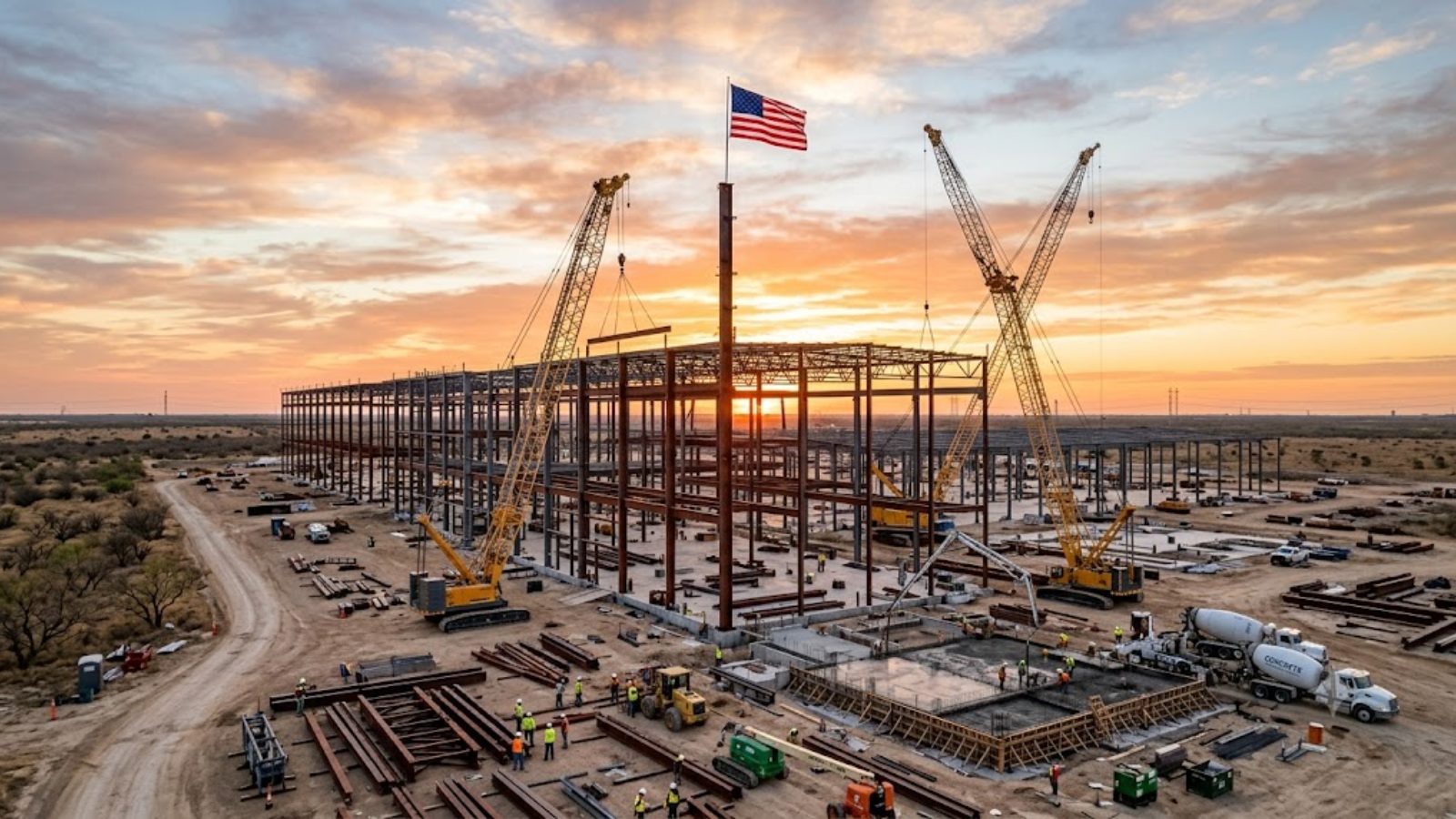
A $3.6 billion factory never arrives alone. It arrives with rail spurs, construction crews, heavy equipment, electrical substations, and a Texas power grid that must grow to feed it.
Toyota is one announcement in a reshoring wave that has been building for two years. Higher-for-longer tariffs mean higher-for-longer building.
That is a multi-year tailwind for gloriously boring businesses. Railroads haul the parts. Equipment makers pour the pads. Utilities wire the load. These are exactly the steady, dividend-paying companies that hold up through whole market cycles.
None of that spending waits for the first truck to roll. The checks start clearing years before 2030. That is what makes reshoring an investment theme rather than a news story.
The pattern to steal
When you read the word tariff, ask one question: who eventually builds a factory to stop paying it? That is where the durable money flows.
Then check whether you own the picks and shovels — the rails, equipment and grid businesses that get paid no matter which automaker wins. Guessing the winning truck is hard. Owning the companies that pour every winner’s concrete is easier.
Toyota will fight Detroit for buyers, and someone will lose. The railroad hauling both of their parts does not care who.
A tariff starts life as a tax you pay at the border. Give it enough years and it becomes a factory someone builds to stop paying it. That transition — from tax to concrete — is where the investment story lives.