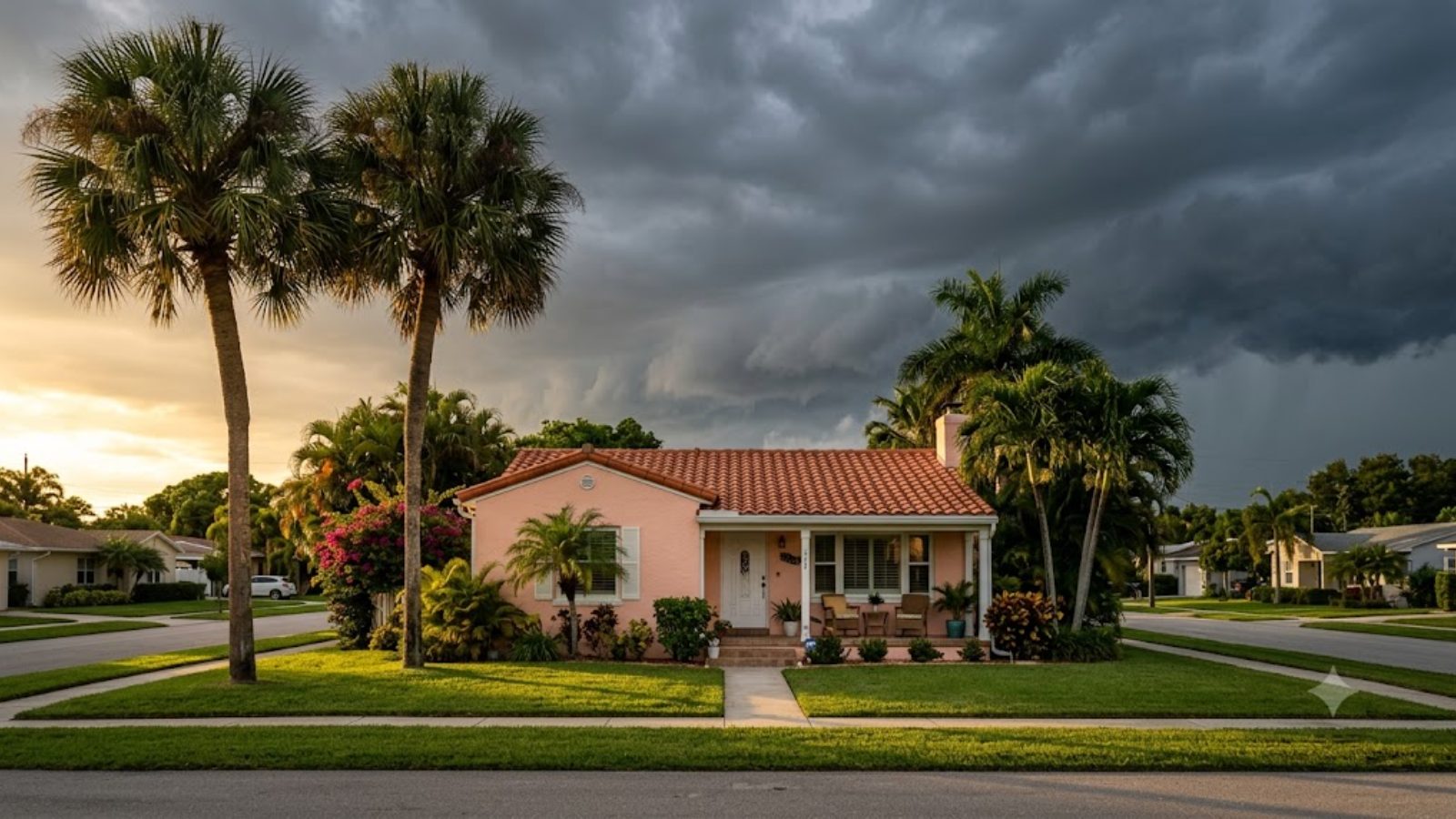
This November, Floridians vote on the biggest property-tax cut in America. The interesting question is not the cut. It is who pays for the ambulance afterward.
The ballot measure
The proposal, backed by Governor DeSantis, raises the homestead exemption — the slice of a primary home’s value shielded from property tax. Today that shield is $50,000.
It would jump to $150,000 in 2027, then $250,000 in 2028, with inflation adjustments after that. If it passes, it would be the largest property-tax cut in the United States.
Constitutional amendments in Florida need 60% of the vote. This one is polling at 64%.
For a retiree in a $400,000 house, shielding the first $250,000 of value is a real, permanent cut to a fixed cost. No wonder it polls well.
The other ledger
Property taxes are boring precisely because of what they fund: schools, sheriffs, firefighters, ambulances, storm drains.
Florida’s own economists project local revenue losses of $5 billion in fiscal 2027–28, $8.8 billion the next year, and $10.8 billion by 2030–31.
Miami-Dade alone stands to lose $304 million in year one. Leon County — home to Tallahassee — froze hiring before a single vote was cast, and its administrator calls the cut an amputation, not a haircut.
The measure is popular for a reason. The bill for it just arrives later, on quieter paper.
Pensacola’s mayor reports lenders asking a very unsentimental question: how do bonds backed by property taxes get repaid when the property-tax base shrinks?
That question matters to anyone holding municipal bonds — loans to cities and counties, often repaid from property taxes. Florida local paper just acquired a November ballot risk its owners never voted for.
For California readers
Most of the households we serve are in California, and many have run the “should we move somewhere cheaper?” math. This measure genuinely changes that math. Property tax is one of the few living costs you can relocate away from.
But the honest spreadsheet has two columns. Column one: no state income tax, and now perhaps a $250,000 homestead exemption.
Column two: homeowner’s insurance that has become Florida’s real property tax, and county services that thin out as budgets shrink. Plus the resale question — what happens to home values in a county that cannot staff itself?
A tax cut pushes home prices up. A hollowed-out fire department pushes them the other way. Both end up in the same number.
One page settles it: every recurring cost priced honestly, and every income line — pension, Social Security, withdrawals — taxed by the destination state’s actual rules. CalSTRS and CalPERS pensions, for instance, are taxed by California only while you live there.
So if Florida is on your shortlist, wait for November; the vote changes the math materially. Price the whole ledger, insurance quote included. If you hold Florida local munis, know what backs them before the vote, not after. And remember: how you draw down your accounts is a bigger tax decision than where you live — and it moves with you.