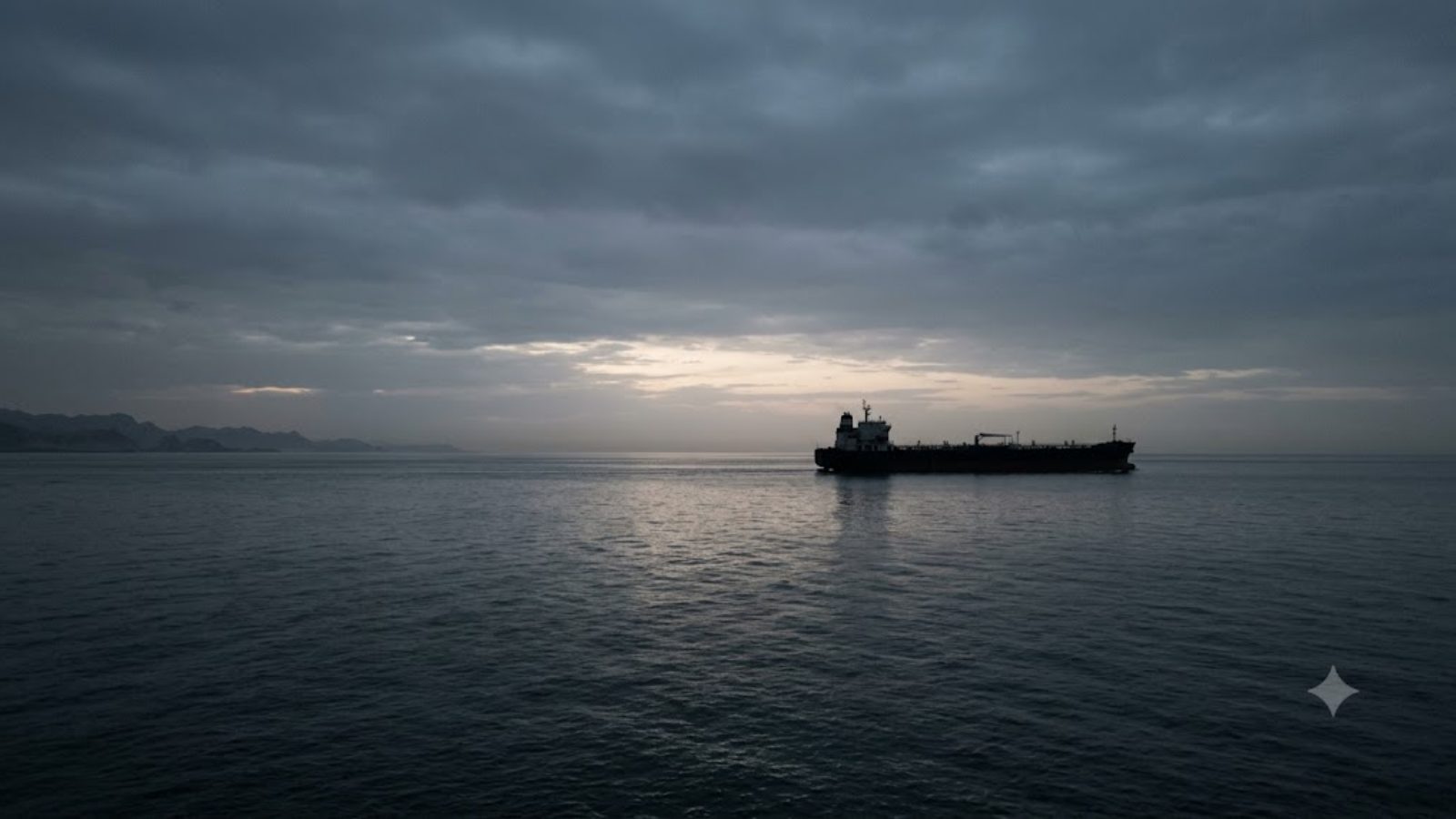
Most of us spent the weekend not thinking about the Strait of Hormuz. That is a fair way to spend a July weekend. But the shooting between the U.S. and Iran resumed while we were not watching, and by Monday afternoon it had turned into a number.
U.S. crude closed Monday at $78.14 a barrel, up 9.42% in a single session. That is one day, not one week. Brent — the international benchmark, meaning the oil price most of the world quotes — gained nearly 10% to $83.30.
What happened
The cause is not complicated. The U.S. launched a third straight night of strikes on Iran. Iran kept the waterway closed rather than declare it open. President Trump said he is reimposing the U.S. blockade on Iranian shipping.
The Strait of Hormuz normally carries about a fifth of the world’s oil and is the main pathway for Gulf producers shipping crude to Asia. Kpler, a firm that tracks ships by satellite, counted just 19 ships a day over the weekend. That is down more than half from the weekend before.
The transmission belt
Here is why this matters if you draw income rather than trade oil. Energy is already in the inflation numbers. Inflation hit a three-year high of 4.2% in May, as the war drove up energy prices.
And the Fed is watching that number. Officials broadly agreed at their June meeting that they would need to raise rates if inflation stays elevated this year. The June inflation reading was due out Tuesday.
So the barrel does not stop at the gas station. It travels into the inflation report, and the Fed reads that report before deciding what your cash and your bonds will earn. A war headline becomes an energy bill, then an inflation print, then a rate decision.
A thinner cushion
When oil spikes, the U.S. leans on the Strategic Petroleum Reserve — the government’s emergency stash of oil, set up in 1975. It still works. The current release, coordinated with other nations, helped cap crude at $112.95 a barrel earlier in the war, even with a fifth of the world’s supply disrupted at one point.
But the stash has been used hard. Over just the past four years, the Biden and Trump administrations ordered 352 million barrels released — nearly half its capacity. Stocks now sit at their lowest level since 1983. Energy Department officials told government auditors they are holding the reserve together with “Band-Aids,” and that it is uncertain how long they will hold.
None of that is a reason to act today. It is a reason not to assume the next spike gets capped as neatly as the last one.
There is a counterweight, and it deserves daylight. Goldman Sachs analysts estimate new Gulf pipelines could shield more than 45% of prewar Persian Gulf oil exports from disruption by the end of 2027, and more than 60% by the end of 2028. Supply has been recovering too: the U.A.E. pumped 3.81 million barrels a day in June, up 1.64 million from May, after leaving OPEC.
Read the fine print, though. That is a bank’s estimate, not a fact. It builds over years, not months. And even on its own timeline it leaves a meaningful share of those exports exposed.
So the principle is boring, which is how we like principles. A single session is not a plan. Monday’s move says the world got riskier over a weekend. It does not say what your household will spend on energy over the next three years. Know what your plan assumes about inflation and rates, and whether those assumptions still match the world you live in.