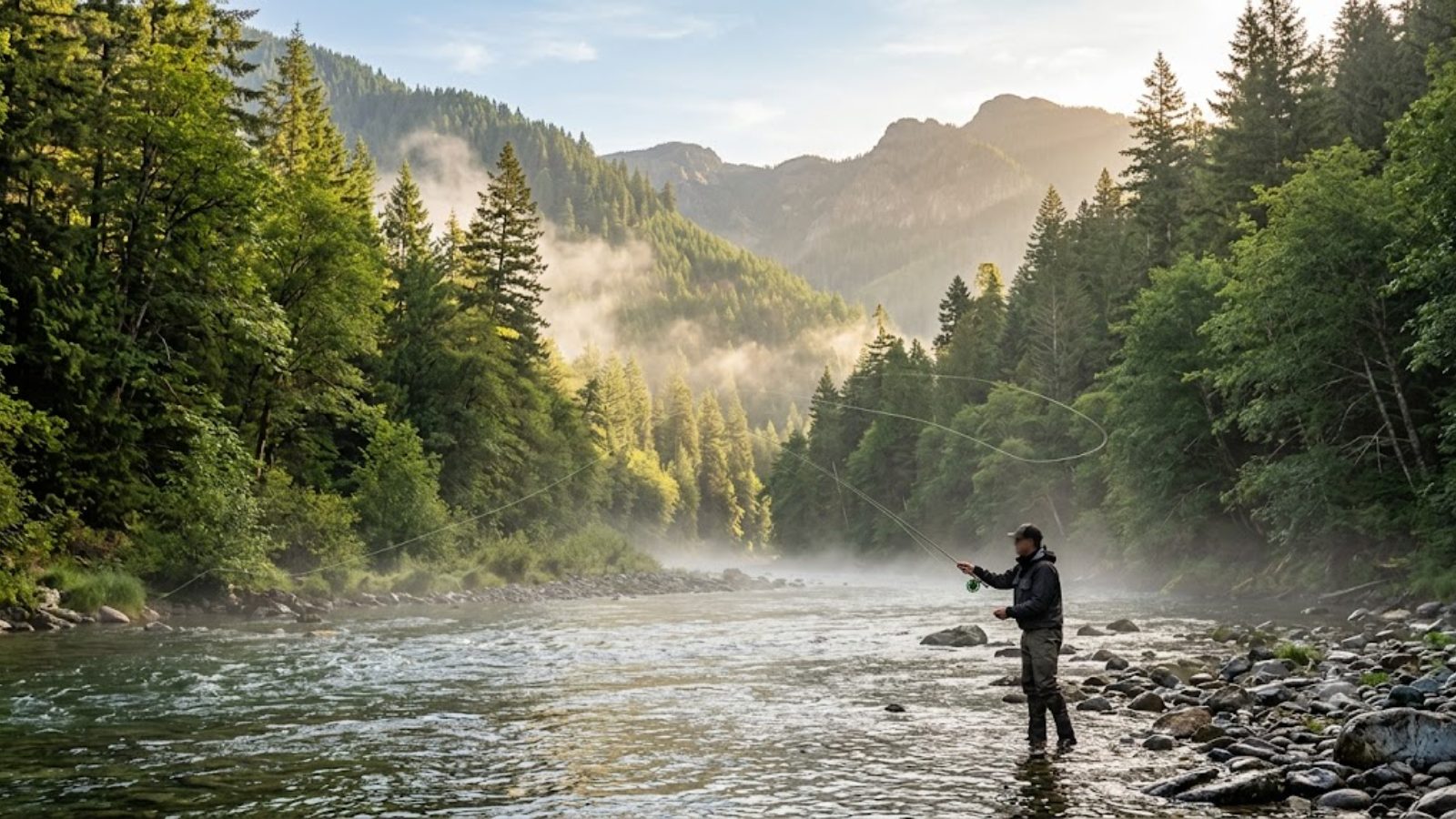
There is a river in the Catskills called the Beaverkill. It is to American dry-fly fishing what Florence is to painting — the place where the thing became an art. It is also where beginners go to be humbled by it.
The Journal’s correspondent went there to learn. He mostly learned this: the same hemlock tree will eat your line three times before breakfast.
The vocabulary arrives long before the skill does. Loading move. Power snap. Cannonball. You can name every part of a cast and still hang your fly in a tree. Knowing the words is not the same as owning the craft.
The river wins
That is the charm, honestly. The cradle of a pastime is also its best classroom, and the classroom charges tuition. Every expensive skill starts with a bad Tuesday.
The river does not care about your job title. It does not care what the rod cost. It grades the cast, not the resume. There is something wonderful about a place that has been humbling confident people for generations and shows no sign of stopping.
And the tuition works. You lose a fly to the hemlock, and the next cast is a little shorter and a little smarter. Nobody learns this from a glossary of casting terms. They learn it from the tree, one confiscated fly at a time.
By the third donation to the hemlock, something shifts. The beginner stops fighting the river and starts reading it. That is the moment the sport actually begins — and no amount of vocabulary can rush you there.
The money read
There is a money read here, because there always is one. Look at what surrounds the river: the gear, the guides, the riverside inns. That small-luxury economy keeps humming even while overall consumer spending grows at just 0.2%.
Why? People protect the spending that feels like identity long after they have postponed the couch. A fly rod is not a purchase. It is a statement about who you are on Saturdays. Households defer furniture. They do not easily defer themselves.
That behavior shows up in portfolios too. It is the same pattern that keeps demand steady for everyday basics. That is part of why our defensive holdings — the steady, boring names built for slow stretches — hold up when spending cools.
Tuition either way
The metaphor is too good to leave on the riverbank. Investing hands you the vocabulary before the skill too. Anyone can say the words. Doing the thing — calmly, on schedule, through a scary week — is the actual cast.
And the market, like the river, charges tuition either way. You can pay it in small, early, supervised mistakes. Or you can pay it all at once, later, standing in the current.
The Beaverkill’s lesson travels well. Keep the tuition small. Keep showing up. And when the hemlock takes your fly a third time, laugh, tie on another, and shorten the cast. That is the whole sport, and most of the job.
The correspondent, for the record, kept casting. So should you.