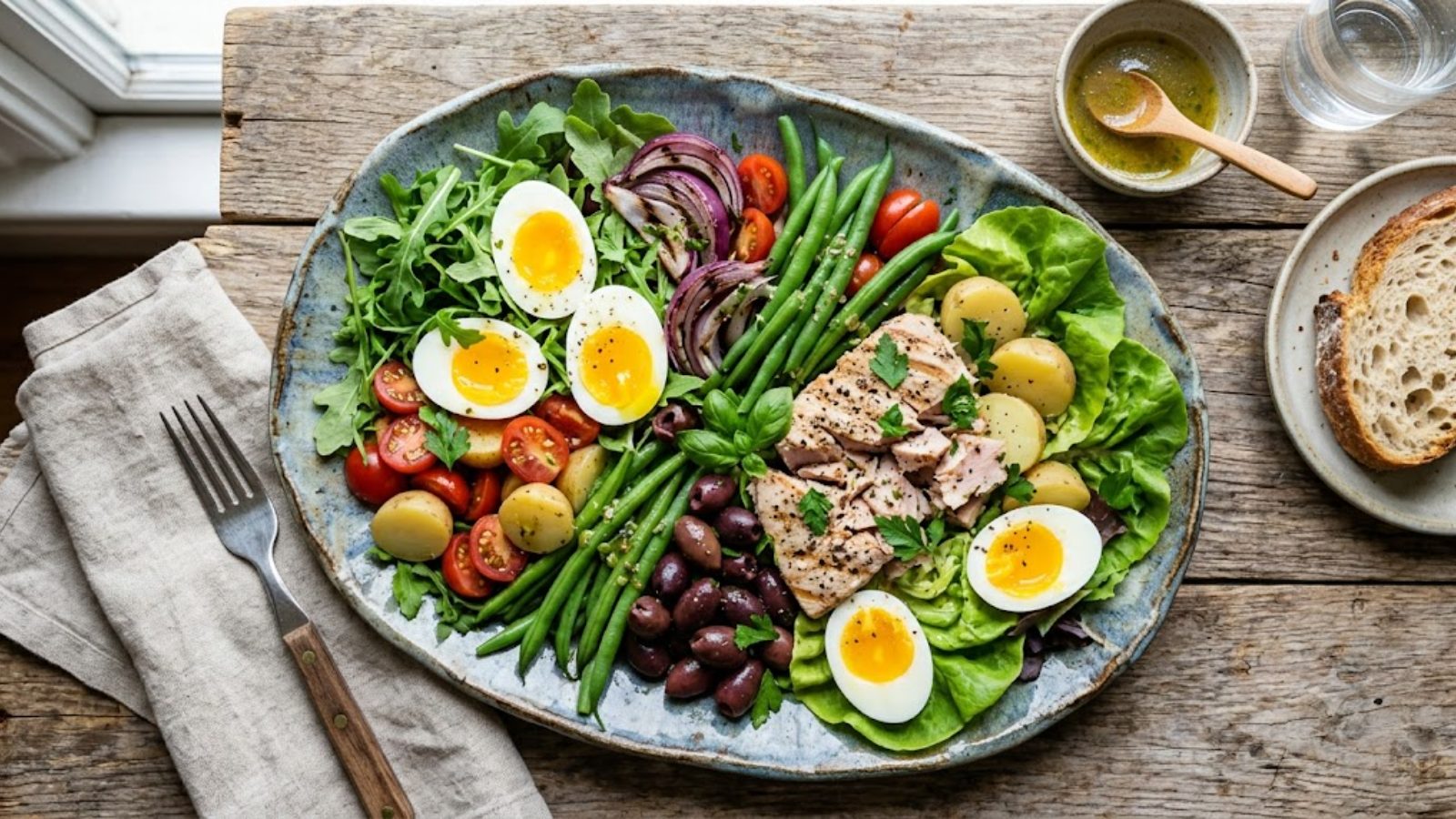
The Journal’s food desk has committed light heresy. It rebuilt the Niçoise salad — the French classic — with the tuna swapped out for another fish entirely. The purists will write letters. The dish, meanwhile, will be fine.
Light heresy
Why does the salad survive the surgery? Because the structure was right all along. The salt, the acid, the egg, the olives — the architecture of the thing — is what carries it. No single ingredient was ever irreplaceable. Not even the famous one.
Substitution isn’t sacrilege. It’s technique. A good cook does not panic when the market is out of tuna. A good cook checks the structure, picks another fish, and serves dinner on time.
Notice what the cook did not do. The cook did not cancel dinner. The cook did not pay any price the fishmonger asked, just to keep the old recipe card happy. The structure gave the cook options, and options are the entire luxury.
The letters from the purists will argue that the tuna is the salad. The plate will quietly disagree. Tradition is lovely. Structure is what feeds people.
The recipe rule
This is worth sixty seconds of an investor’s attention, and here is why. Portfolios are Niçoise salads.
The allocation — the recipe that decides how much of your money goes where — is what makes the dish. The tickers are just the fish. Get the recipe right and the meal survives a substitution. Get it wrong and no ingredient can save you.
Which leads to the rule we actually run money by: no single holding should be load-bearing. If one name becomes the whole meal, you do not have a portfolio. You have a tuna sandwich with garnish.
Diversified — spread widely enough that no single holding can sink the plan — is the kitchen’s word for safe. It is not owning many things. It is owning a structure that survives losing any one of them.
Same dish, different fish
We run the kitchen this way on purpose. When Micron is unavailable at a sane price, the memory exposure rides through AVGO and TSM instead. Same dish, different fish, structure intact.
The sleeve — the section of the portfolio assigned to that theme — keeps doing its job while one ingredient sits on the bench. Nobody skips dinner. Nobody chases the missing fish at a silly price. The recipe holds, which was the whole point of writing it down.
This is also the calm answer to every “should I sell it all?” phone call. If the structure is right, one ingredient having a bad month is a substitution question, not an emergency. If the structure is wrong, no single ingredient was ever going to save it.
The test is simple and a little brutal. If a portfolio cannot lose its tuna, it was never diversified. The reworked salad passes that test. Your statement should too.
Bring it in, and we will check the recipe together. It takes fifteen minutes, and unlike the salad debate, nobody has to write an angry letter to a food section.