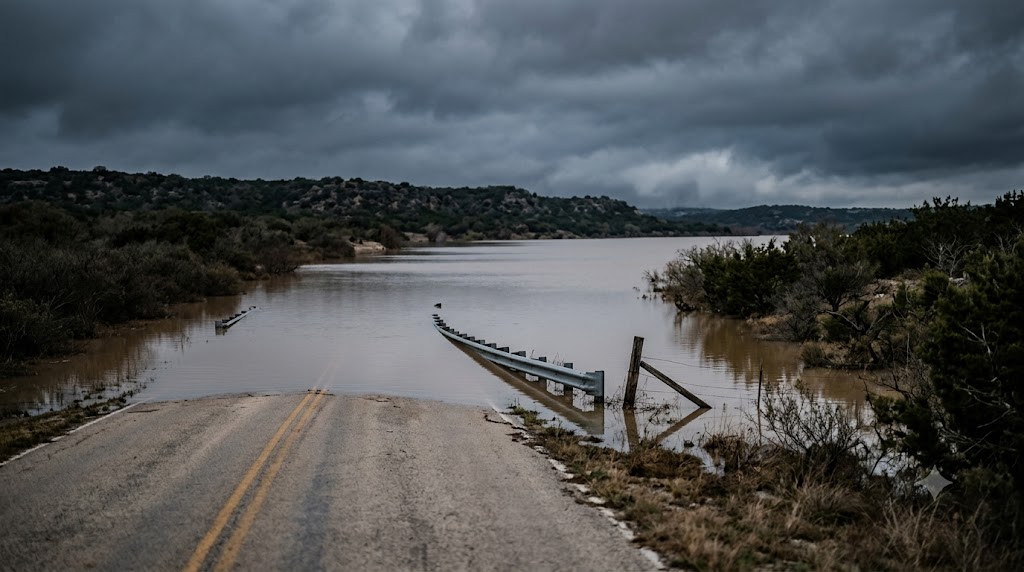
One year, almost to the day, after the Camp Mystic disaster, the Texas Hill Country flooded again. Two feet of rain fell in hours. Two people died. More than 230 were rescued. A state of emergency covers the region.
The first job of a week like this is plain respect for what people lost. The money questions come second. They still deserve honest answers, so here they are.
Why it keeps happening
The geology is brutal and specific. The Hill Country sits on limestone canyons that funnel water fast. Its rivers can rise dozens of feet in a single night.
Everyone who lives there knows this. The problem is that the rain, increasingly, outruns the knowing.
Warning systems, drainage and emergency budgets were built for the storms of an earlier era. The water keeps arriving faster than the infrastructure budget.
The quiet repricing
Extreme weather has stopped being an event and started being a line item — a regular entry in budgets rather than a surprise.
The financial system is repricing that reality in three places. Insurance premiums rise where claims keep coming. Municipal borrowing — the bonds towns and counties sell to fund projects — costs more where the risks are plain. And land values in flood plains adjust as buyers and lenders do the same math.
None of this shows up in one dramatic day. It shows up in renewal letters, bond auctions and appraisals, year after year. That slow drip is the real financial story of weeks like this one.
Anniversaries are how the repricing compounds. Each new event updates every model, every premium, every map.
What we watch
For our purposes, this files under the same watch as the wildfire smoke. Two channels matter.
First, insurers — companies like AIG and Assurant — where claims frequency decides profitability. A single flood does not move them. A pattern of floods does, and the pattern is the story.
Second, the long, unglamorous infrastructure spending that follows every anniversary like this one. Culverts, sirens, drainage, hardened roads. That spending is slow, but it is stubborn, and it flows to the same steady construction and engineering businesses each time.
No action today. Our insurance-sector exposure stays in the watch column while claims season develops. Patience is a position too, and this week it is ours.
The household version
There is a personal version of this story, and it is worth fifteen minutes.
Reread your homeowner’s policy and learn exactly what water damage it covers. Many people are surprised. Standard policies and flood coverage are usually separate things.
Then find out whether your address sits in a flood zone. The maps are public, and they change. If the answer is yes, price the coverage before the renewal letter prices it for you.
None of this requires panic. It requires a folder, an hour, and one honest phone call to your insurer.
Some weeks the right move is simply to pay attention — and to keep the families of the Hill Country in mind while we do.