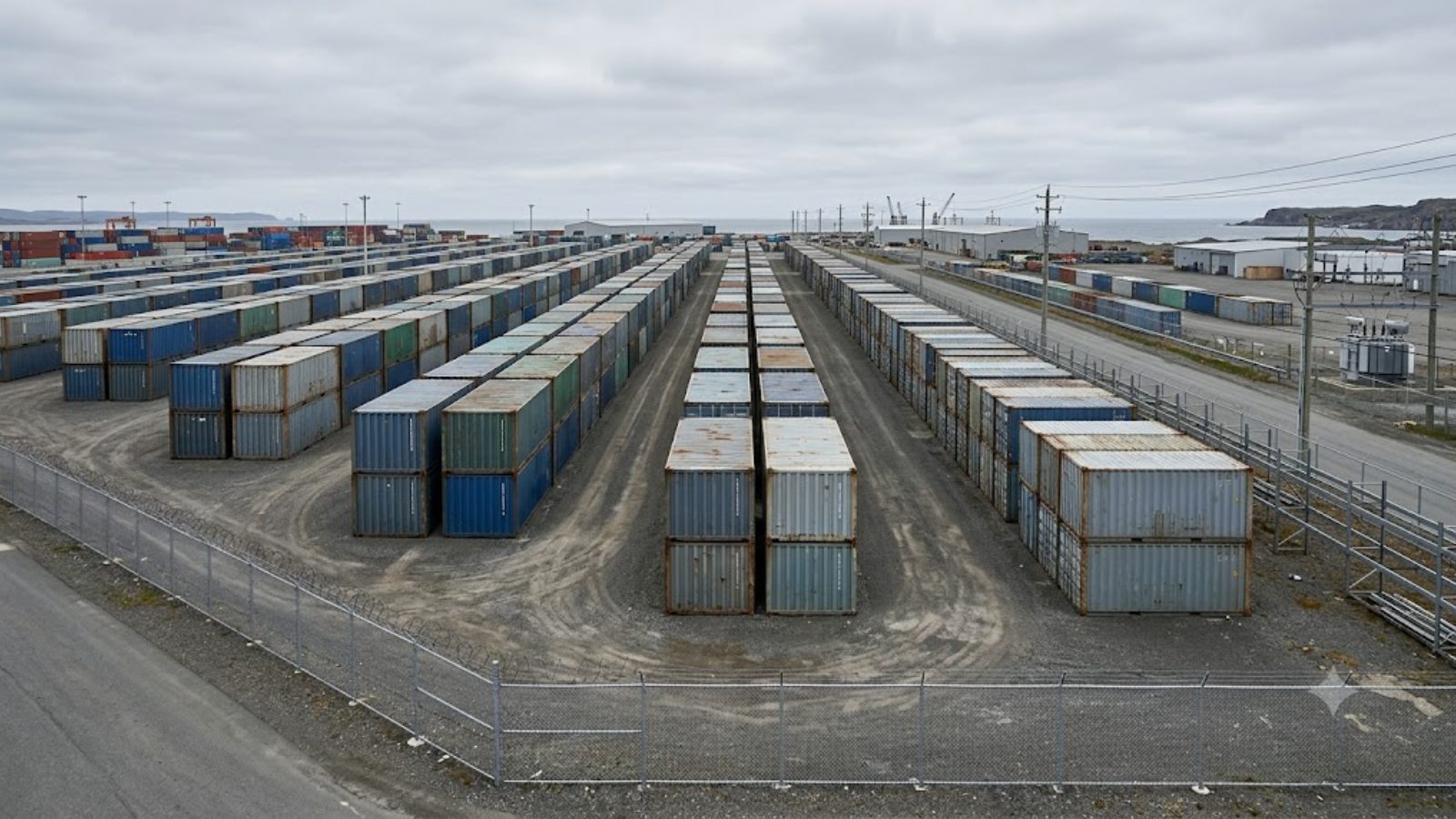
The most underpriced fact in the whole artificial-intelligence story is simple. The models need electricity, and the grid is already groaning. This week China offered its answer, and it arrives on a flatbed truck.
Two Countries, Two Answers
The approach is the actual news here.
America is meeting an electricity problem by building generation. That means years, permits and public hearings.
China is meeting it with a manufactured product the size of a shipping container. You unload it and plug it in.
Storage does not create power. It moves power in time — charging when the grid has spare capacity, releasing when everyone wants it at once.
That is why the container is interesting. It sidesteps the slowest part of the American answer, which is not engineering. It is paperwork.
Neither approach is obviously the right one. New generation adds real supply, while storage only shifts electricity that already exists.
But one of them can be delivered this quarter, and the other one cannot. In a boom, speed is its own kind of advantage.
Own The Constraint, Not The Application
There is a habit worth borrowing here. When a boom is loud, look for the part of it that is scarce.
Right now the scarce thing is not another chatbot. It is power, cooling and transmission.
Storage does not care whose model wins. It gets paid for smoothing the load either way.
Power, cooling and transmission collect whether the winning model ships from California or Hangzhou. The wire is neutral, and neutral is a nice quality in an investment.
Put plainly: own the road, not the car. Cars go in and out of fashion. The road gets used regardless.
Booms tend to pay the bottleneck. When everybody needs the same scarce input, whoever owns that input sets the terms.
The AI story will keep producing loud headlines about models. The quieter question is who gets paid when the meter spins.
Why We Are Not Buying The Container
Here is the part worth saying plainly. The entire AI theme quietly rests on a wire and a substation.
That is the least glamorous part of the story, and also the most ownable one.
We cannot and will not buy the Chinese storage manufacturer. The rule is U.S.-exchange only.
We also avoid any name that can die on a single tariff or data-security headline. That is not a political view. It is a risk we cannot size or model.
So we express the same idea through the utilities, the grid-equipment makers and the electrical names. They get paid to move and store the electrons regardless of whose battery holds them.
If a U.S.-listed, sanely priced way to own modular storage shows up, it goes straight on the candidate list. A Chinese manufacturer we are not allowed to hold does not.
For now this is a watch item in the Capital Wealth Growth Portfolio, not a trade. The container is a lovely piece of engineering and an un-ownable stock.
Which is exactly why we would rather own the wire than the box.