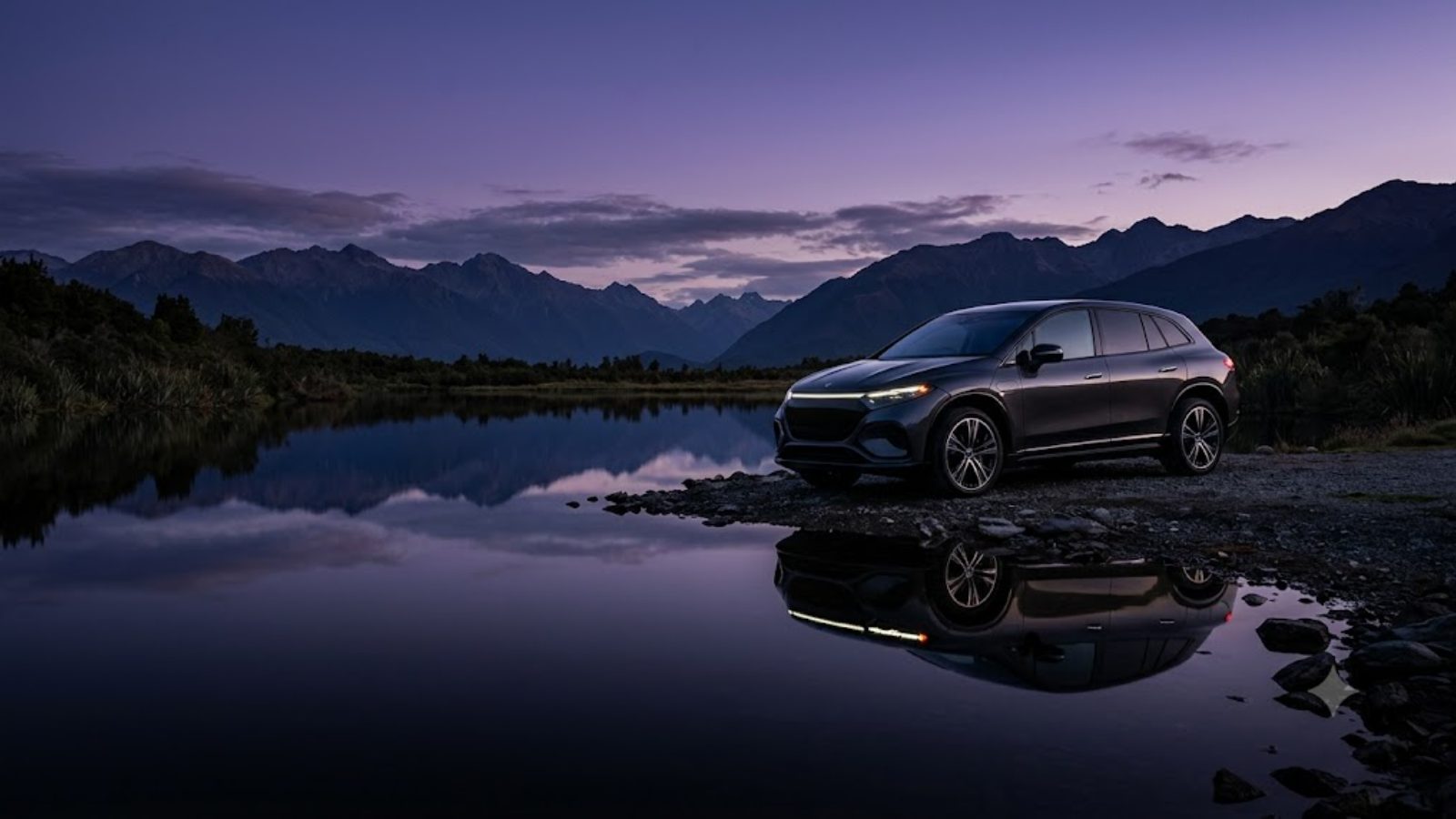
Every so often a car columnist writes something that belongs in the business section. This week Dan Neil did it while ostensibly answering his hate mail. His message to grumbling American enthusiasts was blunt: stop mourning Detroit.
The frontier of the automobile has moved. It now speaks Mandarin.
The Car That Swims
His evidence is gloriously absurd. BYD’s ultraluxury Yangwang can float in water for up to half an hour.
On land it does other party tricks. It spins in its own length like a tank. Then it shuffles sideways out of a tight parking spot like a crab.
The sticker is roughly $150,000. For that money you get an SUV that treats a lake as a driveway.
Its stablemate is not messing around either. The U9 Xtreme is the fastest road car on the planet at 308 miles an hour.
Three hundred and eight. On a public-road car. Sold by a company most American drivers could not pick out of a lineup five years ago.
This is the automotive equivalent of a country doing a backflip to prove it can stand up. It is showing off, and it is working.
The Boring Number Underneath
Now the dull number, which is the serious one. China is the world’s largest car market. It is also the second-largest exporter of light vehicles.
And it controls something like 75% of global EV battery manufacturing.
Read that again slowly. Three out of every four electric-car batteries on Earth come out of one country’s factories.
The theatrical SUVs are the marketing. The battery chemistry is the moat — the durable advantage a rival cannot copy in a season.
The patents underneath that chemistry sit with names like CATL. The magic trick is the floating car. The money is the thing it floats on.
Enthusiasts hate hearing this, and Neil clearly enjoyed telling them anyway. Nostalgia is a lovely hobby and a terrible research method.
What We Own Instead
Here is the part worth saying plainly. We do not own a Chinese automaker, and we are not going to.
Our rule is U.S.-exchange only. No crab-walking SUV survives a tariff headline or a data-privacy ban.
That is not a theory. Polestar is already exiting the U.S. market in 2027 over exactly that kind of problem.
So we own the constraint instead. Utilities. Electrical-equipment makers. The power-and-storage names that get paid no matter whose logo sits on the hood.
Batteries need electricity. Electricity needs wire, transformers and generation. Those are boring, listed, taxable American businesses, and they collect a toll on every one of these cars.
It is the same idea as this week’s data-center and grid stories. Own the road, not the car.
The showroom sells you a car that swims. The supply chain sells everyone else the batteries. Only one of those two facts survives contact with the Capital Wealth Growth Portfolio.
When the most exciting product in a category and the least ownable stock in it are the same object, that is not a contradiction. That is the whole discipline.