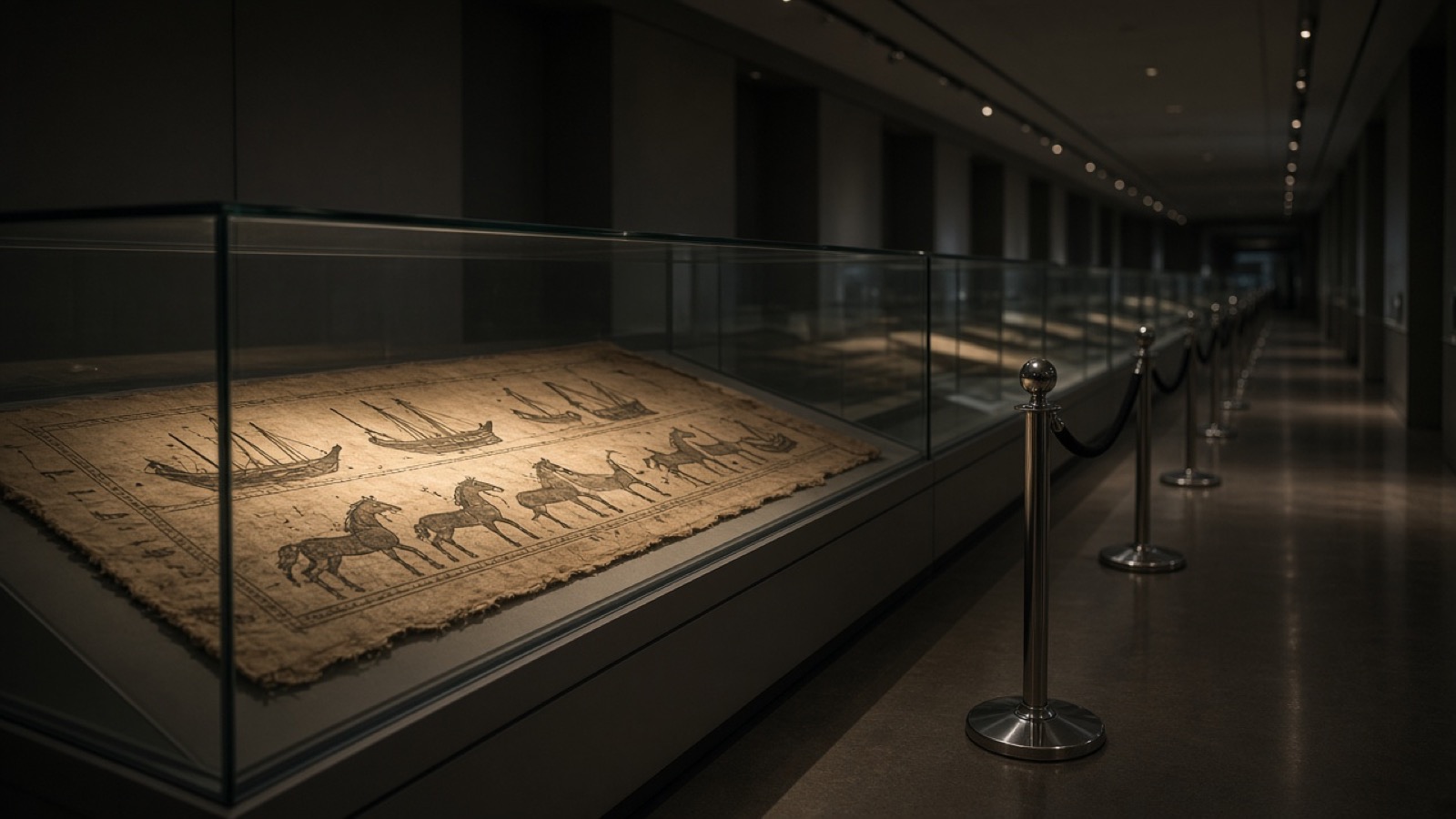
England waited about 1,000 years to get its most famous piece of cloth back, and it has spent the first weeks of the visit arguing about who gets to the front of the line. The Bayeux Tapestry — 230 feet of embroidery telling how William of Normandy conquered the place in 1066 — is on show at the British Museum after seven years of diplomatic wrangling between London and Paris. When tickets went live, Joe Stonor reports in Monday’s Journal, the online queue blew past 80,000. Sasha Mills, 25, an art-history postgraduate who set her alarm for 8 a.m., never got close. Then word got out about who hadn’t needed to queue at all.
Guests at One Aldwych, a luxury hotel and museum sponsor, were offered tapestry tickets with rooms running around $1,100 a night, for a viewing at the date and time of their choosing. In August the Guardian reported that Palantir (PLTR) co-founder Peter Thiel had a private viewing, with no public record of donations to the museum; Thiel didn’t comment. One author noted on X that an American billionaire had seen it before the King, the Queen or the French president. Rebecca Dale, 28, a government worker from Leicestershire, posted about it and came back from a lunch break to 200 comments; she called the scramble “the Eras tour for history fans” and said the whole thing feels two-tiered. The question made it all the way to Prime Minister’s Questions, where Andy Burnham, Britain’s new prime minister, said he wanted the maximum number of kids to stand in front of it.
The museum’s defense: sponsors get something for their money, and it set aside tickets for children and built school programs around the show. More tickets go on sale Oct. 21 for the rest of the 10-month stay, with competition for the 40-minute, one-way procession past the cloth expected to be fierce. Even the full-scale replica in nearby Reading is sold out through January 2027. Laura Roberts, who struck out on tickets and came down from Blackpool with her daughter anyway, didn’t buy the sponsor argument. “It’s just not fair is it,” she said.
What a thousand years buys
Step back from the queue and look at the object. English nuns stitched it; a small town in Normandy kept it for most of a millennium; revolutionaries in France eyed it as a wagon cover; Nazi soldiers tried to ship it to Berlin. It survived all of them because, in every century, someone decided it mattered enough to keep. Mills, still ticketless, offers the consolation: “It’s literally a record of how we got conquered.”
Our read
Two planning threads here. The first is Cash Flow (M5): the pay-to-skip economy is now everywhere — expedited passports, airport lanes, hotel packages that bundle the museum — and the honest way to think about it is that you’re buying certainty with money instead of time. A $1,100 room buys a sure viewing at the hour you pick; the Oct. 21 drop buys a chance. Neither is wrong, but you should know which one you’re paying for and why, and most of the time patience is the better-priced option.
The second is Estate, and it’s the bigger one. The tapestry didn’t survive revolutions because it was valuable; plenty of valuable things ended up as wagon covers. It survived because it always had a steward — a person or an institution whose job was to keep it, and who knew how. That’s the estate question most families skip: not what you own, but who’s charged with keeping it, whether they know it, and whether the instructions outlive you. A letter of intent, a named steward for the things that matter, a family meeting before anyone has to guess — that’s most of it. Hastings wasn’t on anyone’s calendar either, which is the argument for doing the paperwork on a quiet afternoon rather than the week it’s needed.