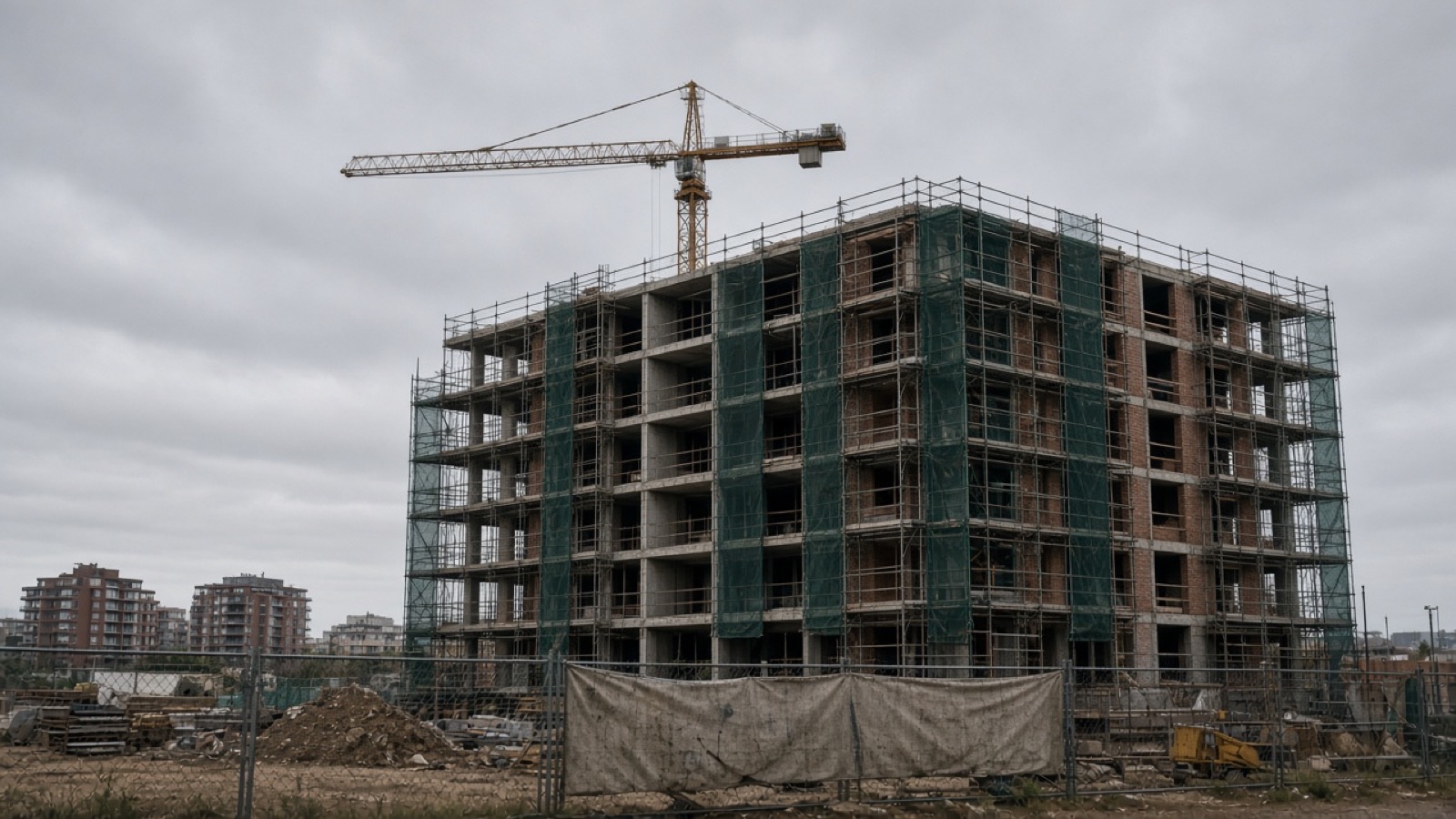
Matt Rosenthal shook hands on a roughly 200-unit apartment property in the Midwest for about $20 million. Before his Eastham Capital even put down the deposit, borrowing costs had jumped more than six-tenths of a percentage point. So he did what a growing number of commercial buyers are doing, Peter Grant reports in Tuesday’s Journal: he threatened to walk, and the seller cut the price by $600,000. “It’s certainly a different deal now,” Rosenthal said. The maneuver has a name — retrading — and it’s what a 5.3% ten-year Treasury looks like when it arrives at a closing table.
The mechanics are simple. Six to 12 months typically pass between a signed contract and a closing, and a buyer who priced the deal when debt was cheaper now wants a concession or an exit. The calls started when yields rose in late summer and multiplied after the Fed’s quarter-point hike last month; a Cushman & Wakefield managing director told Grant he was already fielding calls “talking retrade” days after the move. Medalist Diversified gave up $100,000 on a $10.2 million retail property in Greenville, S.C., to get it closed in September. A bank walked away from a $45 million construction loan on a North Carolina shopping center that was more than 90% leased; a replacement was found, with friction.
Why property feels rates first: a buyer puts up a slice of the price and borrows the rest, so the debt sets the math. And the debt pile is huge — commercial and multifamily mortgages top $5 trillion, a bigger number than Americans’ credit-card and auto-loan balances put together. When the debt costs more than the building earns, the equity underneath shrinks fast. From late August through Friday, Oct. 2, the FTSE Nareit All Equity REITs index fell more than 8%, per Green Street. Trepp counted 11.4% of securitized commercial mortgages in special servicing in August, the highest since February 2013. The 10-year settled at 5.310% Monday, a two-decade high, and eased to 5.270% Tuesday. Capital hasn’t vanished — lenders competed hard to write Northwind’s $208 million loan converting a Brooklyn office tower to apartments. But as Hines’s Alfonso Munk put it, “The hurdle is simply higher.”
The home buyer’s version of a retrade
A household buying a house lives the same gap between contract and closing, with far less leverage over the seller. Bankrate’s 30-year fixed hit 7.47% in Wednesday’s table, a 52-week high, up from 7.23% a week earlier; Freddie Mac’s survey has it at 7.28%. The institutional move is the retrade. The household move is the rate lock and the financing contingency — the clause that lets you leave if the loan you were promised isn’t the loan you’re offered.
Our read
This is Investments and Risk (IN04), and it splits two ways. Listed REITs are a WATCH: down more than 8% in six weeks against a 5.3% ten-year isn’t yet a price that pays you for the leverage underneath it, and the books’ exposure is small and held at weight — Realty Income (O) in 6 books, Vanguard Real Estate (VNQ) in 4, no office or mall landlords held directly, nothing added. Private and non-traded real-estate funds are an AVOID. The public market reprices a building every afternoon; the private one reprices when the appraiser visits, and a retrade is simply the private market’s price discovery showing up late — often right before the withdrawal gate comes down.
For anyone under contract on a home: lock the rate, keep the financing contingency, and know your walk-away number before the appraisal. Leverage is what made real estate feel brilliant for fifteen years, and it doesn’t care which direction rates move. A plan that quietly assumed one direction deserves a look while the sky is only cloudy, not pouring.