Formula One’s traveling circus — drivers, mechanics and support staff, about 3,000 people in all — lands in Singapore every fall for a race weekend with millions of dollars at stake, and then declines, as a group, to reset its watches. Stu Woo’s A-hed in Tuesday’s Journal describes a paddock that stays on European time: up at 2 p.m. local, omelets in the afternoon, dinner well past midnight. Jet lag never gets a vote because nobody gives it one. “It’s quite pleasant,” says Audi driver Nico Hülkenberg, who reports having hardly any.
The trick is a scheduling accident the sport turned into a system. Singapore’s race starts at 8 p.m., after a run of afternoon starts in Europe, so the body clock the paddock already carries happens to fit — and the teams, who optimize everything else about the car, have optimized this since Singapore joined the calendar in 2008. The whole operation — garages, engineers, hospitality, all 3,000 travelers — runs on a clock that never left Europe. Audi racing director Allan McNish wakes around 3:30 p.m., grabs a snack, works the floodlit evening with engineers back in Germany and Switzerland who are six hours behind in daylight, and turns in around 3:30 a.m. — 9:30 p.m. at home. “Your mind is still European, but your body’s Singaporean,” he says.
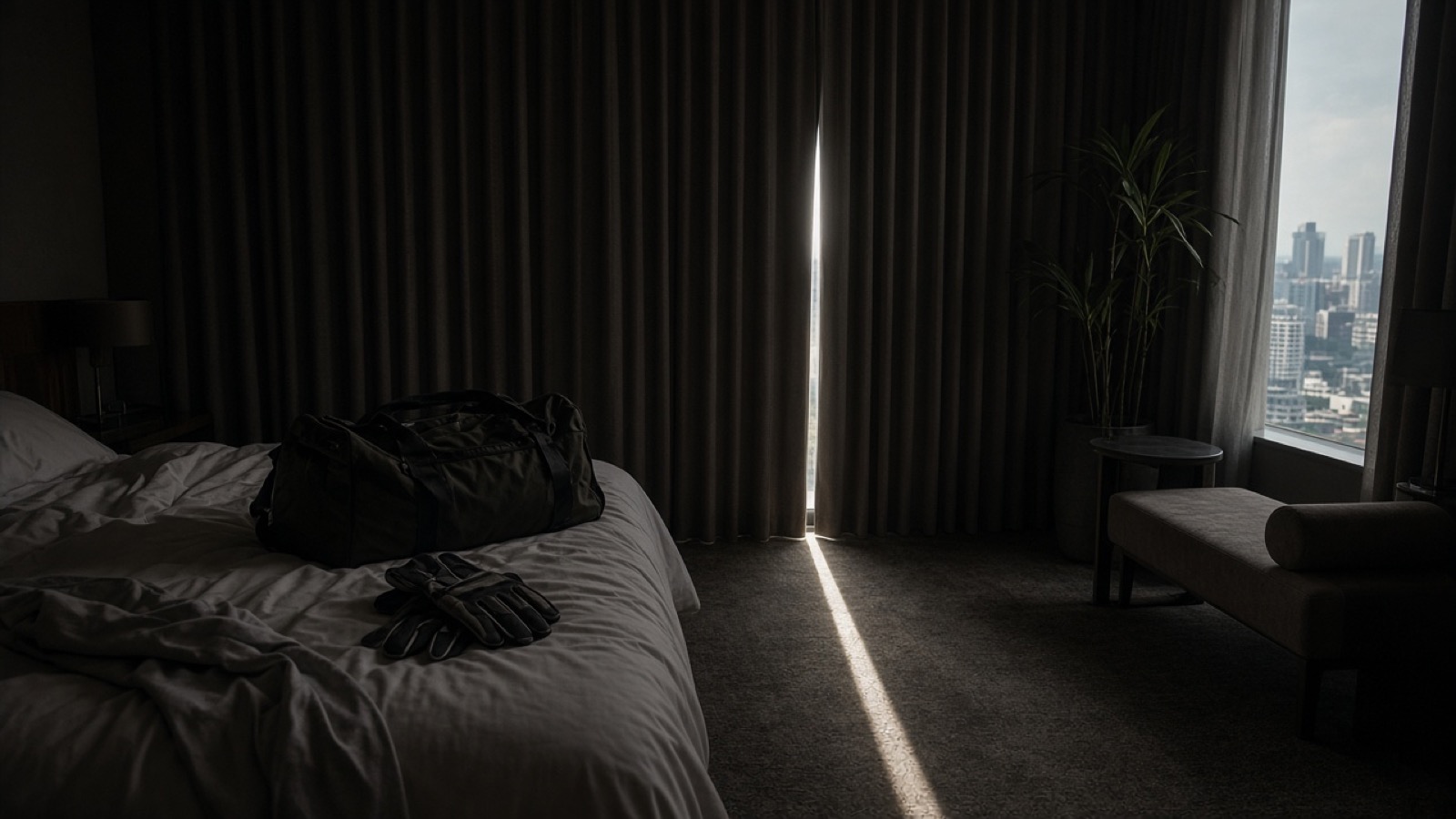
Notice what carries it. Part of the bubble is enforced from above: F1’s own rules, meant to stop overwork, keep teams off the cars until the afternoon in the days before a race, and track sessions are timed late for European television. Nobody has to summon the discipline to live backwards, because the environment does it for them. The rest is biology. “Light is the way the internal clock knows what time it is,” says Stanford sleep scientist Jamie Zeitzer — so the paddock sleeps roughly 5 a.m. to 2 p.m., and the Audi team relies on hotel blackout curtains McNish rates good but imperfect. Zeitzer says ordinary business travelers can borrow the approach; the two hurdles are sunlight and the social cost of scheduling London meetings after teatime because it’s still morning in Los Angeles.
When the schedule breaks
This year the system got stress-tested. With a race moved from Bahrain to Malaysia because of the Middle East conflict, the teams ran an afternoon event near Kuala Lumpur — a five-hour drive from Singapore, same time zone — then flipped straight to the night shift. The result was jet lag with no flight to blame, and for once the sport’s engineers had nothing to offer. Hülkenberg’s prescription amounted to: deal with it.
Our read
This is a Behavioral piece, and the lesson isn’t about sleep. Not one person in that paddock is winning a nightly argument with their body; the schedule wins it for them, and that’s why it works for 3,000 people instead of the three with iron wills. Money runs the same way. The contributions that actually get made are the ones that leave the paycheck before you see it; the rebalancing that actually happens is the kind with a date on the calendar; the buying that doesn’t wreck you is governed by a rule you wrote when you were calm. Our own reserve buys on levels and dates we set in September — not on how Tuesday’s record close felt — for exactly this reason.
There’s a Malaysia lesson too. When life yanks you off the system — a job change, an inheritance, a market you didn’t see coming — you don’t invent a new philosophy at 3 a.m.; you note the disruption and get back on the schedule. A 15-minute review is where we check that the automatic rules are still set to the right numbers. Better to find the switch while the lights are still on.