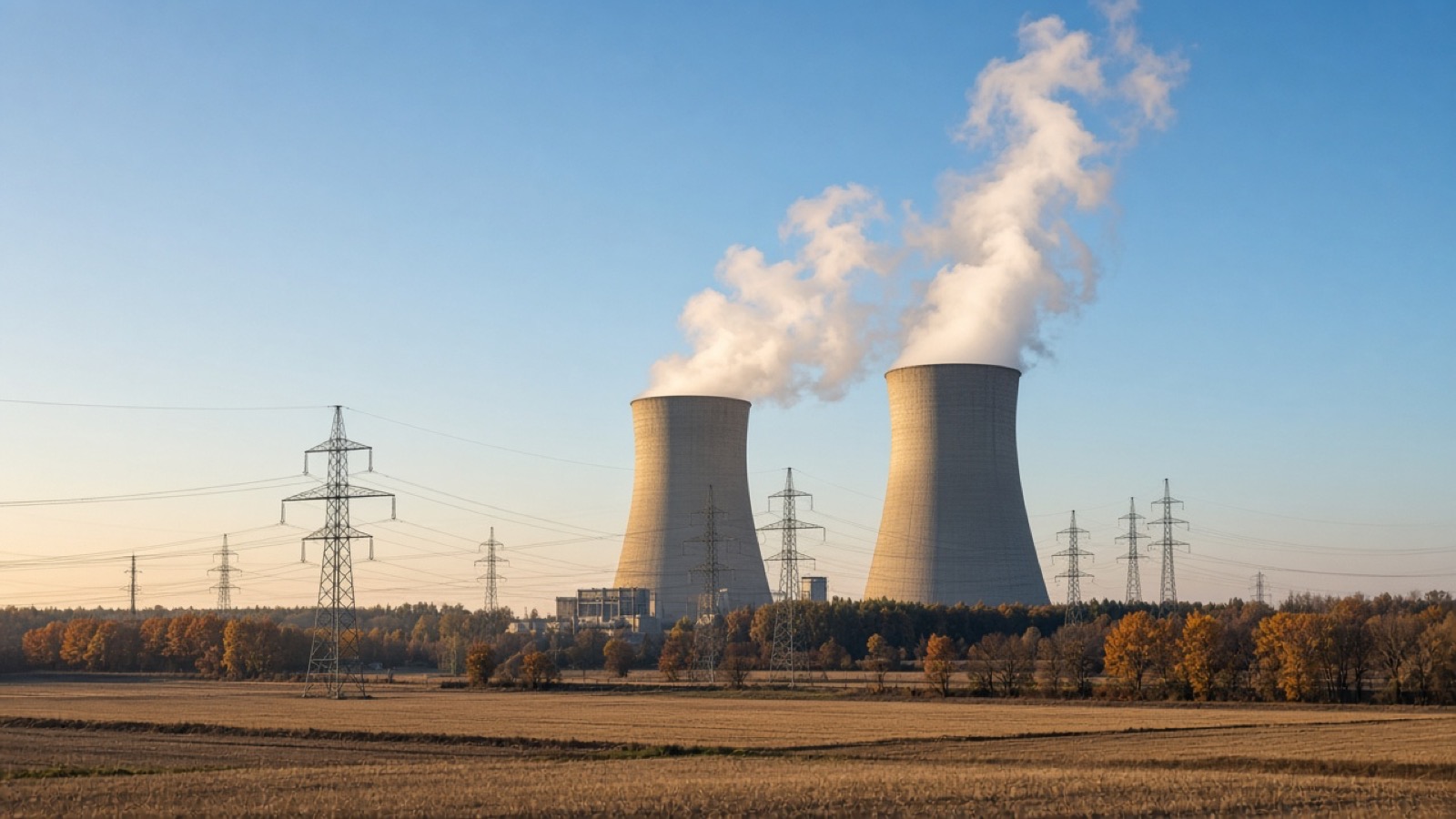
The cheapest new reactor is the one you already have. That’s the whole idea behind Tuesday’s deal, reported by Jennifer Hiller: Google — the Alphabet (GOOGL) unit — will buy 890 megawatts for 20 years from Constellation Energy (CEG), which gets it not by building anything but by upgrading 11 reactors it already runs in Illinois, Pennsylvania and New Jersey. The added output is roughly a large new reactor’s worth. Constellation will spend more than $4.3 billion to do it; the stock rose 12% on the day, closing at $300.40, and took the whole power patch along — Talen up 12%, Vistra (VST) 11%, NRG 7%. The Dow Utility Average’s 2.59% gain was the best of any index Tuesday.
“These are expensive things to be done,” Constellation CEO Joe Dominguez told the Journal — the company has known for years it could do these uprates; it’s Google’s 20-year check that makes them bankable. The first is due in 2028, the rest through 2032 or 2033, and a separate 15-year agreement supplies another 2,700 megawatts in the PJM market across the Mid-Atlantic and Midwest. Google’s energy chief, Peterson Corio framed it as speed to firm, clean power at “a moment where data centers are under a lot of criticism.”
It’s the third such deal in a week of papers. Monday’s Journal had Amazon (AMZN), fresh from abandoning a data-center campus beside Maryland’s Calvert Cliffs plant over local opposition, paying Constellation instead to add 190 megawatts there — about 147,000 homes’ worth — in exchange for up to 690 megawatts long term from across Constellation’s fleet, plus a look at new reactors on the site. Meta has a 20-year, 433-megawatt uprate deal with Vistra; Microsoft is funding the Three Mile Island restart; Google and NextEra Energy (NEE) are reopening Iowa’s Duane Arnold by early 2029.
Because the alternative is grim. The U.S. has switched on only a few new commercial reactors this century, and the most recent big build ended up more than $16 billion over its budget and seven years past its deadline. Squeezing output from plants built in the 1970s — Calvert Cliffs’ two reactors date from then and face relicensing in 2034 and 2036 — is the quickest nuclear megawatt there is, and a 20-year hyperscaler contract is what pays to keep those plants alive.
Because the alternative is grim. Only a handful of new commercial reactors have come online in the U.S. since 2000, and the last big project finished more than $16 billion over budget and seven years late. Squeezing output from plants built in the 1970s — Calvert Cliffs’ two reactors date from then and face relicensing in 2034 and 2036 — is the quickest nuclear megawatt there is, and a 20-year hyperscaler contract is what pays to keep those plants alive.
Our read
Investments and Risk (IN04). We own this trade already, which is the point: Constellation is held in 9 of our 81 model books, NextEra in 21, Vistra in 15, and the buyers — Alphabet, Amazon, Microsoft, Meta — are core mega-cap holdings. All of it is held at weight; nothing added. A 12% day is the kind that invites a chase, and we’d remind ourselves that a stock that can jump 12% on one contract can give it back on one delay — nuclear operators trade on deals that arrive in lumps, and the lumps cut both ways. The thesis — scarce firm power, buyers with 20-year horizons and fortress balance sheets — was just as true last week at a lower price, and it’ll be judged over the life of the contracts, not the week.
For a retiree reading this as a utility story: these aren’t your grandfather’s utilities. The regulated names (NextEra, Duke, Southern) still pay you to wait; the merchant generators (Constellation, Vistra, Talen) are now priced like growth stocks on data-center demand. Know which one you own and why. If Tuesday pushed a position past its place in the plan, that’s a sizing question — best settled on a calm afternoon, not the next headline. We’d rather check the gutters now than during the storm.