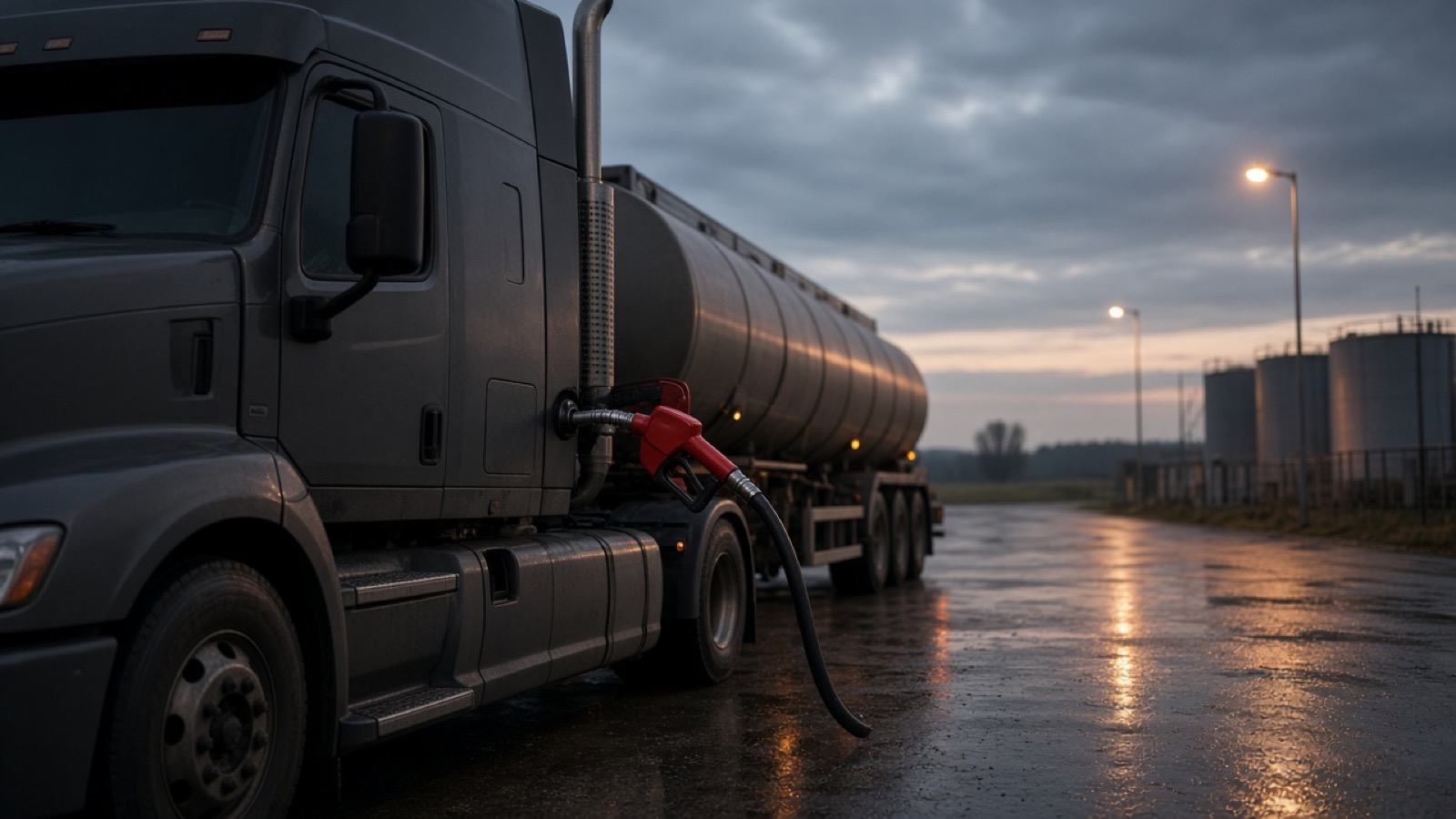
Here’s the thing about an oil war: nobody fills up on crude. Collin Eaton’s Page One story Wednesday makes the point in two numbers. As of Saturday, tankers were clearing the Strait of Hormuz with 10.3 million barrels of crude a day — 76% of the prewar baseline, per Kpler, which looks close to normal if you squint. Refined products — gasoline, jet fuel and, above all, diesel — came to 1.3 million barrels a day, 11% of the flow, down from more than 20% before the war. The oil is moving. The stuff you can actually burn isn’t.
The reason is boring and hard to fix: the Gulf’s refineries — in Saudi Arabia, Kuwait, the U.A.E., Iraq and elsewhere — were knocked out by missile strikes and the war’s other disruptions, so the region can ship crude but not the diesel made from it. Most of the crude that does get out takes roughly a month to reach Asia, where China, Japan and South Korea are keeping their refined fuel at home. That leaves the U.S. as one of the few sellers in a world short of diesel — which is why the national average hit a record $6.53 a gallon late last month and California touched $8.44. “Consumers don’t buy crude oil. They buy gasoline, jet fuel and diesel,” Andy Lipow of Lipow Oil Associates told the Journal.
Washington’s answer so far is a tax trick and a plea. Monday’s executive order lets red-dyed farm diesel — normally tax-exempt and barred from highways — into truck tanks through the end of the year, deferring the 24.4-cent federal tax. The Group of Seven agreed Friday to release 100 million barrels from emergency stocks and declined to restrict diesel exports, the option the White House had floated. Meanwhile Saudi exports doubled to 7 million barrels a day in September, oil executives want the Navy escorting product tankers rather than crude carriers, and Iran has started hitting ships again. A full recovery, analysts told the Journal, won’t come until well into 2027.
The cushion underneath is thin
Tuesday’s paper carried the other half of the story. Saudi Aramco CEO Amin Nasser said the world started the war with almost 10 billion barrels of oil in stock, has lost nearly 3 billion barrels of supply, and has drawn more than 1 billion from inventories to cover the gap. Less than 6 billion barrels of commercial stock remain, most of it not practically usable — a cushion he called “scarily thin” — and rebuilding it could take two years even after Hormuz normalizes. Emergency releases buy time, he said; they don’t fix the shortfall.
Our read
This is Cash Flow (M5) first. Diesel is in the price of groceries, appliances and anything that rode on a truck, and at $6.53 it’s a line that has already moved; a 24.4-cent deferral helps the trucker more than your receipt. If the household budget was set in January, the fuel and food lines need a fresh read — not a panic, a re-read. It’s Investments and Risk (IN04) second, and here the desk changes nothing. The energy sleeve — ExxonMobil (XOM) in 34 of our 81 model books, Chevron (CVX) in 37, ConocoPhillips (COP), Cheniere (LNG) — is held at weight; nothing added. Valero (VLO), held at 1.5% in 12 books, has a written trim trigger: a published White House restriction on diesel exports. The G-7 said no on Friday, and Monday’s order is a tax deferral, not an export restriction. Not published, not trimmed.
What we’re watching is the product split, not the crude price. If that 11% climbs back toward 20%, refinery margins and the pump both ease; if it doesn’t, $89.44 crude won’t rescue anyone’s fuel bill. Either way, a sleeve is for weathering this, not timing it. You don’t go hunting for the umbrella once the rain is coming in sideways — a 15-minute review now is the dry version.