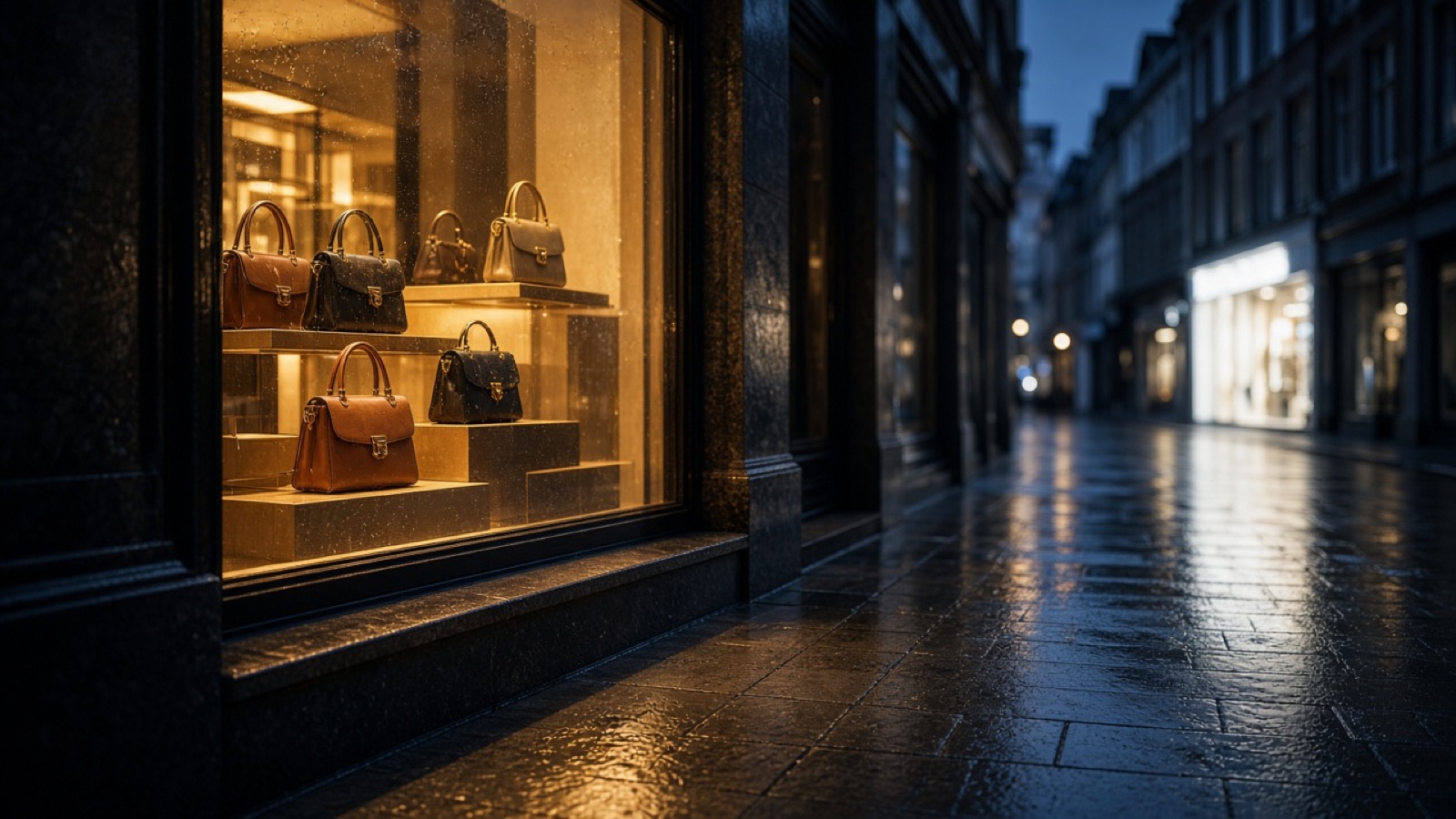
If a Louis Vuitton bag were suddenly 30% cheaper than the same-size tote at Zara, the shelves would be bare by lunch. Carol Ryan opens Monday's Heard on the Street with that thought experiment because the stock market is running it for real: shares of LVMH (LVMUY), the Vuitton parent, trade at a 30% discount to Zara's owner Inditex on expected earnings, and Prada's are cheaper still. The last time that gap opened was 2016. Nobody's elbowing to the front of the line — and the reason they aren't is the whole story.
Global luxury sales have barely grown in three years, Ryan writes, and the two engines that made these the stocks of the past 20 years — Chinese demand and a Western middle class splurging on a $4,000 handbag — are both sputtering. China supplied more than half the industry's growth over the past 30 years. Now Chinese households are drawing down savings while retail sales grow less than 1% for five straight months, per Bernstein; home prices keep falling where 90% of the population lives; and property values overall sit 40% below their late-2021 peak, a worse housing bust than America's after 2008. Add a 20% tax on offshore trusts announced this summer, and sales at luxury malls fell in July — an early sign, Ryan writes, that wealthy shoppers are bracing for the bill.
The Western half of the engine isn't helping either. Energy costs from the Iran war are feeding a fresh round of inflation, and higher bond yields mean the car loan and the mortgage eat what used to go to the handbag. That hurts the mega-brands most: Louis Vuitton is luxury for the masses, with more than half its revenue from middle-income customers who splurge perhaps once a year. Brunello Cucinelli, selling mostly to the ultrarich, carries on. Richemont, whose Cartier runs from a few-hundred-dollar ring to a $10 million custom necklace, trades at Inditex's multiple — the market's reward for serving both ends of a K-shaped economy.
Cheap compared with what?
Here's the tempting part. An investor who bought LVMH in early 2016 and held five years earned total annual returns of 34%, dividends reinvested. But 2016's problem was fashion — shoppers tired of logos, flashy wealth getting risky in China — and Vuitton fixed it with new product, a Chinese rebound and, after 2020, a bigger push into the U.S. Today's problem is the customer's bank balance, plus a competitor that didn't exist a decade ago: resale. The RealReal's sales rose 17% in the second quarter. Ryan's conclusion is that luxury is becoming a different kind of stock; the growth, the fat margins and the “seemingly infinite pricing power” that justified the premium are all in question.
Our read
This is an Investments/Risk (IN04) lesson about the most seductive phrase in investing: cheap versus its own history. A multiple is a price for an engine. When the engine ran at 8% a year with pricing power to spare, a premium was reasonable; if the engine is flat, a discount may not be a bargain at all. The 2016 chart is doing a lot of work in the bull case, and the honest comparison is between what changed then and what's changed now. None of these names are owned here — the books' only exposure is indirect, through Europe index funds such as VGK (held in 11 books) — and nothing gets added on a discount alone.
The transferable rule is to ask what has to be true for the gap to close, and whether you'd buy the business at this price if you'd never seen the old one. That's a question worth putting to anything on your own statement that's down a lot, the funds you bought in 2021 included. Most of the time the answer is fine. Finding out takes fifteen minutes — less time than it takes to decide on a handbag, and better done before the weather turns.