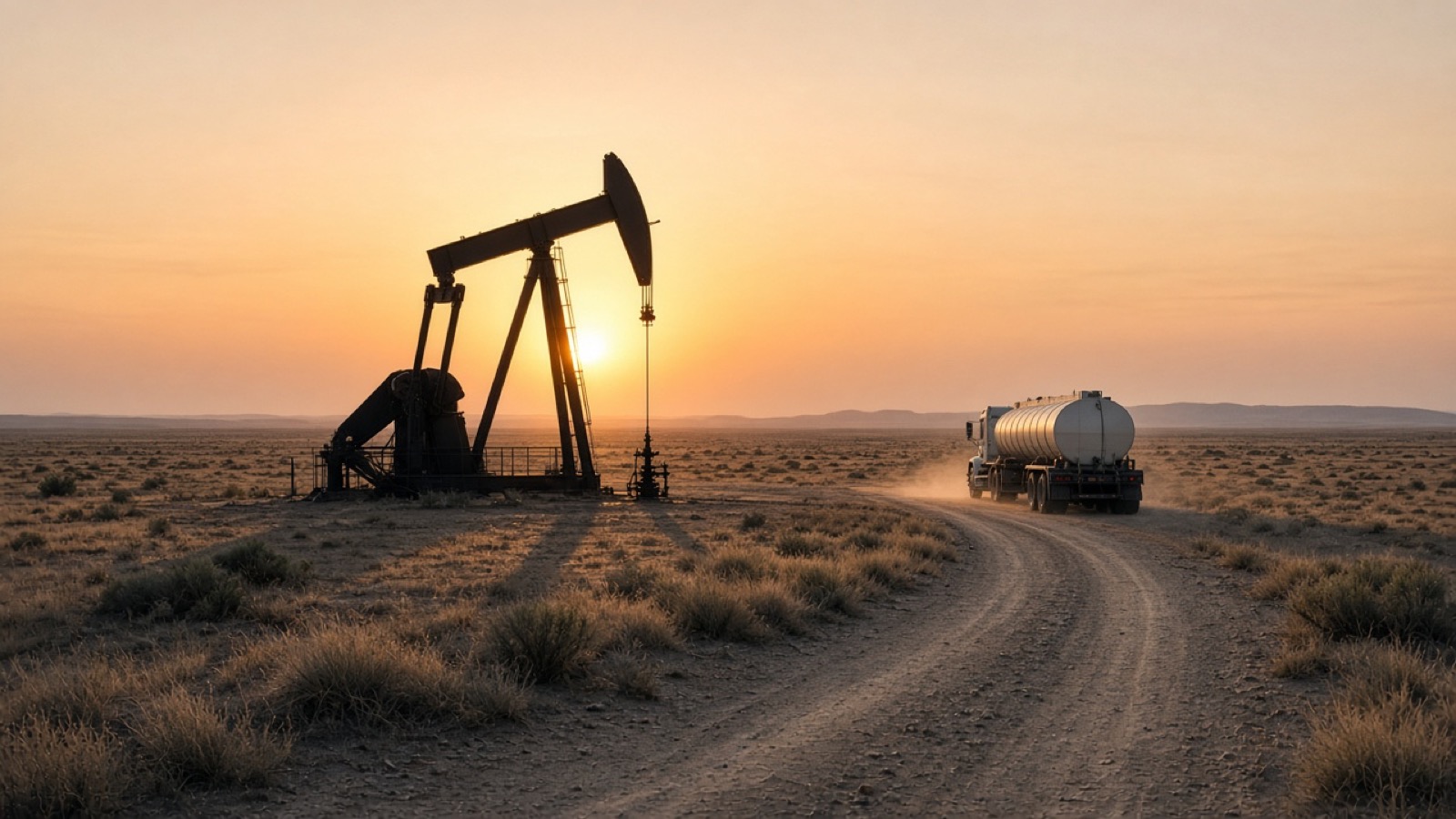
Everyone over 40 knows the script: oil spikes, the economy stalls, the Fed panics. Greg Ip’s Wednesday analysis says the script expired in 2010. A new paper by Diego Känzig and Luca Zanotti of Northwestern and James Stock of Harvard finds that oil shocks used to leave the U.S. with higher unemployment and weaker factory output; since 2010, the economy has tended to come out ahead. What changed is shale. America once bought a net 12 million barrels a day from abroad; today it sells a net 3 million-plus. When the thing getting expensive is the thing you sell, a shock is a raise.
The mechanism isn’t that we ship more barrels. It’s price. Economists call it terms of trade: when what you sell gets dearer, the extra lands in profits, in wealth and in paychecks, and the authors find that haul outweighs what inflation takes out of consumers’ wallets. You can see it in the numbers Ip cites. Energy companies’ profits doubled in the second quarter from a year earlier, per FactSet, and their shares have outrun tech’s. In Wednesday’s ETF table, which carries Tuesday’s close, the Energy Select SPDR (XLE) is up 42.6% for the year against 40.3% for the Technology Select SPDR (XLK) — in the year of the AI melt-up, the oil patch is still ahead. Small wonder, Ip observes, that the industry fought a federal diesel-export ban so hard — and won.
The uncomfortable corollary is for savers. Oil shocks used to leave a lasting mark on inflation and so on interest rates; the authors find rates still go up — but partly because growth is better, not only because prices are. Ip’s reading is that this is why the Fed’s turn to tighter policy hasn’t bothered the stock market much. It has, of course, bothered the bond market plenty: the 10-year Treasury yield settled at 5.27% Tuesday.
Why that makes energy a hedge, not a bet
None of this means anyone is better off paying $6.53 for a gallon of diesel. It means the pain and the gain land in different places — truckers, farmers and factories on one side, refiners and producers on the other — and a portfolio can sit on both. That’s the logic of the desk’s energy sleeve: ExxonMobil (XOM), held in 34 of our 81 model books, Chevron (CVX) in 37, ConocoPhillips (COP), Cheniere (LNG), a 1.5% Valero (VLO) slice in 12. We didn’t buy them to forecast a war; we bought them so a fuel shock would show up on both sides of the household ledger.
Our read
This is Investments and Risk (IN04). A hedge is judged by whether it paid when the thing it insures went wrong, and this one has: energy profits doubled, energy shares beat tech, and the grocery and fuel lines that hurt are partly offset inside the same households’ portfolios. Judged that way, it’s working — and the right response to a hedge that’s working is to leave it alone. Held at weight; nothing added. The temptation on a day like this is to read a good paper as a buy signal — more shock, more profit — but Känzig’s own caveat applies: the analysis doesn’t extend to this war, and it’s a statement about averages, not about next quarter. We’d rather own a hedge than a thesis. If your energy weight has drifted well past where it was meant to be, that’s a rebalancing conversation, and it’s one we’d rather have while the roof is still dry.