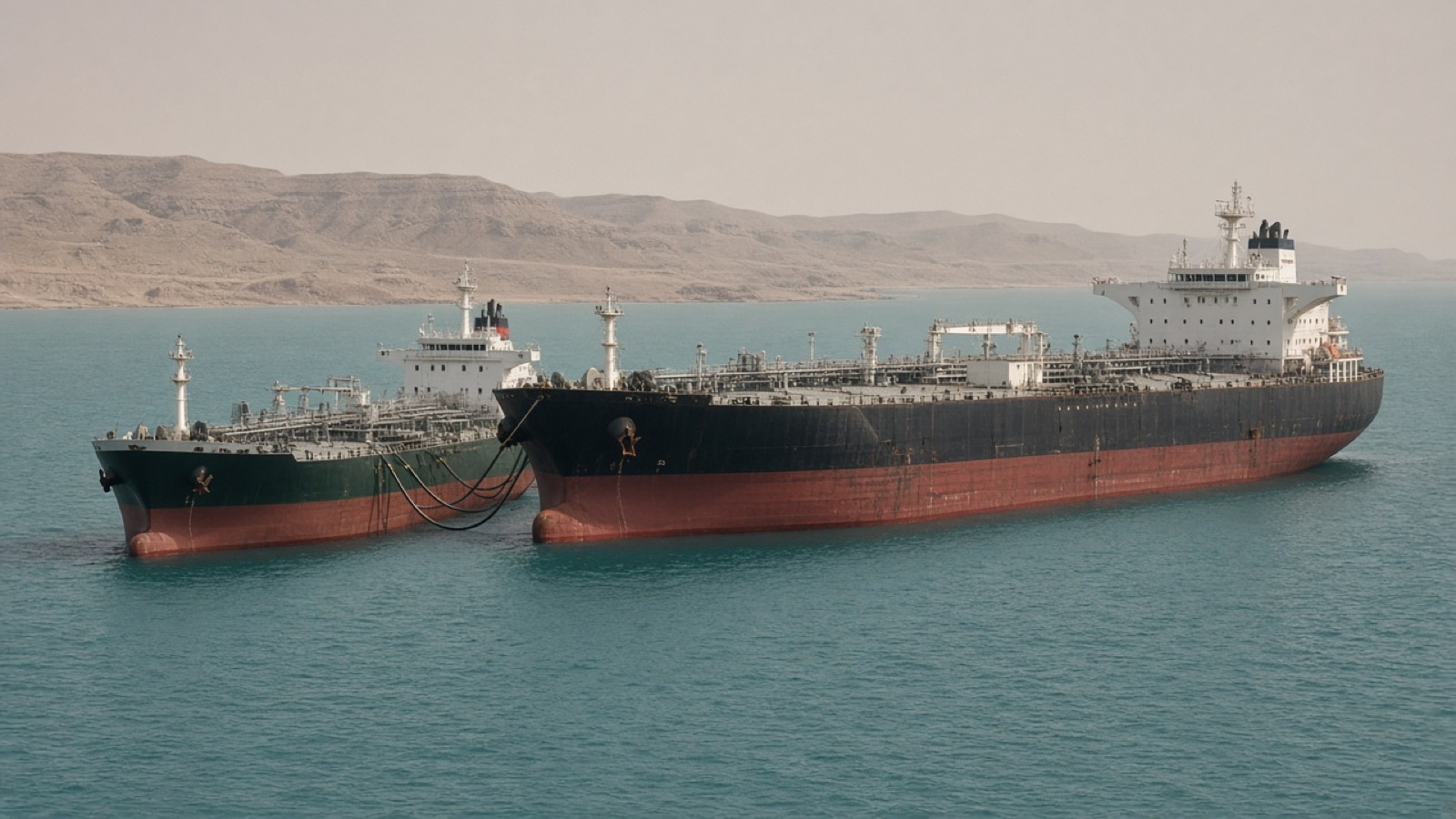
The Gulf fixed its export problem the way you’d fix a broken bridge with a ferry. A tanker fills up inside the Persian Gulf, runs the strait under U.S. naval protection, then pumps its cargo into a second ship idling beyond the waterway — a relay that pushed regional exports back near prewar levels by late September. Then, Monday’s Journal reports, the shooting started again: seven strikes on vessels around Hormuz since Sept. 28, per the Royal Navy-affiliated U.K. Maritime Trade Operations, with another reported Sunday. All seven were hit near the narrowest part of the strait, and a radio message from Iran’s Revolutionary Guard navy told ships not to trust the U.S. corridor at all.
The recovery was real. By Kpler’s count, the region’s crude exports (Iran excluded) ran at no less than 16.5 million barrels a day over Sept. 1–28, roughly where they stood before the war; Standard Chartered estimates Saudi exports rebounded to 6.9 million barrels a day in September from 2.45 million in August. It was also expensive. Ship brokers told the Journal a round-trip shuttle run costs $30 million to $40 million — $15 to $20 a barrel before insurance — and at least four of the seven attacked vessels had already made two or more such runs since June. One, the Kuwaiti crude carrier Al Funtas, was on its fifth when it was hit Sept. 28. HSBC’s Kim Fustier summed it up: Middle East crude exports are “rising, but at enormous cost.”
Markets had priced the fragility before the strikes: Brent settled Friday at $102.25, up nearly 5% for the week, and Capital Economics expects about $100 through year-end. Rory Johnston of Commodity Context already sees flows down by two million to three million barrels a day, with the caveat that early estimates get revised. Part of September’s surge, he suspects, was exporters rushing barrels out ahead of a feared escalation.
OPEC+ can’t help much
The cartel’s Sunday decision (B9) was to hold November output steady, as it did for October, after six consecutive monthly increases finished unwinding 1.65 million barrels a day of 2023 cuts. It isn’t choosing restraint so much as living with it: most members pump below target, OPEC output was 24.08 million barrels a day in August — more than 4 million below February’s prewar level — and no quota changes what can physically get through the strait. The war is in its eighth month, and the two sides still disagree about who controls Hormuz.
Our read
File this under Investments and Risk (IN04), and read it as a report card rather than a signal. The desk’s energy sleeve — ExxonMobil (XOM), held in 34 of our 81 model books, Chevron (CVX) in 37, ConocoPhillips (COP), Cheniere (LNG) and a 1.5% Valero (VLO) position in 12 — exists so the household budget and the portfolio don’t lose to the same headline. With Brent at $102.25 and the shuttle relay under fire, it’s earning its keep. That’s the job. It isn’t a reason to add, and the desk adds nothing this edition; a hedge you keep enlarging stops being a hedge and becomes a bet on a war.
Two things would change our posture, and neither has happened: a published U.S. export restriction (Valero’s written trim trigger) or a sustained drop in flows that shows up in Kpler’s data rather than in a radio threat. Until then, held at weight. If your own energy weight has drifted up with the price, that’s a rebalancing question, not a conviction question — the kind we’d rather settle on a dry day. The umbrella’s open; let’s check the seams before the next squall.