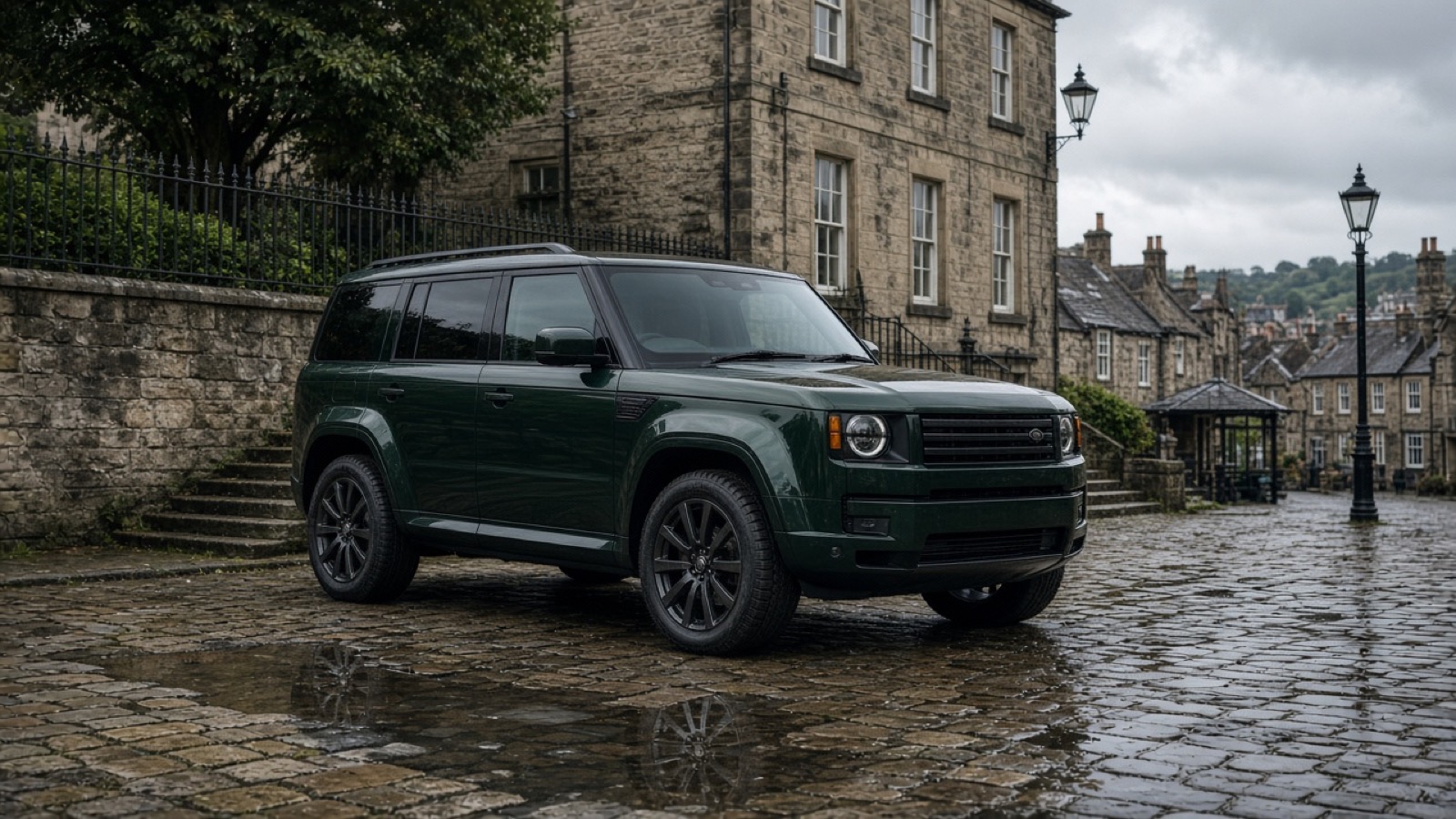
Mark Thewlis, 33, went looking for a family car this summer on England’s south coast and did what most of us do: he priced the one that looked right. It looked like a Range Rover. It cost about $50,000 — half of what the Range Rover it resembled would’ve run him. His first reaction, he told the Journal’s Stephen Wilmot, was “What’s the catch?” One test drive later he’d bought the Jaecoo 7, a Chinese SUV from Chery Automobile that Britons have nicknamed, not entirely kindly, the Temu Range Rover. In September it was the bestselling vehicle in Britain.
That’s not a fluke. In the first half of 2026 almost one in six cars sold in Britain carried a Chinese brand — a higher share than any European country except Norway — and British vehicle imports from China have nearly doubled this year; only Russia and Brazil took in more. Chery’s U.K. sales more than tripled through September, enough to pass Ford Motor (F), which led that market for decades. The Jaecoo brand launched in January 2025 in a hotel ballroom off Windsor Great Park and has moved almost 87,000 cars since. Steve Young, who runs a dealership in west London, opened it in March last year expecting to sell 350 cars. He sold more than 500, and this year he says he’ll pass 1,200, with wait lists.
What’s the catch? The payment was
Here’s the part that matters for anyone with a car loan. Three-fifths of Young’s Jaecoo buyers, by his estimate, used to drive a BMW, a Mercedes or a Range Rover — and when rates climbed, so did the cost of financing one. Jaecoo answered with interest-free loans and a lower monthly line. Sam Luscombe, a dealer in Leeds, put the pitch about as plainly as a pitch gets: “It looks expensive, it feels expensive—and then you find out how much it costs.”
Chery didn’t guess at the look. It ran a joint venture with Jaguar Land Rover from 2012 that built Range Rover Evoques near Shanghai until this summer; JLR moved to cancel the Chinese-built models in 2024. Volkswagen (VWAGY) and Stellantis (STLA) have warned the newcomers are squeezing margins — VW lists it among the reasons for cutting more than 100,000 jobs. Chinese cars are kept out of the U.S. by tariffs and software rules, and Congress is debating a permanent ban. Britain, then, is the preview: its car sales are up around 10% this year on modest growth, lifted by exactly these models.
Our read
This is Cash Flow (M5), and the Jaecoo buyer is doing something we’d like more people to copy: when the cost of money went up, he changed the car, not the budget. A luxury badge is a want; the payment is a fixed cost that competes with the retirement contribution and the emergency fund every month. Thewlis’s question — what’s the catch? — is the right one, and it applies to the loan as much as the car. An interest-free loan isn’t free; the financing lives somewhere in the price, so compare the all-in cost over the years you’ll own it, not the monthly line. On the portfolio side: Ford and Stellantis aren’t owned here, and the German names reach the books only through the Europe fund VGK, held in 11 books. Toyota (TM), seventh of the 10 brands in the Journal’s U.K. sales chart, is held in 6 books at weight; nothing added.
The rule we’d pin to the fridge: a car payment, insurance and fuel together shouldn’t crowd out saving you’ve already committed to, and if a rate rise makes them do that, the fix is a cheaper car, a longer wait or a bigger down payment, not a longer loan. If your own auto loan or lease comes up this year, that’s a fifteen-minute review item. Better to reprice the garage on a quiet afternoon than to meet the catch at the dealership.