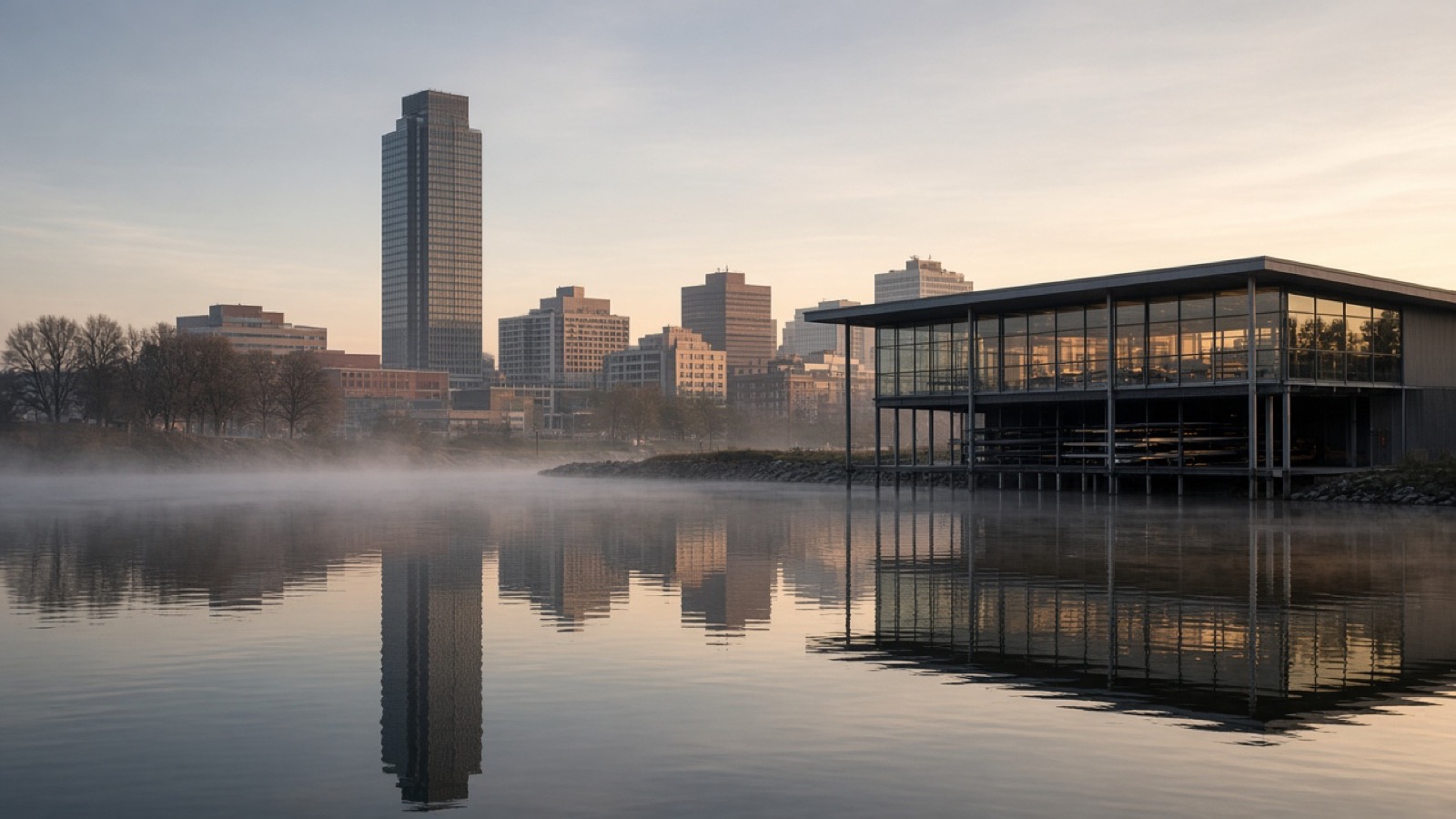
Oklahoma City has an NBA champion, an Olympic white-water course on a once-neglected river, and the state’s tallest building — and two oil-and-gas companies and their leaders paid for much of it over decades, as a company town’s patrons do. This year both of them — Devon Energy (DVN) and Expand Energy (EXE), the old Chesapeake — announced they’re moving headquarters to Houston. Benoît Morenne’s Monday dispatch from Oklahoma City is a civic breakup story, and under it sits a lesson every one-company town, and every one-company household, already half knows.
The numbers are big for a mid-American city. Devon carries a market value of about $52 billion, Expand about $20 billion; the city’s two largest public energy companies and its top civic boosters. Devon’s exit follows its agreed merger with Houston-based Coterra Energy; Chesapeake had already merged with Southwestern, out of north Houston, and taken the Expand name. The pattern’s older than either deal — ExxonMobil (XOM) and Chevron (CVX) have spent years pulling acquired rivals’ head offices from New York, Denver and Irving into the Houston region. Mayor David Holt put it as a shrug: “locating in Houston is like moving a film company to Hollywood.”
Both companies insist the local operations stay — Devon has about 1,000 employees in town, Expand about 500 — and the fear among officials is the slow kind, that a headquarters leaves first and the rest follows, a budget cycle at a time. State Sen. Dusty Deevers asked why Oklahoma keeps “building energy companies only to watch so many of them eventually move south.” What the story also makes plain is how much the city had already diversified: oil and gas is down to about 10,000 jobs in the region, less than half the 2018 count after the pandemic-era layoffs, and about 13% of the metro’s gross product. Oklahoma drops from five Fortune 500 companies to three — Oneok, Williams and Continental Resources.
What the river remembers
Chesapeake is the human part. Aubrey McClendon and Tom Ward started it in 1989; by 2011 its payroll topped 11,000 people — roughly a third in Oklahoma City — and McClendon said résumés arrived at about 500 a day. The company put up most of the money for the first boathouse on a seven-mile run of river at the edge of downtown; it’s now an Olympic training site, and the 2028 Los Angeles Games will hold their canoe and kayak slalom there. Mike Knopp, who runs the nonprofit that operates it, credits McClendon, who died in a car crash a decade ago: “He believed in the big idea.” The boathouses outlived the company that built them.
Our read
This is Investments/Risk (IN04), and the word is concentration. A company town runs the same exposure a lot of households run without noticing: your paycheck, your home’s value, your city’s tax base and sometimes the local municipal bonds in your brokerage account all answer to one industry’s cycle. Oklahoma City had the good sense — or the hard luck — to diversify before the headquarters left; plenty of families don’t. In a town with one game, the stock plan, the house and the job are one bet, not three. The fix isn’t to move to Houston. It’s to make sure the investable money leans away from the thing that already pays you.
On the book: Devon is a small position, held in 3 of our model books, and we’re not touching it over a change of address; Expand isn’t owned here. ExxonMobil (34 books) and Chevron (37) — the consolidators in this story — are held at weight; nothing added. For readers whose zip code and employer share an industry, the review question is simple: what fraction of your net worth, counting the house and the stock plan, rides on one cycle? You’d rather know that number on a sunny day than learn it from a press release.