Andrew Coe's parents used to tell him that every new food he tried would add to his life. He's still collecting. In the Journal's Fall Books section he cooks his way through three new Asian cookbooks and likes all three. One of them has a story behind it that interests us more than the recipes. H Mart is written by Stacey Kwon, the president of the Korean supermarket chain. Her father started it with one store.
Il Yeon Kwon came to the United States as an immigrant and opened his first supermarket in Queens, New York, in 1982, the review says. Today the chain has nearly 100 stores across the country. It began as a place for Korean immigrants to find their own food, and for curious eaters to try it. Coe is honest about the book. Part of it, he admits, is a long advertisement for the chain. He also calls it a real success story and a useful guide. A first trip into an H Mart can overwhelm you, he says. Rows of bags and jars you can't place. The book answers with illustrated guides to the shelves, from kimchi and produce to dried noodles and snacks. It even explains how a Korean barbecue dinner is eaten, with meat and rice wrapped in lettuce leaves.
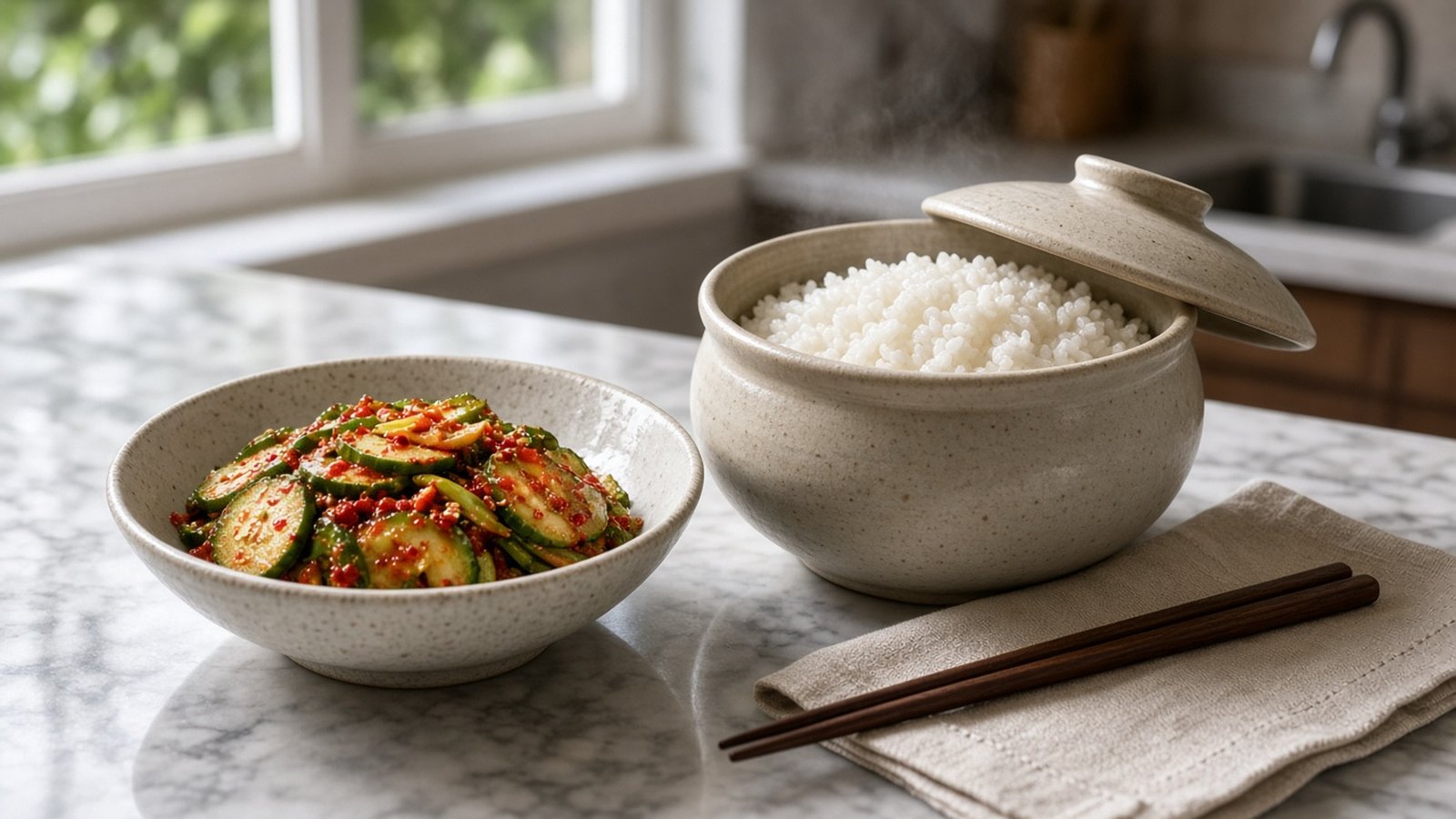
The recipes run from traditional to modern. They begin with banchan, the small side dishes that come with a Korean meal. The spicy cucumber salad gets its heat from gochugaru, ground red chili flakes. Not every dish suits every table. The review mentions pork in some of the H Mart dishes, and rice wine in the other two books, so read before you shop. Coe's wish at the end says a lot. He'd love the same kind of book for other Asian markets.
The other two books
Japanese Comfort Cooking by Tadashi Ono and Harris Salat follows their Japanese Soul Cooking (2013). It opens with dashi, a stock made from kelp and bonito flakes. Coe used it for rice cooked with octopus, and the rice crisped at the bottom of the pot. One miss, he says. A duck-and-mushroom stew calls for just two cups of stock, too little for the dry ingredients or for four diners. Fuchsia Dunlop's Five Tastes is organized around sour, bitter, sweet, pungent and salty. Coe calls her “probably the premier interpreter of Chinese food for Western audiences.” She has written five cookbooks, including The Food of Sichuan (2019), plus a memoir and a food history. His side dish of stir-fried lettuce with a cream of fermented tofu made him wonder why nobody puts it in a Caesar salad.
Our read
This is Estate planning in its business form, succession, with Career underneath. The review gives the family story a few sentences, and we won't inflate it. A founder opened one store. His daughter is now president of a chain with nearly 100 of them. And she has written the public manual that explains the business to a stranger. That's what a working succession looks like. The next generation can run it and can explain it. Many family businesses we meet have the first half at best. The owner knows everything, and nothing is written down.
If you own a business, you'll hand it off one day, one way or another. The only choice is whether a plan exists on paper while you're healthy enough to argue about it. Who runs it next. Who owns it. How the money reaches the family members who don't work there. Cooking from a good cookbook is a fine way to spend a Sunday. Writing the one for your own business is a better one.