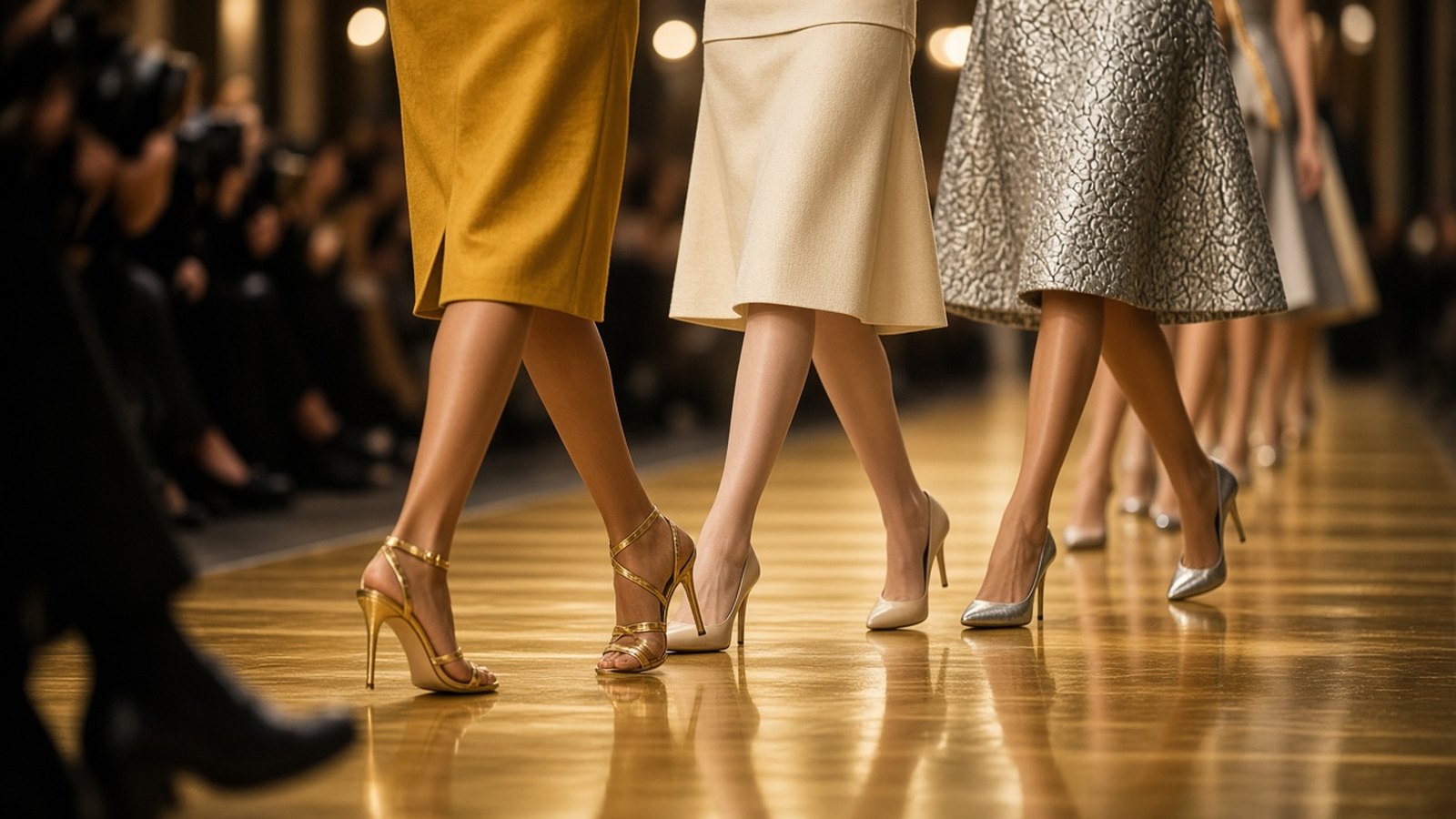
The spring 2027 shows ended in Paris on Tuesday. The Journal's Chantal Fernandez counted ten things worth knowing. Prada sent out 63 knee-length skirts. Robots walked a catwalk in Milan. And the head of American fashion's trade group lost a 20-year job in under a week. The clothes were almost the quiet part.
Start with the reset. A year ago more than a dozen luxury houses put new designers in charge. The paper's winners are Matthieu Blazy at Chanel and Julian Klausner at Dries Van Noten. Both, it says, are bringing their brands back to life without losing the longtime customer. The look is louder and more handmade, and “quiet luxury” is on its way out. Saint Laurent's Anthony Vaccarello, there for 10 years, handed a key to his young son at the end of his show. Kering confirmed his exit 10 days later. We cover that in its own piece this edition. Gucci's Demna built a make-believe flagship store for his show. The paper says the label still doesn't move product the way it did under Alessandro Michele and Tom Ford.
Stunts, robots and a resignation
Vogue World is the magazine's yearly runway show, and it sells tickets. This year it ran in Milan's Galleria Vittorio Emanuele II. Humanoid robots from Unitree Robotics walked the catwalk. Meta Glasses and OpenAI were among the sponsors. Meta (META) sits in 20 of our model books, held at weight, with nothing added. The paper's read is that Vogue picked a side on AI while much of the public is uneasy about it. The business fact under the whole month is plainer. Most luxury houses now sell first to the very richest shoppers, who make up the majority of their sales.
In New York, PETA activists protesting wool left their seats and walked onto a runway. Steven Kolb, who ran the Council of Fashion Designers of America, held one of them down and shoved another, the Journal reports. Someone filmed it. Within a week he had apologized on Instagram and quit. He had led the group for 20 years. It's now searching for a successor.
Then the prices. Conner Ives made his name with a $100 slogan T-shirt. This season's follow-up costs $180. Zara's first John Galliano line had $699 bags and $359 dresses, and some styles were gone in days. We've written that one up separately. In London, Alexander McQueen held its first show there since 2001. Christopher Kane, who closed his own line in 2023, came back at Mulberry.
Our read
This is Cash Flow (M5), with a Behavioral edge. Nothing on these pages is priced by what it costs to make. A follow-up T-shirt costs $180 because the $100 one before it became a story. A fast-fashion chain charges $699 for a bag because a famous name is attached. That's the business, and it works. The defense for a household is dull and it works too. Set the clothing line in the budget before the season starts. Decide it at the kitchen table, never at the rack.
There's a Career note too. Kolb's 20 years ended in under a week, and the organization is hunting for a leader. That search suggests nobody was lined up to take over, though that part is our inference. An owner's or executive's plan needs a name on paper and a household that can run a while without the paycheck. Robots on a runway are a sentiment marker, nothing more. The build-out names in our books stay at weight. Fashion changes every season. Your plan shouldn't. You buy the umbrella in October, before the first storm, and you set the budget before the shows.