Jamie Waters banged his knee on a wooden box. Then he wobbled down a balance beam hugging a tube of water. He's in his mid-30s, and he finished last of the four men in his age group. A few days later his score arrived by email. His Super Age was 27. He called his older sister to brag.
That was a trial run of the Super Age Games, which Waters tried for this weekend's Off Duty cover. Super Age, a New York media and longevity brand, built it with the Buck Institute for Research on Aging. The first official games are in New York in November. Superagers are people past 80 whose minds and bodies work like those of someone far younger. Science has no sure answer for why some people get there and others don't. So the games test the markers that seem to matter, and hand you back an age.
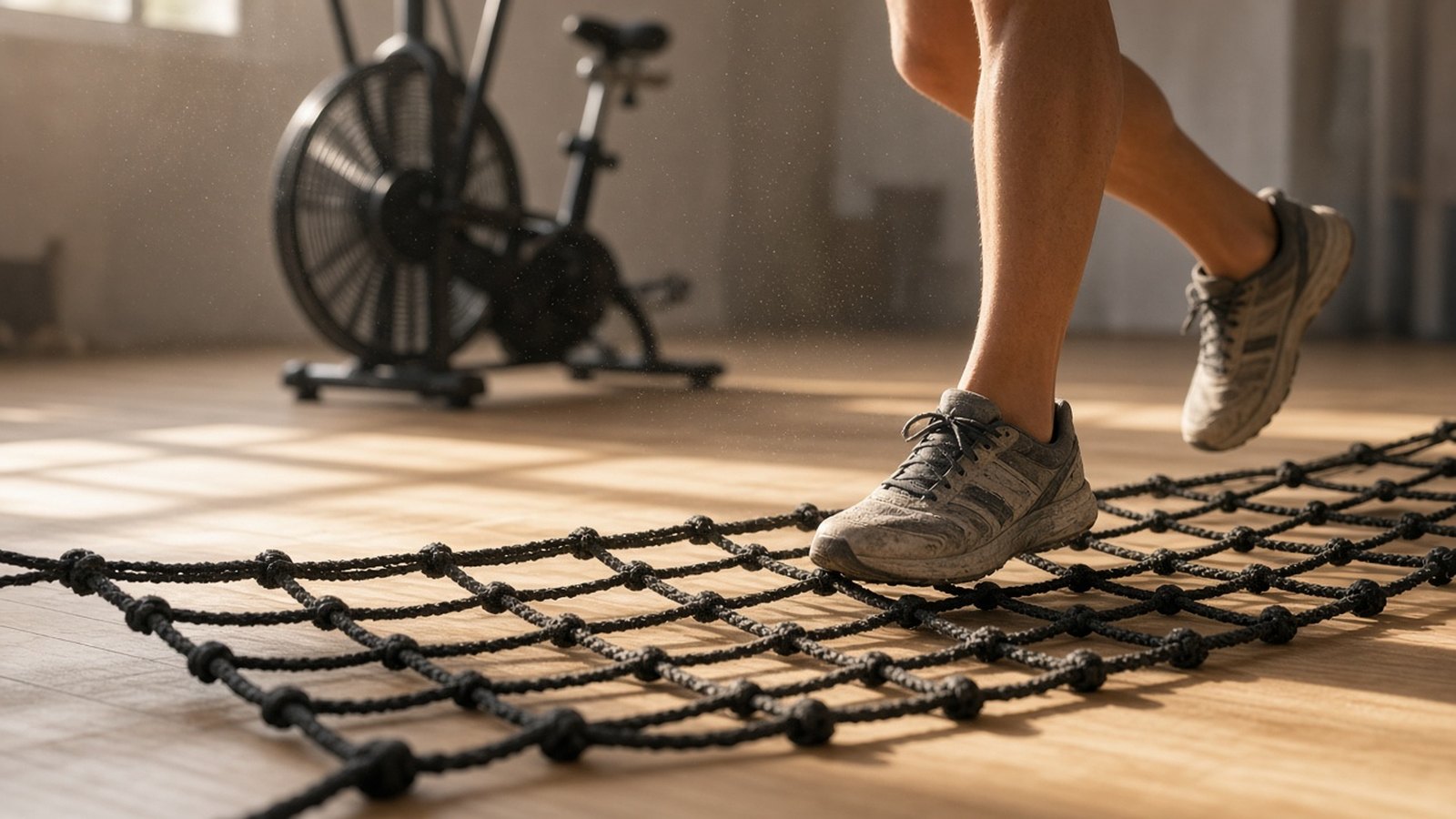
The tests feel like a gym class crossed with a game show. You cross a cargo net strung off the ground. You climb over boxes and crawl under a fence. You hang from a bar as long as you can. That's a grip test, and grip strength is the marker we wrote about on Oct. 7. You walk a beam holding a big tube of water. You pedal an air bike for four minutes. The bike measures how much oxygen your body can use at once. The event's website calls that “the single strongest predictor of how long you'll live well.” That's the website's claim, not the Journal's and not ours. A computer test tracks tennis balls on a screen, and another asks you to read faces.
A number, with a warning on the label
Your score mixes the day's results with a quiz on how you live. It's ranked against entrants of your sex and age group, and against the habits of the average American man and woman. Waters did well on the bike and the faces test and badly on balance. His fix, from founder David Stewart, is to walk heel-to-toe along a street curb. Stewart is 67 and could pass for his early 50s, Waters writes. “We're offering an evidence-based approximation, not a number to plan an estate around,” he said. Douglas E. Vaughan, who runs a longevity institute at Northwestern, told the Journal that even the better-known biological age is far from exact. The story's own caution is that one number rarely settles anything about a person's health. What superagers most share, by Vaughan's account, is close ties to family and friends.
The crowd wasn't what Waters expected. The biggest group was women ages 30 to 60. A 75-year-old retired school paraprofessional, who trains five days a week with a trainer, told him, “I just want to be independent.” A 78-year-old former nurse-midwife spent two years at the gym to get brave enough to try.
Our read
This is Retirement, M10, and the founder said the hard part for us. The number is a rough estimate of how you're aging. It isn't a date. Nobody can turn a fitness score into a year to plan around. So we plan for the long end. First comes income that lasts as long as you do, which is what a pension and Social Security are for. Then comes the cost of staying independent, which is what the 75-year-old is training for. Then the family and friends the Northwestern doctor says matter most, which cost nothing. Our Oct. 7 grip piece covered why grip strength matters. What's new is the score, and the people selling it tell you not to plan on it. We'd take them at their word.
A long life is the good problem. It's also the expensive one. The time to check whether the plan still works past 90 is while you can still hang from the bar. You don't check the roof in the rain.