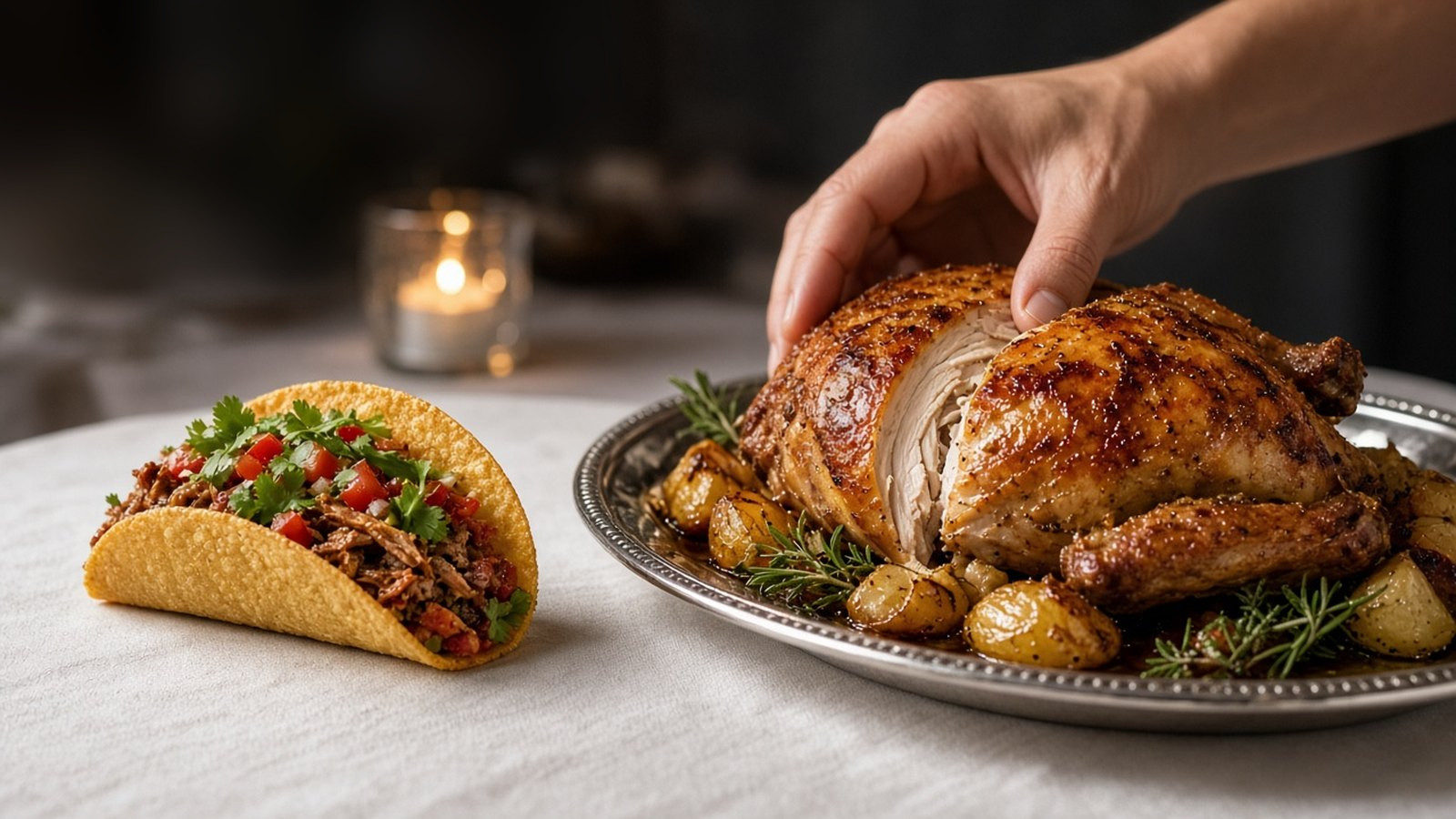
Harold Moore has a Michelin star. His whole roast chicken at Cafe Commerce in New York costs $99. It comes with herb butter under the skin and sourdough stuffing laced with foie gras. The dish he compares it to is a Taco Bell Crunchy Supreme. Adam Chandler's front-page A-hed in the Journal is full of chefs saying the same thing, and none of them is kidding.
Moore's case for the taco is a cook's case. A corn shell holds ground beef, shredded cheese, iceberg lettuce, tomato and sour cream. “There is everything in the perfect bite,” he said. It's hot and cold at once, crisp and soft, with spice and then the sour cream that calms it. Bricia Lopez co-runs a restaurant the late critic Jonathan Gold ranked among the best Oaxacan places in America. She says the crunch, the fat and the tang are all there for a purpose. They make your mouth happy.
The love runs through the whole trade. Dung Vo, a co-founder of Noko Hospitality in Nashville, eats it after late shifts. Jennifer Hwa Dobbertin, a San Antonio chef and three-time James Beard nominee, orders it by the bagful for staff going-away parties. She calls it a staple for service workers. The Crunchwrap turned 20 last year, and more than 100 million have been sold. Chefs now build their own with pernil, bulgogi, birria and scratch-made salsas. Dobbertin's has chicken in a khao soi coconut curry and crisp wheat noodles. Vo modeled a grilled cheese at his restaurant on the Crunchwrap's crunch.
It started across the street in San Bernardino
The chain's roots are local. Glen Bell, the founder, sold hot dogs from a stand in San Bernardino, California. Mitla Cafe sat across the street, and its owners taught him the crunchy taco. Today the chain is the prize of the Yum Brands (YUM) lineup, held at weight in 5 of our books with nothing added. Its food lab keeps pushing. Brett Pluskalowski, a senior manager on the innovation team, argues that the Doritos Locos Taco of 2012 opened the door to odd shells. Taco Bell has since used fried chicken, biscuits and waffles. He's now trying a shell made of tahdig, the crisp rice from the bottom of a Persian rice pot. “You can turn anything into a taco shell now,” he said. It hasn't worked yet.
Our read
This is Cash Flow (M5), with a Behavioral note. Some of the people who cook the country's priciest food go home and eat the cheap thing. They aren't slumming. They're telling you that price and pleasure run on two different scales. A budget that assumes the costly choice is the better one wastes money in both directions. It overpays for things that don't bring much joy, and it feels guilty about the cheap thing that does.
So here's the exercise. Pull last month's food spending and mark the meals you still remember. Then look at what they cost. Many people find the memory and the price tag have little to do with each other. Fund the bites you'd order again, at whatever price they come, and cut the ones you ate out of habit. A chef with a Michelin star rates a taco next to his $99 chicken, and price didn't decide it. You don't need rain to check the umbrella, and you don't need a bad month to check the food line.