Five Moves, Twice a Week, Most of Them Doable in a Living Room. Super Age's Head Coach Hands Out His Homework
The coach built the circuit for grip strength, leg power and coordination. Two short sessions a week, and most of it needs no gym. Check with your doctor first, then start with the farmer carry.
By Sean Anees Saifi · Capital Wealth · Published Sunday, October 11, 2026 · Source: The Wall Street Journal, October 10–11, 2026 weekend edition, whose market figures are the Friday, October 9 close (Off Duty)
Key Points
Junior Kennedy, head coach at Super Age, built the circuit to work grip strength, leg power and coordination. Do each move two or three times, rest as you need, twice a week.
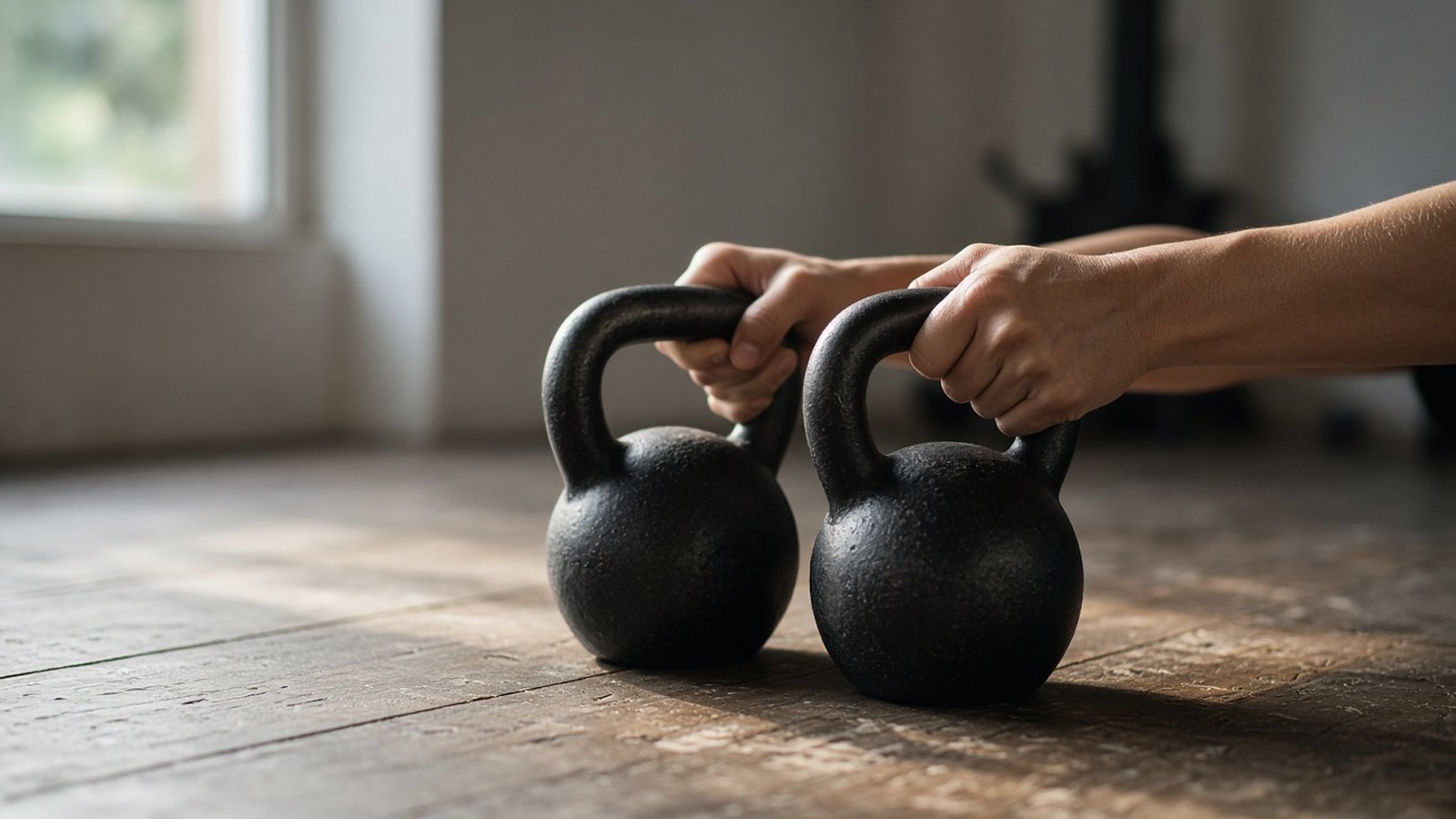
The farmer carry comes first. Hold a dumbbell or kettlebell of the same weight in each hand and walk tall for 40 to 60 steps. It's about the simplest grip work there is.
Tabletop sidewalks and step-ups come next. On all fours with the knees just off the floor, take five steps sideways and five back, three times each way. Then eight step-ups a leg onto a bench, weights in hand.
A brisk 60-second march, opposite hand to opposite knee, trains coordination. Finish with 60 to 90 seconds of hard pedaling on a bike, or high knees on the spot if you don't have one.
No weights in pounds are printed, and this is a coach's advice in a lifestyle section. Ask your doctor before you start, especially if you've been away from exercise for a while.
40 to 60
steps of the farmer carry, a weight in each hand, walking tall
8
step-ups per leg onto a bench, dumbbells in hand
60 to 90
seconds of fast pedaling on a stationary bike to finish
2 or 3
rounds of each move, resting as needed, twice a week
The circuit opens with a farmer carry, a weight in each hand for 40 to 60 steps. The five moves take two or three rounds, twice a week.
In one line: Super Age's head coach gives five moves, twice a week, for grip, leg power and coordination, most of them doable at home. It's about the cheapest line in a retirement plan.
Most of the Super Age Games happen in a gym full of ropes, boxes and bikes. The homework doesn't. In a box beside this weekend's cover story, Super Age's head coach, Junior Kennedy, lays out five moves. You do them twice a week. You repeat each one two or three times and rest when you need to. Most of them fit in a living room.
Start with the farmer carry. Pick up a dumbbell or kettlebell of the same weight in each hand, stand tall and walk 40 to 60 steps. That's it. It trains the grip, which the games test with a dead hang from a bar. Next come tabletop sidewalks. Get on all fours and lift your knees so they hover just off the floor. Step sideways five times, moving the hand and foot on the same side together. Step back five times. Do that three times in each direction.
Then the legs. Hold a dumbbell in each hand and step up onto a bench or a sturdy platform with one leg, eight times a side. After that, march in place for 60 seconds, briskly, touching the opposite hand to the opposite knee. Finish on a stationary bike, pedaling hard for 60 to 90 seconds. No bike at home means high knees on the spot instead. The main story adds one more tip for balance, from the contest's founder. Walk heel-to-toe along a street curb, the way you did as a kid.
No weights in pounds are printed. Start light, with something you can carry in good form. And remember what this is. It's a coach's advice in a lifestyle section, aimed at a contest. It isn't medical advice, and neither is this. If you're coming back from an injury or a hospital stay, or you haven't trained in years, show the list to your doctor first.
Our read
We file this under Health Costs, with Retirement, M10, right behind it. The games test markers of healthy aging, and grip strength is one of them. The coach built this circuit for grip, leg power and coordination. Our Oct. 7 piece on grip strength said squeezing a tennis ball won't fix a weak grip. Whole-body strength does, built while you're well, so a bad year doesn't drop you below the line where you need help. That's the planning case in one sentence. Often the costliest line in a late-life budget is paying someone to do what you can no longer do yourself. Two short sessions a week are a cheap hedge against it, and the premium is time.
So read the list, call the doctor, and put the sessions on the calendar like a bill. Then check the other reserve. Ask where the money would come from if a few years of help at home landed on the budget. That's a better question to settle in a dry season than in a storm.
What It Means For Your Portfolio
Hold. Train the reserve, in muscle and in money.
No portfolio action. Two short strength sessions a week are a cheap defense against what is often the costliest line in a retirement budget. That line is the help you pay for when you can't do it yourself.
General planning principles, not advice for anyone in particular. Get a doctor's okay, then do the circuit twice a week. Track one number, like how many steps you can carry or how long you can hang from a bar. Treat it like a savings contribution. Small, fixed, automatic.
Then write down how you'd pay for a few years of help at home or assisted living. Keep that money separate from the money that pays for ordinary life.