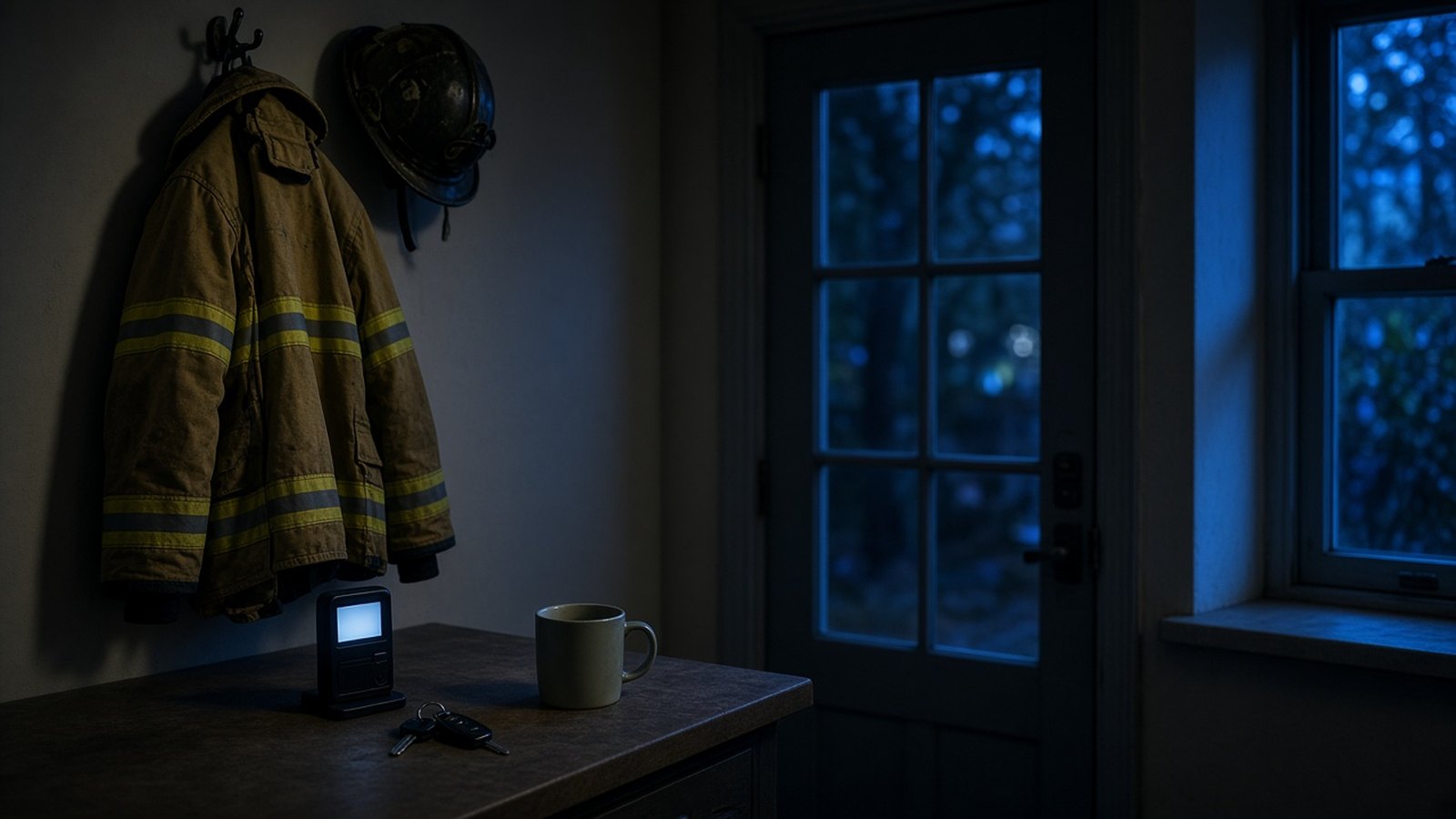
The pager went off at 4 in the morning. Myke Cole flipped on his car's blue lights and drove hard for the firehouse. Minutes later he and four other volunteers stood in front of a Hudson Valley house with fire coming through the roof. Nobody on his crew could be spared to walk around the back and check for a face at a window.
That walk-around is the first job at any fire, Cole writes in the Journal's Review section. People who call 911 are scared and often wrong. The caller out front has no view of the window around back, or of anyone in it. But the flames stood 20 feet high and the crew was tiny. With three or so people on a call, he says, a lieutenant can be forgiven for putting every hand on the hose or the search. “It wasn't the first time I wished for an AI-powered drone,” he writes.
Cole volunteers in a country that runs on volunteers. Over 70% of the fire departments registered with FEMA are all-volunteer, on 2023 data, and fewer people are joining. In New York, his state, volunteer numbers fell by a third over two decades, by the estimate of the state firefighters association, FASNY. The group adds its own caveat. Nobody keeps a central count of volunteer firefighters, so every number is an estimate. Many volunteers are over 50, Cole among them. FASNY's spokesperson says this isn't a public-safety crisis, though some departments struggle, mostly for money.
What a drone could do, and what it can't
AI scares people because it takes jobs. A fire company that's short of hands could use exactly that, Cole argues. His idea is a proposal, not a plan. A 911 dispatcher, or an AI agent, would send a drone to the fire while the crew was still pulling on gear. It would fly the circle and beam back pictures, so the crew arrived knowing the building. He calls it a “force multiplier,” a term from his military days. Drones already fly for the Colorado Springs Fire Department, since 2023, and for the U.S. Forest Service, with no AI involved. Cole wants safeguards too, since police could misuse such drones. No machine could do his job that morning, feeding hose into the house and hauling loops up the stairs. A charged 1.75-inch line can weigh up to 75 pounds for every 50 feet.
The July house had no pre-incident plan. That's the file firefighters build by visiting a property and mapping the layout. Making one by hand is slow, so it often doesn't get done, and Cole thinks AI could do it from parcel maps and photos. That morning the fire had a long head start. The crew stopped the flames but lost the building. When pieces of the roof came down, three long horn blasts sent everyone out to fight from outside. Cole learned later that a few officers had reached the house before the engine and had done the walk-around. He didn't know it at the time. Afterward, he and two others rode back to the station to shower, short crew or not. “We all know you can get fired for being late to your day job,” he writes.
Our read
This is Insurance/Consumer Protection (M11), with Housing (M6) underneath. The essay never mentions insurance, so this part is ours. At most fire departments on FEMA's list, the people who answer a house fire are volunteers. They drive from home to the firehouse first, and every minute of that drive belongs to the fire. This house was lost with the crew on scene. So the household's real backstop is its own policy, and a policy makes assumptions. Insurers often price a home partly on how far it sits from the responding station and a hydrant. Ask your agent how your home is rated for fire protection and what that assumes. Then read the dwelling limit, and ask whether it would rebuild the house at today's prices or only pay the depreciated value.
There's a Retirement (M10) thread too. Many volunteers are over 50, Cole says, and the work is brutal on a body. If volunteering is part of your retirement picture, plan for work that is physical. And you don't shop for the umbrella in the rain. Pull the home policy at your next review and read what it promises.