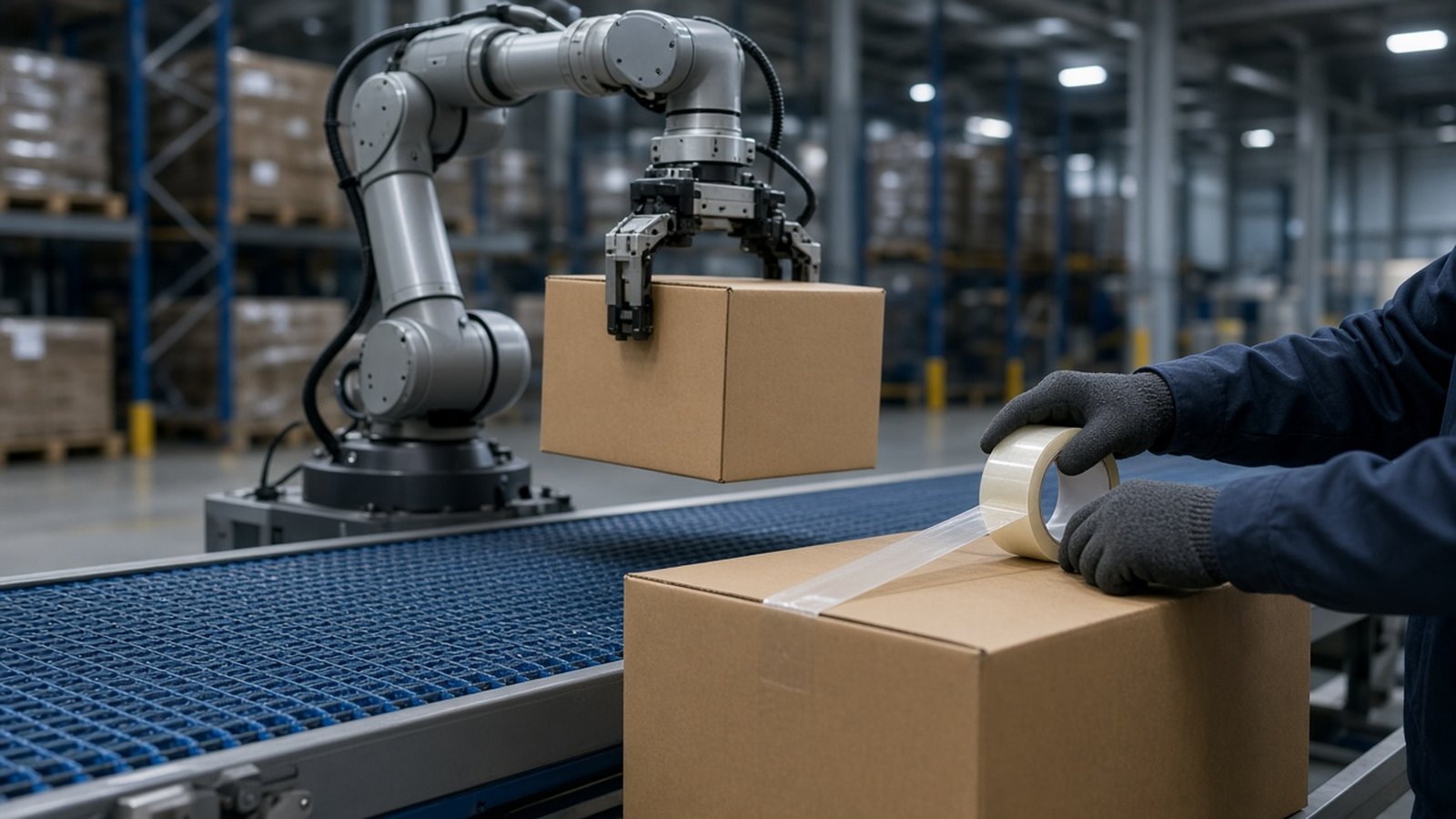
A few Thanksgivings ago, a robot arm in a California warehouse fumbled the frozen turkeys. Walmart (WMT) had to ask the supplier for a stronger box and lean on nearby warehouses to get enough birds to stores. That’s the whole story in one turkey. Walmart has spent a decade and billions of dollars teaching machines to do what 140,000 people do by hand. The machines are getting there. Slowly, and with a lot of help.
The Journal’s Sarah Nassauer spent Page One on the kinks. Walmart’s supply chain feeds 5,200 U.S. stores from roughly 200 buildings. Most were built in the 1980s and ’90s. So about 80% of the automation projects are retrofits, done while the building keeps running. Rob Montgomery, who runs supply-chain operations for Walmart U.S., calls this moment “peak complexity.” The cardboard box Walmart has used for two decades doesn’t fit the machines. The little robots that move goods around quit too often, sometimes over nothing more than dust. A big bag of dog food or a large TV defeats the system. Pulling single items out of a case to ship on their own is easy for a person. The robots fought with it for years, and the fix is only now going into a dozen-plus warehouses.
The progress is real, and so is the bill. Brooksville, the Florida test site, is now about 80% automated. The power bill at an automated grocery site can hit $800,000 a month in peak months, the paper was told. It was about $250,000 when more of the work was manual. The engineers who keep the machines running cost more than the warehouse workers. And there have been write-offs. Walmart bought Alert Innovation for $400 million in 2023, then sold it to Symbotic (SYM) last year at a loss, for $200 million. Kroger (KR) said last fall it would take a $2.6 billion charge to close three automated e-commerce centers. Amazon (AMZN), which is ahead on automation, passed Walmart this year as the largest U.S. company by revenue.
What happens to the 140,000
Here’s the part for anyone who works in a warehouse, or whose kid does. Walmart’s executives say the company will eventually need fewer warehouse workers. The jobs left over lean toward running and repairing the machines, not lifting boxes. They also say turnover is high enough that nobody has to be laid off, and Montgomery says sales growth could keep the head count where it is today. Both claims are theirs, and they sit side by side in the story. Montgomery put the pace this way. “We know that if we wait till perfect, it’ll take too long.”
Our read
This is Career and Cash Flow (M5), with Investments (IN04) behind it. Two lessons, one for each side of the loading dock. For the worker, the company has told you its plan in plain words. Fewer lifting jobs over time, more repair jobs, and the engineers who run the machines cost the company more than the people who lift. The move is to be on the right side of that line before turnover does the sorting. For the investor, any payoff from automation comes on the company’s timetable, which is a decade, with write-offs along the way. Symbotic’s 2022 deal runs to around 2030, and the in-store system isn’t expected to work until 2028. Judge the promise in years.
Walmart (WMT) is held at weight in 12 books; nothing added. Amazon (AMZN) is in 19, also held. Symbotic and Kroger aren’t in the books. Walmart expects this spending to peak this year and next. That’s the company’s number, and we don’t forecast it. A ten-year project is a reason to check your own plan every year, since a lot can change in a decade, including the job. The umbrella gets checked before the rain. A career gets checked before the robot learns your task.